

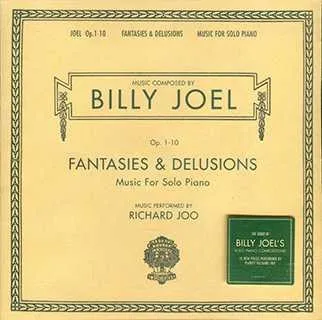
Released 25 years ago this October
Fantasies & Delusions
Billy Joel · 2001
76 min · 12 tracks · pop rock
An introspective blend of classical piano compositions that reflects Joel's lyrical depth and melodic sensibility.
Top tracks — play these first
-
→
Opus 3. Reverie (Villa D'Este) Start here — establishes the sonic palette early
-
→
Opus 1. Soliloquy (On a Separation) — This opening track encapsulates the emotional core of the album, blending lyrical narrative with complex melodies that reflect themes of separation and introspection.
-
→
Opus 2. Waltz #1 (Nunley's Carousel) — The waltz format showcases Joel's ability to create whimsical yet deeply heartfelt compositions, effectively merging nostalgia with elegance.
-
→
Opus 5. Waltz #2 (Steinway Hall) — This piece highlights Joel's mastery of piano dynamics, creating a rich tapestry of sound that evokes both celebration and melancholy.
Elevation
Our rating, out of 100 — and why.
AI-generated from five scored dimensions. An opinion, not a measurement.
InstrumentalThe album showcases Joel's classical compositional skills with strong melodies but lacks broader cultural reach.
What we noticed
- The album consists entirely of piano compositions, with each track labeled as an 'opus' and structured around classical forms.
- There are no lyrics or vocal performances; the focus is solely on instrumental melodies and harmonies.
- The tracks vary in tempo and mood, with some pieces being more reflective while others exhibit a lively waltz rhythm.
- Composition 25% of the score
-
7/10
- Craft 20% of the score
-
8/10
- Durability 25% of the score
-
6/10
- Distinctiveness 18% of the score
-
7/10
- Sequencing 12% of the score
-
8/10
the writing — melody, harmony, structure, lyrics
production, performance, arrangement
whether it rewards returning to it
whether it sounds like itself
running order, pacing, length
Known within its scene. Reported but not counted — how far a record travelled describes its reception rather than the record, and a newer release has had less time to travel than an older one.
Is this for you?
Good fit if you like
- lush piano storytelling experience
- wave-like pacing with dynamics
- introspective moments of reflection
- ideal for quiet evenings
- evocative themes of longing
Maybe skip if you
- seeking high-energy tracks
- prefer standalone singles
Where this album fits
- In the catalog
- Experimental — Represents a significant departure into classical music from pop/rock roots.
- Themes
- piano-driven nostalgia· emotional separation· whimsical elegance
- Career context
- Fantasies & Delusions marked a significant departure for Billy Joel, being his first classical album released in 2001 after a lengthy career in pop and rock. This album followed the completion of his last studio album, River of Dreams, in 1993, where he had shifted focus towards a more personal and artistic expression through instrumental music.
- Stylistic neighbors
- Elton John· Carole King· James Taylor
Moments worth listening for
Where the writing does something specific.
-
Opus 1. Soliloquy (On a Separation)
The narrative shifts from introspection to direct address, revealing vulnerability in grappling with emotional distance.
This shift in perspective intensifies the personal stakes of the composition, inviting listeners to connect more intimately with the emotional journey.
Tracklist
- 1 Opus 3. Reverie (Villa D'Este) Start here 9:31
- 2 Opus 2. Waltz #1 (Nunley's Carousel) 6:58
- 3 Opus 7. Aria (Grand Canal) 11:08
- 4 Opus 6. Invention in C Minor 1:04
- 5 Opus 1. Soliloquy (On a Separation) 11:26
- 6 Opus 8. Suite for Piano: I. Innamorato 7:46
- 7 Opus 8. Suite for Piano: II. Sorbetto 1:30
- 8 Opus 8. Suite for Piano: III. Delusion 3:37
- 9 Opus 5. Waltz #2 (Steinway Hall) 7:00
- 10 Opus 9. Waltz #3 (For Lola) 3:28
- 11 Opus 4. Fantasy (Film Noir) 8:56
- 12 Opus 10. Air (Dublinesque) 3:46


If this landed
Records by other artists that run on the same instinct.

Reference: Wikipedia · MusicBrainz · Wikidata
Sync your library
Everything you track here works immediately — no account needed. Create one when you want to sync across devices.