

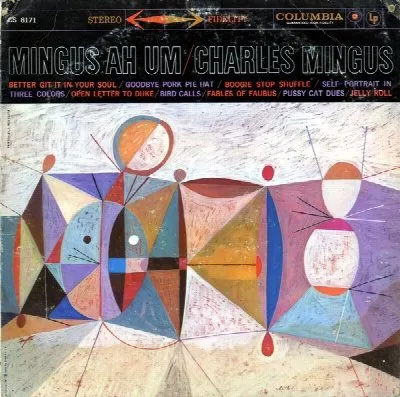
Mingus Ah Um
Charles Mingus · 1959
45 min · 9 tracks · jazz
Church-shout horns and restless bass lines turn tightly arranged jazz into something that feels gloriously close to breaking loose.
Top tracks — play these first
-
→
Better Git It in Your Soul Start here — Gospel-inflected horn calls and a driving, shifting pulse make the opener feel like a jazz ensemble drawing energy from a church congregation.
-
→
Goodbye Pork Pie Hat — Written in tribute to saxophonist Lester Young, this slow, blues-shaped elegy lets its horn melody linger rather than rushing toward a soloist’s climax.
-
→
Open Letter to Duke — Mingus’s tribute to Duke Ellington moves through contrasting themes and ensemble colors, treating a revered predecessor’s orchestral imagination as a starting point for his own.
-
→
Fables of Faubus — A mocking ensemble theme gives way to sharply contrasting passages; even without the censored lyrics, its musical caricature carries the force of protest.
-
→
Jelly Roll — Its bluesy piano and buoyant ensemble writing salute Jelly Roll Morton while folding an older jazz vocabulary into Mingus’s flexible group sound.
Elevation
Our rating, out of 100 — and why.
AI-generated from five scored dimensions. An opinion, not a measurement.
InstrumentalMingus makes tightly recurring themes feel volatile through shifting ensemble interplay; the sequence has strong contrasts and a clear closing turn.
What we noticed
- The opener builds from a repeating bass figure into staggered horn calls and group responses, then keeps breaking the groove with sharp ensemble accents.
- The sequence pivots from the slow, blues-shaped elegy of “Goodbye Pork Pie Hat” to the stop-start, bass-driven “Boogie Stop Shuffle.”
- “Fables of Faubus” turns a compact, recurring horn theme into a longer series of ensemble breaks; the nine-track original sequence closes with the jaunty “Jelly Roll.”
- Composition 25% of the score
-
9/10
- Craft 20% of the score
-
9/10
- Durability 25% of the score
-
9/10
- Distinctiveness 18% of the score
-
9/10
- Sequencing 12% of the score
-
8/10
the writing — melody, harmony, structure, lyrics
production, performance, arrangement
whether it rewards returning to it
whether it sounds like itself
running order, pacing, length
Defined its genre or moment. Reported but not counted — how far a record travelled describes its reception rather than the record, and a newer release has had less time to travel than an older one.
Where this album fits
- In the catalog
- Breakthrough — Its major-label release and widely recognized compositions brought Mingus to a broader audience.
- Themes
- Black church gospel calls· Lester Young elegy· Duke Ellington tribute· Arkansas segregation protest
- Career context
- Mingus Ah Um was Charles Mingus’s first album for Columbia Records, recorded in 1959 as he led a small ensemble of distinctive improvisers. It followed the ambitious Jazz Workshop recordings of the 1950s and preceded another 1959 Columbia session released as Mingus Dynasty.
- Stylistic neighbors
- Eric Dolphy· Thelonious Monk· Ornette Coleman
Tracklist
- 1 Better Git It in Your Soul Start here 7:22
- 2 Goodbye Pork Pie Hat 4:47
- 3 Boogie Stop Shuffle 3:44
- 4 Self-Portrait in Three Colors 3:06
- 5 Open Letter to Duke 4:56
- 6 Bird Calls 3:13
- 7 Fables of Faubus 8:14
- 8 Pussy Cat Dues 6:29
- 9 Jelly Roll 4:01
What to play next
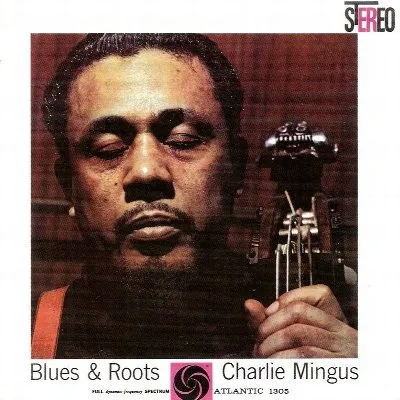
Blues & Roots
1960
It carries Ah Um’s bluesy, gospel-inflected ensemble energy into a more exuberant, rhythm-driven set.
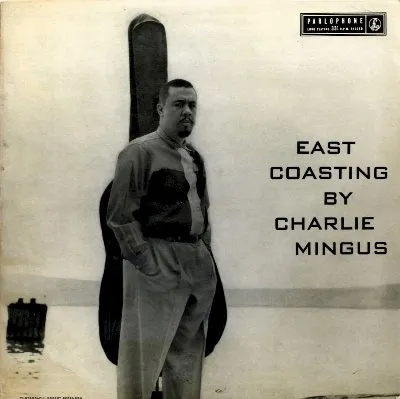
East Coasting
1958
Its richly arranged small-group writing provides a natural lead-in to Ah Um’s vivid ensemble sound.
If this landed
Records by other artists that run on the same instinct.
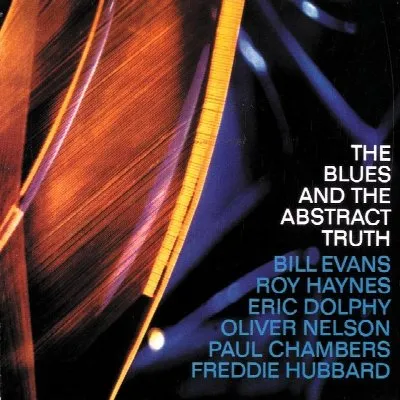
Reference: Wikipedia · MusicBrainz · Wikidata
Sync your library
Everything you track here works immediately — no account needed. Create one when you want to sync across devices.