

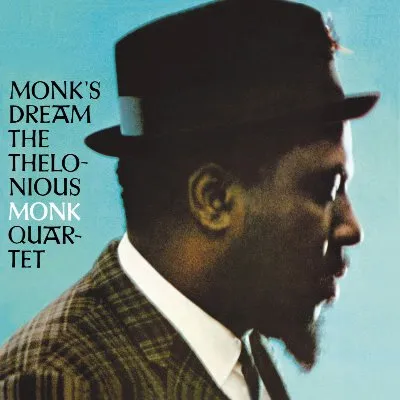
Monk's Dream
Thelonious Monk · 1963
46 min · 8 tracks · jazz
Monk’s piano turns familiar melodies into angular conversations with a quartet that swings through every unexpected pause.
Top tracks — play these first
-
→
Monk's Dream Start here — The opening title track revisits a composition Monk first recorded in the 1950s, with Rouse’s tenor answering the pianist’s clipped phrases over a buoyant quartet swing.
-
→
Bright Mississippi — Built on the chord changes of the standard Sweet Georgia Brown, this extended quartet performance gives Rouse room to stretch while Monk punctuates the flow with mischievous accents.
-
→
Just a Gigolo — Monk plays the standard alone, exposing the space between his sharply placed chords and the tenderness beneath his unconventional treatment of the melody.
-
→
Ba-lue Bolivar Ba-lues-are — A return to a composition from Monk’s Riverside years, this performance finds the quartet settling into a loping blues while piano and tenor play with the tune’s crooked contours.
Elevation
Our rating, out of 100 — and why.
AI-generated from five scored dimensions. An opinion, not a measurement.
InstrumentalMonk's angular themes and quartet interplay give familiar standards and originals a clear identity; the ballad and brisk passages make the eight-track sequence breathe.
What we noticed
- The title track opens with a compact, jaunty theme; the following “Body and Soul” shifts to a spacious ballad pace before “Bright Mississippi” snaps back into brisk motion.
- The eight-track sequence alternates Monk originals with standards, including “Just a Gigolo” late in the set; “Bye-Ya” restores a buoyant pace before the closing “Sweet and Lovely.”
- Rouse's tenor answers and shadows Monk's piano lines, while the rhythm section keeps the quartet's stop-start turns moving without filling every gap.
- Composition 25% of the score
-
8/10
- Craft 20% of the score
-
8/10
- Durability 25% of the score
-
8/10
- Distinctiveness 18% of the score
-
8/10
- Sequencing 12% of the score
-
8/10
the writing — melody, harmony, structure, lyrics
production, performance, arrangement
whether it rewards returning to it
whether it sounds like itself
running order, pacing, length
Significant within its genre. Reported but not counted — how far a record travelled describes its reception rather than the record, and a newer release has had less time to travel than an older one.
Is this for you?
Good fit if you like
- brief detours beside eight-minute explorations
- familiar standards amid quirky originals
- playful shifts between and ballads
- a varied forty-seven-minute set
Maybe skip if you
- want every track equally brief
- prefer one consistent mood
Where this album fits
- In the catalog
- Starting Point — Its clear quartet setting and representative compositions make it an approachable introduction to Monk's catalog.
- Themes
- 1960s jazz-club rooms· stride-piano syncopation· late-night horn conversations
- Career context
- Monk’s Dream was Thelonious Monk’s first album for Columbia Records, following his years on the Riverside label. Recorded in 1962, it features his working quartet with tenor saxophonist Charlie Rouse, bassist John Ore and drummer Frankie Dunlop.
- Stylistic neighbors
- Charles Mingus· Dizzy Gillespie· Herbie Nichols
Tracklist
- 1 Monk's Dream Start here 6:27
- 2 Body and Soul 4:30
- 3 Bright Mississippi 8:38
- 4 Blues Five Spot 3:16
- 5 Ba-lue Bolivar Ba-lues-are 7:32
- 6 Just a Gigolo 2:30
- 7 Bye-Ya 6:03
- 8 Sweet and Lovely 7:52
What to play next
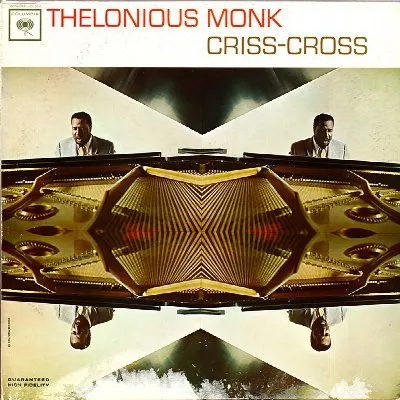
Criss Cross
1963
It keeps Monk's crisp small-group swing and angular themes, while offering fresh takes from the same 1963 period.

Thelonious Monk at the Blackhawk
1960
Its live quartet setting introduces the nimble ensemble interplay that Monk's Dream brings into a polished studio ses...
If this landed
Records by other artists that run on the same instinct.

Reference: Wikipedia · MusicBrainz · Wikidata
Sync your library
Everything you track here works immediately — no account needed. Create one when you want to sync across devices.