

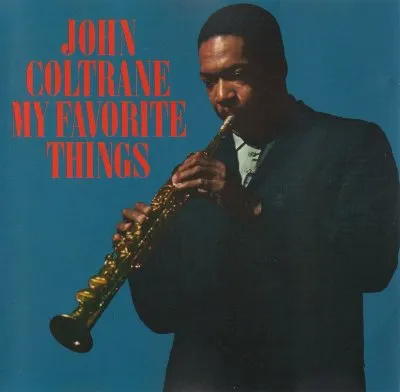
My Favorite Things
John Coltrane · 1961
40 min · 4 tracks · jazz
A transcendent blend of modal improvisation and ethereal melodies that reshapes the listener's perception of jazz standards.
Top tracks — play these first
-
→
My Favorite Things — This track redefined the boundaries of jazz interpretation by transforming a Broadway standard into an expansive modal exploration, featuring Coltrane's signature soprano saxophone.
-
→
Everytime We Say Goodbye — Coltrane’s rendition imbues this classic with deep emotional resonance through intricate solos that reflect a profound sense of yearning and introspection.
-
→
Summertime — His interpretation of this Gershwin classic showcases Coltrane's ability to blend lyrical beauty with complex harmonic structures, creating a haunting atmosphere.
Elevation
Our rating, out of 100 — and why.
AI-generated from five scored dimensions. An opinion, not a measurement.
InstrumentalColtrane's innovative improvisation and modal exploration define this influential jazz album.
What we noticed
- The title track features a repeated melodic motif that Coltrane expands upon through extensive improvisation, lasting over 13 minutes.
- Each of the four tracks showcases a different approach to melody and harmony, with 'Summertime' employing a slow, bluesy feel while 'Everytime We Say Goodbye' has a more lyrical quality.
- Coltrane's saxophone is often accompanied by a minimalist piano and percussion backdrop, allowing for a focus on his improvisational style.
- The album's overall structure emphasizes long, flowing pieces that build in intensity rather than adhering to traditional song forms.
- Composition 25% of the score
-
8/10
- Craft 20% of the score
-
9/10
- Durability 25% of the score
-
9/10
- Distinctiveness 18% of the score
-
8/10
- Sequencing 12% of the score
-
7/10
the writing — melody, harmony, structure, lyrics
production, performance, arrangement
whether it rewards returning to it
whether it sounds like itself
running order, pacing, length
Defined its genre or moment. Reported but not counted — how far a record travelled describes its reception rather than the record, and a newer release has had less time to travel than an older one.
Where this album fits
- In the catalog
- Breakthrough — Marked Coltrane's transition to modal jazz, gaining wider recognition.
- Themes
- modal jazz exploration· saxophone improvisation· 1960s cultural shift
- Career context
- Released in 1961, My Favorite Things marked John Coltrane's transition into a more exploratory phase, following his groundbreaking album Giant Steps. This record showcased his innovative approach to improvisation, setting the stage for his later explorations into free jazz and spiritual music.
- Stylistic neighbors
- Pharoah Sanders· Ornette Coleman· Albert Ayler
Tracklist
Best experienced from track one — press play and let it unfold.
- 1 My Favorite Things 13:45
- 2 Everytime We Say Goodbye 5:45
- 3 Summertime 11:35
- 4 But Not for Me 9:35
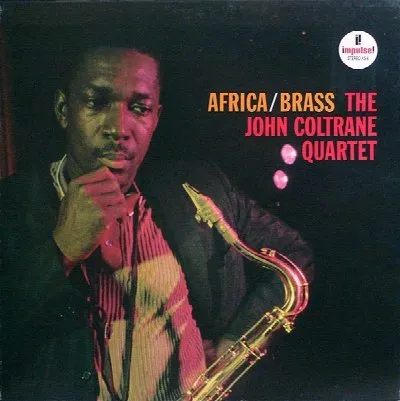

If this landed
Records by other artists that run on the same instinct.

The Shape of Jazz to Come
Ornette Coleman
Explores free jazz improvisation with a focus on individual expression and harmonic freedom.
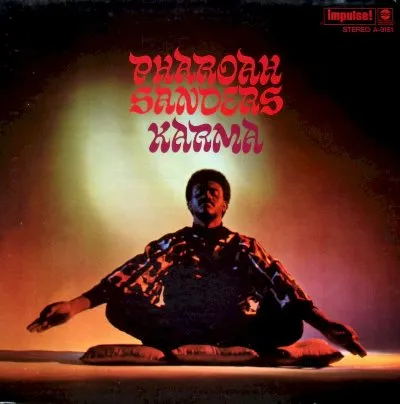
Karma
Pharoah Sanders
Shares Coltrane's spiritual depth and modal exploration through intense saxophone work.

Spiritual Unity
Albert Ayler
Features avant-garde saxophone improvisation, embracing emotional intensity and modal structures.
Reference: Wikipedia · MusicBrainz · Wikidata
Sync your library
Everything you track here works immediately — no account needed. Create one when you want to sync across devices.