

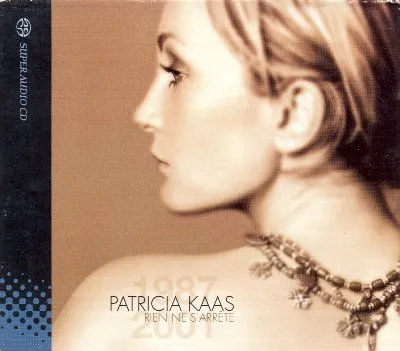
Rien ne s'arrête
Patricia Kaas · 2001
75 min · 18 tracks · jazz
A rich tapestry of emotive melodies, blending chanson with jazz-inflected pop, showcasing Kaas's powerful and nuanced vocals.
Top tracks — play these first
-
→
Rien ne s’arrête — The title track captures the essence of the album, with its haunting melody and introspective lyrics that explore themes of resilience and continuity amidst change.
-
→
Mon mec à moi — This song stands out for its playful yet poignant narrative about love and companionship, showcasing Kaas's ability to infuse emotion into catchy pop hooks.
-
→
Il me dit que je suis belle — This track highlights Kaas’s vocal strength and emotional depth, presenting a narrative of self-affirmation in the face of societal expectations.
Elevation
Our rating, out of 100 — and why.
AI-generated from five scored dimensions. An opinion, not a measurement.
The album blends emotive melodies with strong vocal performances, showcasing its jazz influences while maintaining a cohesive sound.
What we noticed
- The first track opens with a slow, emotive piano melody that sets a reflective tone for the album.
- Kaas's vocals are prominently featured throughout, often layered with lush string arrangements that enhance the emotional weight of the lyrics.
- Several tracks incorporate jazz rhythms and instrumentation, creating a dynamic interplay between the vocal lines and the accompanying music.
- Composition 25% of the score
-
7/10
- Craft 20% of the score
-
8/10
- Durability 25% of the score
-
6/10
- Distinctiveness 18% of the score
-
7/10
- Sequencing 12% of the score
-
5/10
the writing — melody, harmony, structure, lyrics
production, performance, arrangement
whether it rewards returning to it
whether it sounds like itself
running order, pacing, length
Known within its scene. Reported but not counted — how far a record travelled describes its reception rather than the record, and a newer release has had less time to travel than an older one.
Is this for you?
Good fit if you like
- dynamic journey with emotional peaks
- evocative storytelling through vocals
- for reflective evenings
- engaging narratives that unfold slowly
- intimate moments of personal connection
Maybe skip if you
- prefer instant gratification tracks
- seek upbeat party anthems
Where this album fits
- In the catalog
- Breakthrough — This album solidified Kaas's status after her prior success, gaining wider recognition.
- Career context
- Released in September 2001, Rien ne s'arrête marked Patricia Kaas's return after her successful album, Je te dis vous (1999), which had solidified her status as a prominent artist in the French music scene. This album further established her as a leading figure in French chanson, embracing both contemporary and traditional influences while exploring deeper emotional themes.
- Stylistic neighbors
- Édith Piaf· Carla Bruni· Juliette Gréco
Moments worth listening for
Where the writing does something specific.
-
Quand j’ai peur de tout
The narrator confronts fears directly, expressing vulnerability while simultaneously seeking strength in personal reflection.
This moment showcases a shift from passive apprehension to active introspection, illustrating Kaas's lyrical depth in addressing complex emotions.
Tracklist
Best experienced from track one — press play and let it unfold.
- 1 Rien ne s’arrête 3:31
- 2 D’Allemagne 4:25
- 3 Mon mec à moi 4:13
- 4 Quand Jimmy dit 3:43
- 5 Mademoiselle chante le blues 3:23
- 6 Les Hommes qui passent 3:47
- 7 Les Mannequins d’osier 3:54
- 8 Kennedy Rose 3:19
- 9 Entrer dans la lumière 4:05
- 10 Il me dit que je suis belle 4:45
- 11 Ceux qui n’ont rien 3:54
- 12 Quand j’ai peur de tout 4:22
- 13 Je voudrais la connaître 4:18
- 14 L’Aigle noir 5:00
- 15 Ma liberté contre la tienne 5:04
- 16 Une fille de l’Est 3:30
- 17 Les chansons commencent 5:18
- 18 Mon chercheur d’or 4:32

Reference: Wikipedia · MusicBrainz · Wikidata
Sync your library
Everything you track here works immediately — no account needed. Create one when you want to sync across devices.