

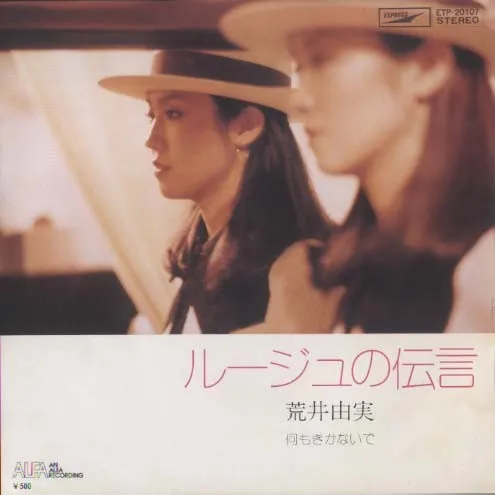
Rouge no Dengon
Yumi Matsutoya · 1975
6 min · 2 tracks · J-pop
A vibrant blend of folk rock and jazz fusion infused with playful pop melodies that showcase Yumi Matsutoya's distinctive vocal style.
Top tracks — play these first
-
→
ルージュの伝言 — The title track encapsulates Matsutoya's unique fusion of catchy melodies and sophisticated arrangements, making it an enduring favorite that showcases her lyrical wit.
-
→
何もきかないで — This song highlights Matsutoya's ability to convey complex emotions through a simple yet poignant melody, illustrating her skill as a storyteller.
Elevation
Our rating, out of 100 — and why.
AI-generated from five scored dimensions. An opinion, not a measurement.
The album blends folk rock and jazz fusion with strong melodies, showcasing Matsutoya's unique vocal style.
What we noticed
- The title track features a prominent piano melody that is interwoven with strings, creating a lush backdrop for the vocals.
- The second track employs a more subdued arrangement, focusing on acoustic guitar and soft percussion, contrasting with the vibrant energy of the first.
- Both tracks showcase Matsutoya's vocal range, with dynamic shifts in intensity and phrasing that highlight her expressive style.
- Composition 25% of the score
-
7/10
- Craft 20% of the score
-
8/10
- Durability 25% of the score
-
6/10
- Distinctiveness 18% of the score
-
7/10
- Sequencing 12% of the score
-
5/10
the writing — melody, harmony, structure, lyrics
production, performance, arrangement
whether it rewards returning to it
whether it sounds like itself
running order, pacing, length
Significant within its genre. Reported but not counted — how far a record travelled describes its reception rather than the record, and a newer release has had less time to travel than an older one.
Where this album fits
- In the catalog
- Breakthrough — Established Yumi Matsutoya's reputation as a solo artist after her prior work.
- Themes
- 1970s Japanese pop· personal storytelling
- Career context
- Released in 1975, Rouge no Dengon marked Yumi Matsutoya's breakthrough as a solo artist after her previous work under the name Yumi Arai. This album followed the success of her earlier singles and solidified her place in the evolving Japanese music scene, transitioning from the kayōkyoku genre into a more modern sound.
- Stylistic neighbors
- Anri· Mariya Takeuchi· Kiyotaka Sugiyama
Tracklist
Best experienced from track one — press play and let it unfold.
- 1 ルージュの伝言 3:03
- 2 何もきかないで 3:11


If this landed
Records by other artists that run on the same instinct.

Reference: Wikipedia · MusicBrainz · Wikidata
Sync your library
Everything you track here works immediately — no account needed. Create one when you want to sync across devices.