

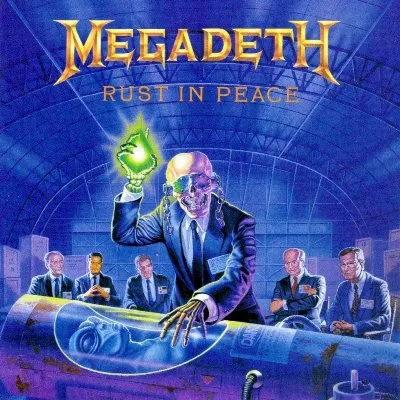
Rust in Peace
Megadeth · 1990
40 min · 9 tracks · heavy metal
Razor-edged riffs and tightly wound rhythms give way to guitar solos that twist through the wreckage.
Top tracks — play these first
-
→
Holy Wars… The Punishment Due Start here — The opener shifts from a breakneck account of religious conflict into a slower, comic-book-inspired revenge narrative, with an acoustic interlude separating its contrasting sections.
-
→
Hangar 18 — An account of government secrecy gives way to an extended succession of lead breaks, putting Mustaine and Friedman’s contrasting guitar styles at the center.
-
→
Tornado of Souls — Its sharply defined vocal hook anchors a song whose tension peaks in Friedman’s fluid, melodically unpredictable solo.
-
→
Dawn Patrol — Ellefson’s exposed bass line and Mustaine’s hushed delivery make this environmental warning an eerie pause before the closing assault.
-
→
Rust in Peace… Polaris — The closing track gives a nuclear missile a voice, matching its boasts with riffs that turn the Cold War threat into a grotesque character study.
Elevation
Our rating, out of 100 — and why.
AI-generated from five scored dimensions. An opinion, not a measurement.
Intricate riffs and socially charged lyrics define this influential thrash metal album.
What we noticed
- The album features complex song structures with frequent tempo changes, particularly evident in tracks like 'Hangar 18' and 'Tornado of Souls'.
- Guitar solos are prominent throughout, often trading off between the two guitarists, creating a dynamic interplay.
- Lyrically, the album addresses themes of war and politics, with each track presenting a distinct narrative or concept.
- Composition 25% of the score
-
8/10
- Craft 20% of the score
-
9/10
- Durability 25% of the score
-
8/10
- Distinctiveness 18% of the score
-
8/10
- Sequencing 12% of the score
-
7/10
the writing — melody, harmony, structure, lyrics
production, performance, arrangement
whether it rewards returning to it
whether it sounds like itself
running order, pacing, length
Defined its genre or moment. Reported but not counted — how far a record travelled describes its reception rather than the record, and a newer release has had less time to travel than an older one.
Is this for you?
Good fit if you like
- dynamic progression with peaks
- intense energy for focused sessions
- intricate riffs demanding attention
- cathartic release through aggression
Maybe skip if you
- prefer calm, mellow sounds
- avoid complex musical structures
Where this album fits
- In the catalog
- Critical Peak — 'Rust in Peace' is often cited as Megadeth's most ambitious work, solidifying their reputation.
- Themes
- political conflict· military disillusionment· government secrecy· personal turmoil
- Career context
- Released in 1990, Rust in Peace was Megadeth’s fourth studio album and the follow-up to So Far, So Good... So What! It introduced guitarist Marty Friedman and drummer Nick Menza to the band’s recording lineup, alongside Dave Mustaine and bassist David Ellefson.
Moments worth listening for
Where the writing does something specific.
-
Rust in Peace… Polaris
The opening section gives a nuclear weapon a first-person voice as it boasts about its destructive reach.
Personification turns an instrument of mass destruction into a swaggering character, making the threat sound disturbingly self-assured.
Tracklist
- 1 Holy Wars… The Punishment Due Start here 6:36
- 2 Hangar 18 5:14
- 3 Take No Prisoners 3:28
- 4 Five Magics 5:42
- 5 Poison Was the Cure 2:58
- 6 Lucretia 3:58
- 7 Tornado of Souls 5:22
- 8 Dawn Patrol 1:50
- 9 Rust in Peace… Polaris 5:36
What to play next
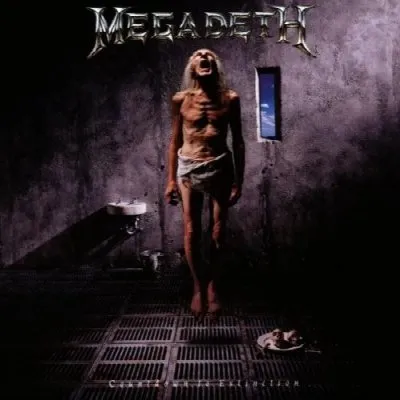
Countdown to Extinction
1992
It continues the intricate riffs and socially charged themes from Rust in Peace.
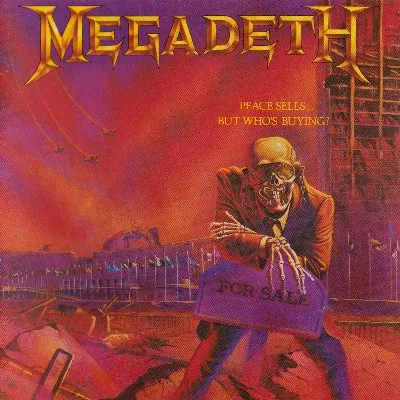
Peace Sells… but Who's Buying?
1986
This sets the stage with similar energy and lyrical depth leading into Rust in Peace.
If this landed
Records by other artists that run on the same instinct.
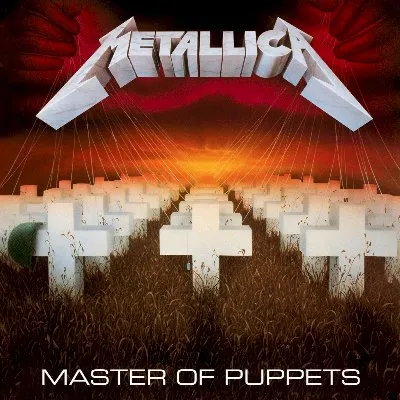
Master of Puppets
Metallica
Shares intricate riffs and themes of manipulation and control, driving a similar intensity.
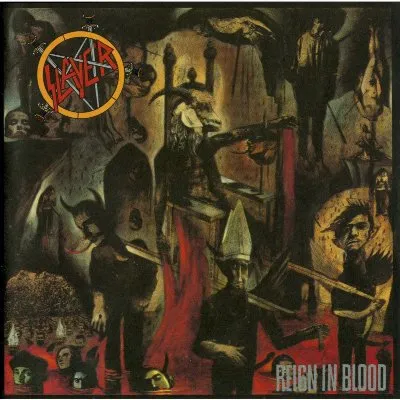
Reign in Blood
Slayer
Delivers relentless speed and socio-political themes, complementing the aggressive energy of Megadeth.
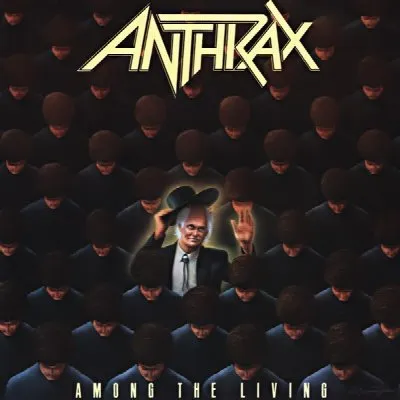
Among the Living
Anthrax
Features complex arrangements and socially conscious lyrics, resonating with the political edge of 'Rust in Peace.'
Reference: Wikipedia · MusicBrainz · Wikidata
Sync your library
Everything you track here works immediately — no account needed. Create one when you want to sync across devices.