


Spirit World Field Guide
Aesop Rock · 2020
63 min · 21 tracks · abstract hip-hop
A surreal blend of abstract lyricism and intricate beats creates a vivid exploration of life's complexities and the afterlife.
Top tracks — play these first
-
→
Hello From the Spirit World Start here — The opening track sets an otherworldly tone with its eerie atmosphere and introduces listeners to the album’s themes of mortality and introspection.
-
→
Pizza Alley — This track juxtaposes mundane life with existential reflection, showcasing Aesop's ability to weave storytelling into everyday scenarios, making it a standout moment on the album.
-
→
Holy Waterfall — With its rich imagery and emotional depth, this track encapsulates Aesop's lyrical prowess while exploring themes of spirituality and introspection that resonate throughout the album.
Elevation
Our rating, out of 100 — and why.
AI-generated from five scored dimensions. An opinion, not a measurement.
Aesop Rock's intricate lyricism and unique production create a standout abstract hip-hop experience.
What we noticed
- Many tracks incorporate unconventional soundscapes and samples, blending abstract beats with layered vocal delivery.
- The thematic content is rich with surreal imagery and metaphor, requiring attentive listening to unpack the meanings.
- Several tracks transition smoothly into one another without clear breaks, contributing to a cohesive atmosphere throughout.
- Composition 25% of the score
-
8/10
- Craft 20% of the score
-
7/10
- Durability 25% of the score
-
8/10
- Distinctiveness 18% of the score
-
9/10
- Sequencing 12% of the score
-
8/10
the writing — melody, harmony, structure, lyrics
production, performance, arrangement
whether it rewards returning to it
whether it sounds like itself
running order, pacing, length
Known within its scene. Reported but not counted — how far a record travelled describes its reception rather than the record, and a newer release has had less time to travel than an older one.
Is this for you?
Good fit if you like
- quirky narratives with vivid imagery
- short bursts of playful energy
- exploratory themes and abstract concepts
- intricate wordplay for detail hunters
- late-night solitary listening experience
Maybe skip if you
- seeking straightforward, linear tracks
- prefer longer, cohesive albums
Where this album fits
- In the catalog
- Critical Peak — This album showcases Aesop Rock's lyrical depth and unique sound, often seen as a high point.
- Themes
- afterlife exploration· mundane existentialism
- Career context
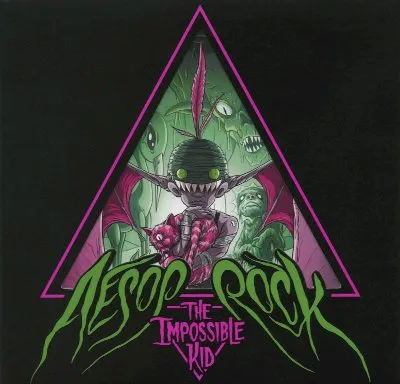
- Released in 2020, Spirit World Field Guide is Aesop Rock's eighth studio album, following his acclaimed 2016 album, The Impossible Kid. At this point in his career, he had solidified his reputation as a pioneer in abstract hip-hop, showcasing his complex wordplay and unique production style. The album builds on his established sound while incorporating new thematic elements inspired by the world around him.
Moments worth listening for
Where the writing does something specific.
-
Gauze
The narrative shifts from personal reflection to a broader commentary on society’s fragility as the imagery becomes increasingly vivid and unsettling.
By changing focus midway through the song, Aesop highlights a contrast between individual experience and collective reality, deepening the thematic complexity.
Tracklist
- 1 Hello From the Spirit World Start here 2:06
- 2 The Gates 3:51
- 3 Button Masher 3:45
- 4 Dog at the Door 1:28
- 5 Gauze 3:12
- 6 Pizza Alley 4:36
- 7 Crystal Sword 2:20
- 8 Boot Soup 4:08
- 9 Coveralls 3:39
- 10 Jumping Coffin 3:29
- 11 Holy Waterfall 3:48
- 12 Flies 0:46
- 13 Salt 3:37
- 14 Sleeper Car 3:42
- 15 1 to 10 0:53
- 16 Attaboy 3:00
- 17 Kodokushi 3:53
- 18 Fixed and Dilated 2:38
- 19 Side Quest 1:21
- 20 Marble Cake 4:16
- 21 The Four Winds 2:51
Reference: Wikipedia · MusicBrainz · Wikidata
Sync your library
Everything you track here works immediately — no account needed. Create one when you want to sync across devices.