

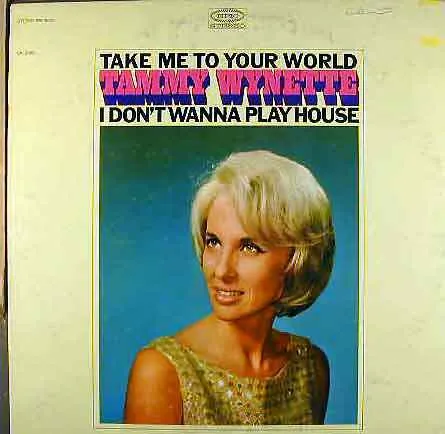
Take Me to Your World / I Don't Wanna Play House
Tammy Wynette · 1968
29 min · 11 tracks · country music
Nashville strings frame domestic heartbreak while Tammy Wynette’s tremulous delivery brings the drama close to home.
Top tracks — play these first
-
→
I Don’t Wanna Play House Start here — A child’s refusal to play at marriage reveals the damage of a household breakup. Wynette’s restrained delivery lets the story’s change in perspective carry its force.
-
→
Take Me to Your World — This country No. 1 turns a plea for escape into an intimate performance, with Wynette stretching the melody around the uncertainty of the request.
-
→
Jackson Ain’t a Very Big Town — The song sets romantic trouble against the claustrophobia of a small town, making social scrutiny part of the heartbreak.
-
→
Ode to Billie Joe — Wynette’s reading of Bobbie Gentry’s narrative brings a cool, conversational Southern tragedy into an album otherwise centered on romantic and domestic conflict.
Elevation
Our rating, out of 100 — and why.
AI-generated from five scored dimensions. An opinion, not a measurement.
Wynette's storytelling and emotional delivery are strong, but the production feels conventional for its time.
What we noticed
- The album opens with the hit 'I Don’t Wanna Play House,' which features a prominent string arrangement that sets a dramatic tone.
- Several tracks, like 'Jackson Ain’t a Very Big Town' and 'Take Me to Your World,' incorporate traditional country instrumentation, including steel guitar and piano.
- Composition 25% of the score
-
7/10
- Craft 20% of the score
-
6/10
- Durability 25% of the score
-
5/10
- Distinctiveness 18% of the score
-
7/10
- Sequencing 12% of the score
-
6/10
the writing — melody, harmony, structure, lyrics
production, performance, arrangement
whether it rewards returning to it
whether it sounds like itself
running order, pacing, length
Known within its scene. Reported but not counted — how far a record travelled describes its reception rather than the record, and a newer release has had less time to travel than an older one.
Is this for you?
Good fit if you like
- short, impactful listening sessions
- emotional storytelling focus
- contemplative late-night vibes
- introspective personal reflections
Where this album fits
- In the catalog
- Breakthrough — This album solidified Wynette's reputation after her earlier success with 'Stand By Your Man.'
- Themes
- children amid marital discord· 1960s country domestic life· Mississippi River murder ballad
- Career context
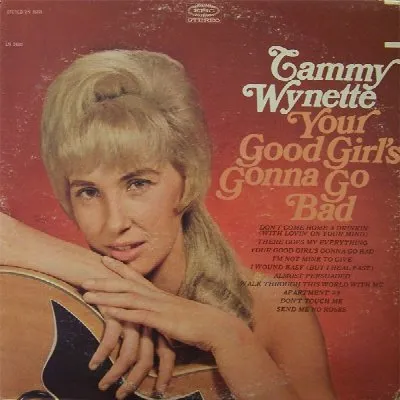
- Released in January 1968, this was Wynette’s second studio album, following her 1967 debut Your Good Girl’s Gonna Go Bad. It arrived as she was establishing herself on country radio, with both songs named in its title reaching No. 1 on Billboard’s country singles chart.
- Stylistic neighbors
- Loretta Lynn· Patsy Cline· Dolly Parton
Tracklist
- 1 I Don’t Wanna Play House Start here 3:25
- 2 Jackson Ain’t a Very Big Town 2:35
- 3 Broadminded 2:12
- 4 Cry 2:44
- 5 The Phone Call 1:55
- 6 It’s My Way 2:20
- 7 Take Me to Your World 2:45
- 8 (Or) Is It Love 2:28
- 9 Fuzzy Wuzzy Ego 2:16
- 10 Good 2:21
- 11 Ode to Billie Joe 4:14
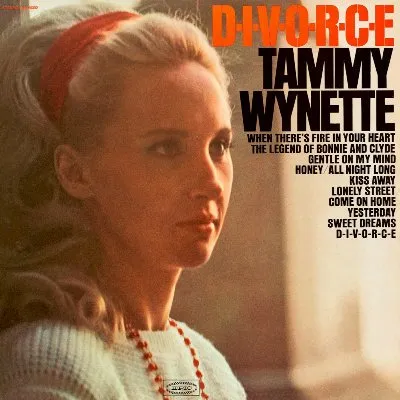
If this landed
Records by other artists that run on the same instinct.
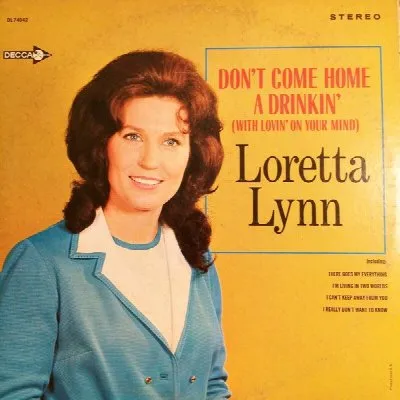
Don't Come Home A-Drinkin' (With Lovin' on Your Mind)
Loretta Lynn
Shares direct stories of marital strain and domestic life in a spare, traditional Nashville country setting.
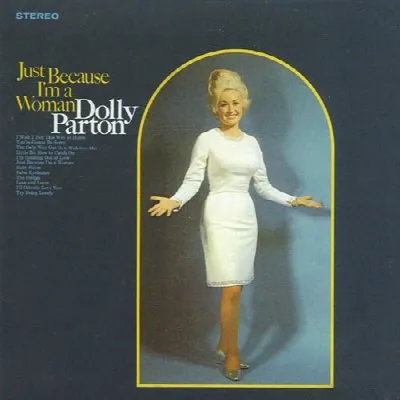
Just Because I'm a Woman
Dolly Parton
Pairs intimate accounts of women's lives with the same late-1960s country arrangements and plainspoken storytelling.

Queen of Honky Tonk Street
Kitty Wells
Uses traditional country to tell emotionally direct stories of heartbreak and the pressures facing women.
Reference: Wikipedia · MusicBrainz · Wikidata
Sync your library
Everything you track here works immediately — no account needed. Create one when you want to sync across devices.