

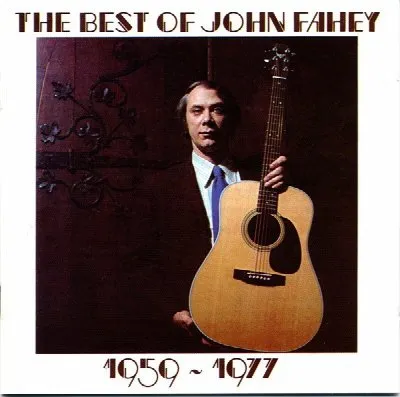
The Best of John Fahey 1959–1977
43 min · 15 tracks · blues
A masterful blend of intricate guitar work and heartfelt Americana, echoing the roots of blues and folk traditions.
Top tracks — play these first
-
→
Sunflower River Blues — Opening with haunting melodies, this track exemplifies Fahey’s signature fingerstyle technique while capturing the essence of American folk blues.
-
→
The Last Steam Engine Train — With its evocative imagery and emotional depth, this piece showcases Fahey's ability to tell stories through instrumental music, making it a standout example of his artistry.
-
→
Revolt of the Dyke Brigade — This track combines playful experimentation with social commentary, reflecting Fahey's willingness to challenge norms and expand the boundaries of traditional guitar music.
Elevation
Our rating, out of 100 — and why.
AI-generated from five scored dimensions. An opinion, not a measurement.
Fahey's intricate guitar work and unique compositions define this compilation, showcasing his influence on American primitive guitar music.
What we noticed
- Several tracks incorporate elements of traditional blues and folk, blending them with innovative arrangements that reflect his unique compositional style.
- Composition 25% of the score
-
8/10
- Craft 20% of the score
-
8/10
- Durability 25% of the score
-
7/10
- Distinctiveness 18% of the score
-
9/10
- Sequencing 12% of the score
-
5/10
the writing — melody, harmony, structure, lyrics
production, performance, arrangement
whether it rewards returning to it
whether it sounds like itself
running order, pacing, length
Significant within its genre. Reported but not counted — how far a record travelled describes its reception rather than the record, and a newer release has had less time to travel than an older one.
Is this for you?
Good fit if you like
- intimate solo guitar reflections
- warm afternoon listening sessions
- nostalgic melodies for daydreaming
- short tracks for casual enjoyment
Maybe skip if you
- seeking high-energy party tracks
- prefer lengthy immersive experiences
Where this album fits
- In the catalog
- Starting Point — A career-spanning selection offers newcomers a concise overview of Fahey's fingerstyle and compositional range.
- Career context
- Released in 1977, this compilation encapsulates John Fahey's innovative contributions to American fingerstyle guitar, showcasing his work from the pivotal years of 1959 to 1977. By this point in his career, Fahey had established himself as a leading figure in the acoustic music scene, influencing countless musicians with his distinctive style that melded traditional blues with avant-garde elements.
- Stylistic neighbors
- Leo Kottke· Bert Jansch· Nick Drake
Moments worth listening for
Where the writing does something specific.
-
In Christ There Is No East or West
The shift from a reflective tone to a more jubilant rhythm emphasizes spiritual unity across cultural divides.
This structural contrast not only enhances the song's uplifting message but also showcases Fahey's ability to intertwine deep themes with musical dynamics.
Tracklist
Best experienced from track one — press play and let it unfold.
- 1 Sunflower River Blues 3:22
- 2 Poor Boy Long Ways From Home 2:28
- 3 The Last Steam Engine Train 2:19
- 4 In Christ There Is No East or West 2:46
- 5 St. Louis Blues 3:18
- 6 Some Summer Day 3:30
- 7 Take a Look at That Baby 1:35
- 8 Spanish Two-Step 2:24
- 9 When the Springtime Comes Again 4:54
- 10 Spanish Dance 2:07
- 11 On the Sunny Side of the Ocean 3:54
- 12 I'm Going to Do All I Can for My Lord 1:26
- 13 Give Me Cornbread When I'm Hungry 3:12
- 14 Dance of the Inhabitants of the Palace of King Philip XIV of Spain 3:18
- 15 Revolt of the Dyke Brigade 3:01
What to play next
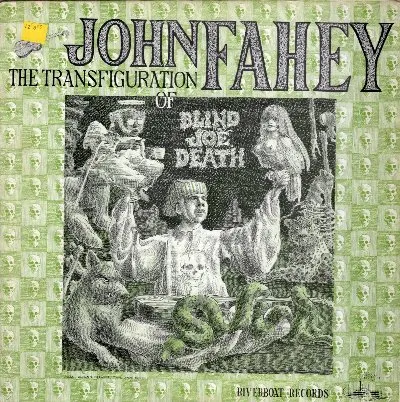
The Transfiguration of Blind Joe Death
1965
A focused early album that deepens the compilation’s blend of intricate guitar, blues roots, and shifting folk forms.
The New Possibility
Reference: Wikipedia · MusicBrainz · Wikidata
Sync your library
Everything you track here works immediately — no account needed. Create one when you want to sync across devices.