

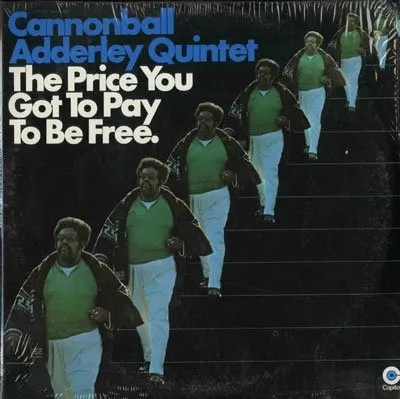
The Price You Got to Pay to Be Free
Cannonball Adderley · 1970
74 min · 20 tracks · jazz
Soul-jazz warmth meets expansive arrangements as Cannonball Adderley pushes his alto into the electric possibilities of a new decade.
Top tracks — play these first
-
→
Soul Virgo — This brief opener establishes the album’s compact, suite-like sequencing before the longer pieces take over.
-
→
Rumpelstiltskin — Following the short opener, this five-minute piece gives the album room to stretch beyond its introductory gesture.
-
→
The Price You Got to Pay to Be Free — The title piece places the language of freedom at the center of a record made as jazz musicians were responding to major social and musical change.
-
→
Painted Desert — One of the longer selections on the first disc, it offers a contrasting scale to the record’s many concise interludes.
Elevation
Our rating, out of 100 — and why.
AI-generated from five scored dimensions. An opinion, not a measurement.
The original sequence has purposeful shifts in groove and song form, while its electric jazz-funk writing remains more engaging than unusually distinctive or deep on repeat.
What we noticed
- The original ten-track sequence opens with the groove-led “Soul Virgo” and “Rumpelstiltskin,” then shifts to the Brazilian song “Pra Dizer Adeus” before the title track.
- Short, sharply titled pieces such as “Inquisition” and “Exquisition” sit beside longer song forms, interrupting the album’s funk-driven momentum rather than sustaining one extended jam.
- The catalogued tracks after “Directions” appear to be additions to the original ten-track program; judging the album’s pacing by those twenty tracks would distort its shape.
- Composition 25% of the score
-
6/10
- Craft 20% of the score
-
7/10
- Durability 25% of the score
-
6/10
- Distinctiveness 18% of the score
-
6/10
- Sequencing 12% of the score
-
7/10
the writing — melody, harmony, structure, lyrics
production, performance, arrangement
whether it rewards returning to it
whether it sounds like itself
running order, pacing, length
Known within its scene. Reported but not counted — how far a record travelled describes its reception rather than the record, and a newer release has had less time to travel than an older one.
Is this for you?
Good fit if you like
- twenty-track, stop-start sequencing
- quick jolts between longer pieces
- playful titles beside weightier themes
- two-half listening with abrupt endings
Maybe skip if you
- need seamless album-long flow
- want every track fully developed
Where this album fits
- In the catalog
- Experimental — It shifts the quintet toward more electric, funk-influenced textures than the group's earlier hard-bop sound.
- Themes
- 1970 electric-jazz transition· soul-jazz brass warmth· wide-open desert soundscapes· jazz freedom rhetoric
- Career context
- Released in 1970, the album came after Adderley’s 1966 crossover success with the quintet recording Mercy, Mercy, Mercy! By this point, the alto saxophonist was working at the intersection of jazz, soul and the newer electric sounds reshaping jazz.
- Stylistic neighbors
- John Coltrane· Wayne Shorter· Miles Davis
Tracklist
Best experienced from track one — press play and let it unfold.
Disc 1
- 1 Soul Virgo 1:46
- 2 Rumpelstiltskin 5:11
- 3 Inquisition 2:15
- 4 Devastatement 2:55
- 5 Pra Dizer Adeus (To Say Goodbye) 2:49
- 6 The Price You Got to Pay to Be Free 4:40
- 7 Some Time Ago 4:29
- 8 Exquisition 4:00
- 9 Painted Desert 6:11
- 10 Directions 1:07
Disc 2
- 1 Down in Black Bottom 5:17
- 2 1-2-3-GO-O-O-O! 4:41
- 3 Lonesome Stranger 1:55
- 4 Get Up Off Your Knees 4:59
- 5 Wild-Cat Pee 3:10
- 6 Alto Sex 1:42
- 7 Bridges 4:45
- 8 Out and In 5:40
- 9 Together 6:31
- 10 The Scene 0:30
What to play next

The Black Messiah
1972
It carries the groove-forward, socially conscious feel into a fuller early-’70s jazz-funk sound.
The Happy People
1970
Its buoyant, groove-led sound offers a natural step toward this album’s more searching feel.
If this landed
Records by other artists that run on the same instinct.
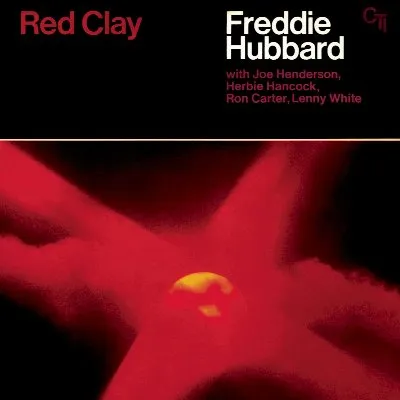
Red Clay
Freddie Hubbard
Shares 1970s electric-jazz exploration, warm brass, and soul-jazz grooves opening into longer improvisations.
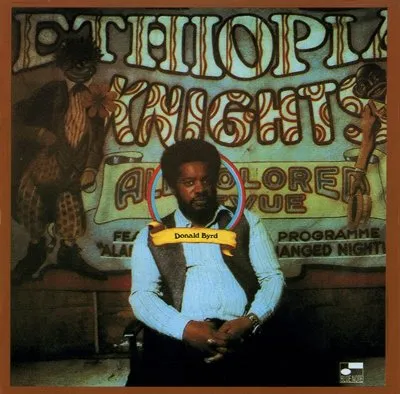
Ethiopian Knights
Donald Byrd
Pairs brass-led soul-jazz warmth with electric textures and spacious, forward-driving arrangements.
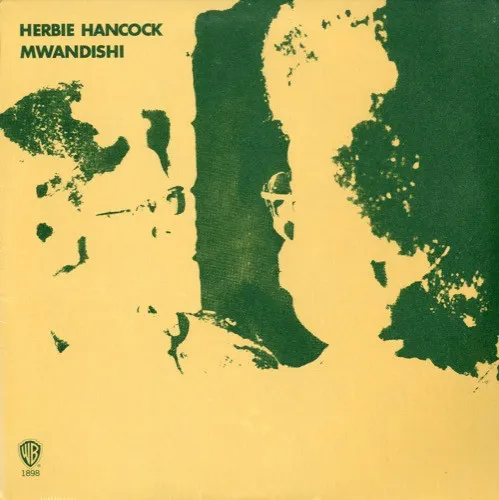
Mwandishi
Herbie Hancock
Pushes jazz into wide-open electric space, with exploratory ensemble playing and an expansive early-’70s sound.
Reference: Wikipedia · MusicBrainz · Wikidata
Sync your library
Everything you track here works immediately — no account needed. Create one when you want to sync across devices.