

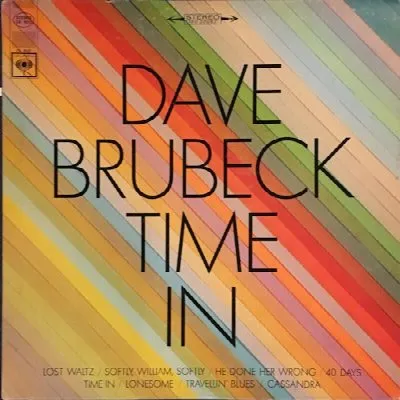
Released 60 years ago
Time In
Dave Brubeck · 1966
38 min · 8 tracks · jazz
Brubeck’s quartet turns shifting meters toward blues and waltz rhythms with Paul Desmond’s alto saxophone floating above the pulse.
Top tracks — play these first
-
→
Lost Waltz — The opening track brings a waltz feel into the quartet’s rhythmic world, setting an agile tone for the album.
-
→
Time In — The title track connects the record to Brubeck’s continuing fascination with meter while leaving room for the quartet’s conversational interplay.
-
→
Travellin' Blues — Its blues framework offers a contrast to the album’s waltz material, showing how the quartet could bring rhythmic curiosity to a familiar jazz form.
-
→
Lonesome — At over seven minutes, it gives the quartet more room to develop an idea than the album’s shorter pieces.
Elevation
Our rating, out of 100 — and why.
AI-generated from five scored dimensions. An opinion, not a measurement.
InstrumentalA well-shaped quartet set whose waltz, ballads, and blues give it pacing and variety, though its writing stays within familiar Brubeck territory.
What we noticed
- The opening track, “Lost Waltz,” puts the set in triple time; the next track slows into the ballad “Softly, William, Softly.”
- The sequence moves through blues pieces including “Travellin’ Blues” and “He Done Her Wrong,” then ends with “Lonesome” and “Cassandra.”
- The album stays with the piano, alto saxophone, bass, and drums quartet format, with no vocals.
- Composition 25% of the score
-
6/10
- Craft 20% of the score
-
7/10
- Durability 25% of the score
-
6/10
- Distinctiveness 18% of the score
-
5/10
- Sequencing 12% of the score
-
7/10
the writing — melody, harmony, structure, lyrics
production, performance, arrangement
whether it rewards returning to it
whether it sounds like itself
running order, pacing, length
Known within its scene. Reported but not counted — how far a record travelled describes its reception rather than the record, and a newer release has had less time to travel than an older one.
Is this for you?
Good fit if you like
- compact sessions with varied moods
- waltz and travel-themed detours
- a lingering seven-minute centerpiece
- brief songlike turns between longer
Maybe skip if you
- want one unbroken mood
- prefer every track equally brief
Where this album fits
- In the catalog
- Deep Cut — A mid-career quartet album extending Brubeck’s rhythmic experiments without serving as the main entry point to his ca...
- Themes
- waltz-time jazz· shifting-meter experiments· blues-rooted improvisation
- Career context
- Released in 1966, Time In returned Dave Brubeck to the rhythmic experiments associated with 1959’s Time Out. It arrived near the end of his long-running quartet with Paul Desmond, Eugene Wright and Joe Morello, which disbanded in 1967.
- Stylistic neighbors
- Paul Desmond· Gerry Mulligan· Chet Baker
Tracklist
Best experienced from track one — press play and let it unfold.
- 1 Lost Waltz 3:54
- 2 Softly, William, Softly 5:42
- 3 Time In 4:00
- 4 40 Days 4:41
- 5 Travellin' Blues 6:00
- 6 He Done Her Wrong 2:17
- 7 Lonesome 7:12
- 8 Cassandra 4:17
What to play next
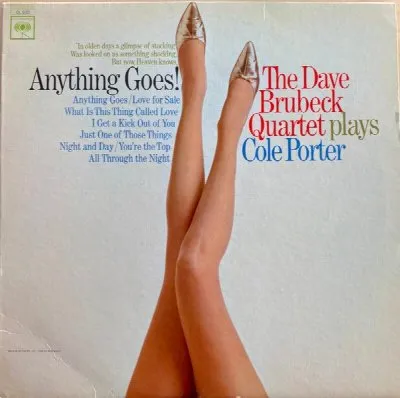
Anything Goes! The Dave Brubeck Quartet Plays Cole Porter
1967
It keeps the quartet’s nimble interplay while shifting from rhythmic exploration to familiar songs and melodic variat...
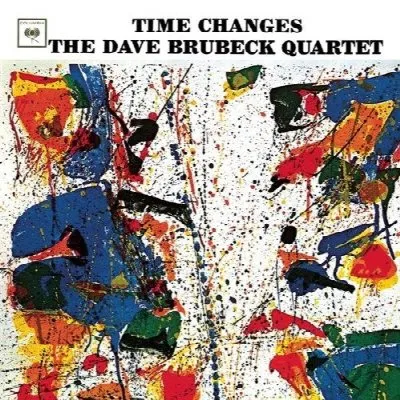
Time Changes
1964
Its experiments with meter and pulse lead naturally into the rhythmic curiosity heard on Time In.
If this landed
Records by other artists that run on the same instinct.
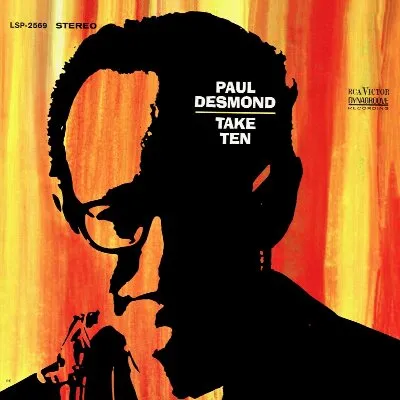
Take Ten
Paul Desmond
Desmond's airy alto and relaxed phrasing float over Dave Brubeck Quartet rhythms, including the title track's 5/4 pulse.

Electric Bath
Don Ellis
Shares the adventurous odd-meter focus, but channels it through electric textures and a larger ensemble.
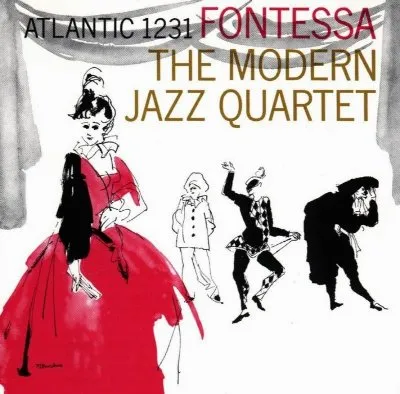
Fontessa
Modern Jazz Quartet
Pairs cool, poised improvisation with blues roots and chamber-like arrangements.
Reference: Wikipedia · MusicBrainz · Wikidata
Sync your library
Everything you track here works immediately — no account needed. Create one when you want to sync across devices.