

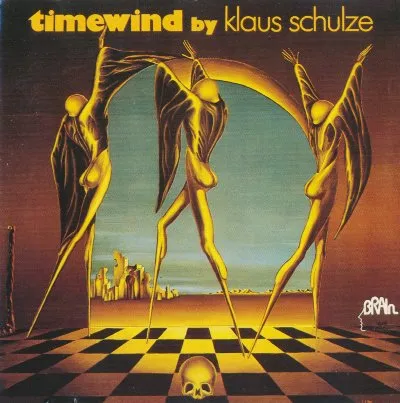
Timewind
Klaus Schulze · 1975
58 min · 2 tracks · minimalist music
A mesmerizing blend of cosmic synths and hypnotic rhythms that invites listeners into a transcendent sonic journey.
Top tracks — play these first
-
→
Bayreuth Return — This track showcases Schulze's mastery of extended compositions, offering a deep exploration of sound textures that evolve over its lengthy runtime. Its rich layers and dynamic shifts exemplify the essence of the album’s minimalist approach.
-
→
Wahnfried 1883 — As the closing piece, this track encapsulates the thematic and sonic essence of Timewind, blending serene melodies with complex rhythmic structures that create an immersive listening experience. Its gradual build-up invites listeners to reflect on the entire journey through the album.
Elevation
Our rating, out of 100 — and why.
AI-generated from five scored dimensions. An opinion, not a measurement.
InstrumentalThe album's immersive soundscapes and innovative use of synthesizers mark it as a significant work in electronic music.
What we noticed
- The album consists of two extended tracks, each over 20 minutes long, allowing for deep exploration of sound textures.
- Synthesizers create layered, evolving soundscapes that gradually shift in tone and intensity throughout each piece.
- There are minimal rhythmic elements, with a focus on sustained notes and ambient sounds that create a meditative atmosphere.
- Composition 25% of the score
-
8/10
- Craft 20% of the score
-
9/10
- Durability 25% of the score
-
8/10
- Distinctiveness 18% of the score
-
9/10
- Sequencing 12% of the score
-
7/10
the writing — melody, harmony, structure, lyrics
production, performance, arrangement
whether it rewards returning to it
whether it sounds like itself
running order, pacing, length
Significant within its genre. Reported but not counted — how far a record travelled describes its reception rather than the record, and a newer release has had less time to travel than an older one.
Where this album fits
- In the catalog
- Breakthrough — Established Schulze's reputation in electronic music with innovative soundscapes.
- Themes
- Bayreuth soundscapes· meditative immersion· synthesizer evolution
- Career context
- Released in August 1975, Timewind is Klaus Schulze's fourth studio album, following his earlier works like Irrlicht and Cyborg. At this point, Schulze was establishing himself as a prominent figure in the electronic music scene, particularly within the Berlin School movement.
- Stylistic neighbors
- Tangerine Dream· Jean-Michel Jarre· Vangelis
Tracklist
Best experienced from track one — press play and let it unfold.
- 1 Bayreuth Return 30:21
- 2 Wahnfried 1883 28:29

If this landed
Records by other artists that run on the same instinct.

Phaedra
Tangerine Dream
Shares immersive ambient textures and sequencer-driven soundscapes characteristic of the 70s electronic scene.

Ambient 1: Music for Airports
Brian Eno
Explores ethereal sound layers and minimalism, creating tranquil atmospheres for introspection.

Join Inn
Ash Ra Tempel
Combines extended improvisation with a blend of cosmic sounds, reflecting a similar exploratory spirit.
Reference: Wikipedia · MusicBrainz · Wikidata
Sync your library
Everything you track here works immediately — no account needed. Create one when you want to sync across devices.