

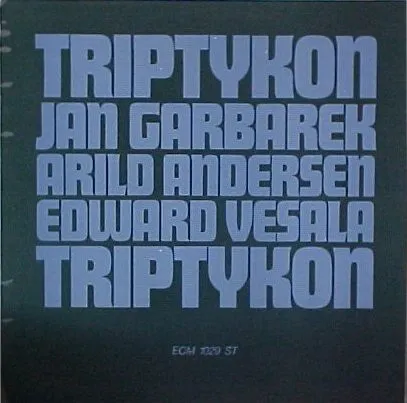
Triptykon
1973 42 min 7 tracks jazz
Elevation 82 /100 SummitFree improvisation opens onto spare Nordic folk melodies as flute and percussion interrupt the trio’s restless momentum.
Is this for you?
Good fit if you like
- meditative soundscapes for relaxation
- dynamic ebb and flow experience
- saxophone-led atmospheric immersion
- brief interludes for reflection
Maybe skip if you
- prefer fast-paced, energetic music
- seek standalone hit singles
Recommended tracks
Top tracks — play these first
-
Rim Start here — The extended opener gives the trio room to move between forceful collective improvisation and exposed instrumental exchanges.
-
Selje — A brief flute piece brings folk-derived melody into sharp focus, offering an intimate contrast to the longer improvisations.
-
Triptykon — The long title track makes the trio’s open-ended interplay central, letting Andersen and Vesala shape the music rather than simply accompany Garbarek.
-
Bruremarsj — The closing bridal march brings a Norwegian folk form into the album’s jazz setting, making its connection to traditional melody especially audible.
Elevation
Our rating, out of 100 — and why.
AI-generated from five scored dimensions. An opinion, not a measurement. How Elevation works
InstrumentalTriptykon showcases innovative compositions and atmospheric soundscapes, marking a significant evolution in Garbarek's style.
What we noticed
- The album features long, flowing tracks that often exceed six minutes, allowing for extended improvisation and exploration of themes.
- Each piece is built around a central melodic motif played on the saxophone, which is layered with ambient textures and subtle percussion.
- The soundscapes shift gradually, creating a sense of movement that mirrors the natural landscapes they evoke.
- Composition 25% of the score
-
8/10
- Craft 20% of the score
-
7/10
- Durability 25% of the score
-
8/10
- Distinctiveness 18% of the score
-
8/10
- Sequencing 12% of the score
-
6/10
the writing — melody, harmony, structure, lyrics
production, performance, arrangement
whether it rewards returning to it
whether it sounds like itself
running order, pacing, length
Weighted as shown, these five average 75.6 out of 100. Elevation spreads averages across a wider scale, which places this one at 82; the spreading never changes which of two albums scores higher.
Significant within its genre. Reported but not counted — how far a record travelled describes its reception rather than the record, and a newer release has had less time to travel than an older one.
Tracklist
- 1 Rim Start here 10:39
- 2 Selje (recommended) 2:22
- 3 J.E.V. 7:31
- 4 Sang 2:51
- 5 Triptykon (recommended) 12:47
- 6 Etu Hei! 2:22
- 7 Bruremarsj (recommended) 4:12
Where this album fits
- In the catalog
- Experimental — Marks a shift to avant-garde and atmospheric compositions in Garbarek's career.
- Themes
- Nordic landscapes· ethereal saxophone· avant-garde jazz
- Career context
- Released in 1973, Triptykon followed Jan Garbarek’s early ECM albums Afric Pepperbird and Sart. It brought him together with bassist Arild Andersen and Finnish drummer Edward Vesala in a trio setting that left room for folk-derived material alongside free improvisation.
- Stylistic neighbors
- John Surman· Trygve Seim· Andy Sheppard
Keep listening
What to play next

Witchi-Tai-To
1974
Continues the ethereal soundscapes with a deeper exploration of jazz influences.
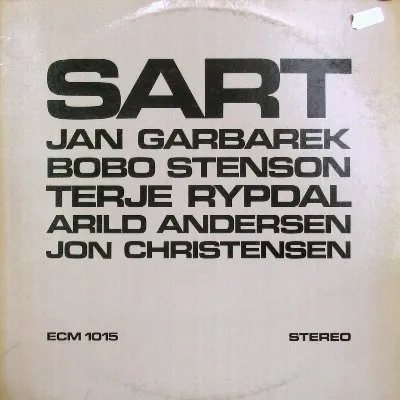
Sart
1971
Sets a foundation of experimental sounds that lead into the meditative style of Triptykon.
Own the record
Some of these are affiliate links: a purchase may earn Northsound a small commission, at no cost to you. It never decides what we recommend or how we score.
Sources
The Weekly Dispatch
One record worth your time, every week — picked the way this page is.
One short email. Free, unsubscribe anytime. Read this week's.
Sync your library
Everything you track here works immediately — no account needed. Create one when you want to sync across devices.