

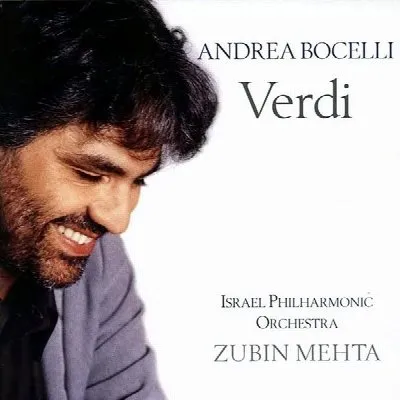
Verdi
Andrea Bocelli · 2000
60 min · 15 tracks · opera
Verdi’s operatic scenes unfold through ardent solo singing and orchestral surges that move from private longing to public defiance.
Top tracks — play these first
-
→
Il trovatore, Atto III: Di quella pira Start here — Manrico’s call to arms brings the album’s most urgent dramatic mode into focus, with a vocal line propelled by the threat to his mother.
-
→
Rigoletto, Atto III: A La donna è mobile — The Duke’s breezy tune offers a sharp contrast to the surrounding tragedy; its easy charm is part of Verdi’s portrait of a dangerously careless character.
-
→
Aida, Atto I: Celeste Aida — Radamès moves from dreams of military glory to a tender address to Aida, requiring the voice to balance ceremonial ambition with intimacy.
-
→
Luisa Miller, Atto II: Quando le sere al placido — Rodolfo recalls evenings with Luisa before his memories turn bitter, giving Bocelli room to shape a long line around an abrupt change in feeling.
Elevation
Our rating, out of 100 — and why.
AI-generated from five scored dimensions. An opinion, not a measurement.
Bocelli's 'Verdi' effectively showcases operatic arias with strong vocal performances and orchestration, appealing to both classical and crossover audiences.
What we noticed
- Each track is arranged for orchestral accompaniment, with dynamic shifts in intensity that mirror the dramatic narratives of the arias.
- The first half of the album maintains a consistent tempo and intensity, while the latter half introduces more varied pacing and emotional weight.
- Composition 25% of the score
-
8/10
- Craft 20% of the score
-
9/10
- Durability 25% of the score
-
7/10
- Distinctiveness 18% of the score
-
8/10
- Sequencing 12% of the score
-
6/10
the writing — melody, harmony, structure, lyrics
production, performance, arrangement
whether it rewards returning to it
whether it sounds like itself
running order, pacing, length
Significant within its genre. Reported but not counted — how far a record travelled describes its reception rather than the record, and a newer release has had less time to travel than an older one.
Is this for you?
Good fit if you like
- sweeping emotional climaxes unfold
- rich tenor against lush orchestration
- immersive journey through operatic themes
- patient build to powerful moments
Maybe skip if you
- prefer immediate gratification tracks
- dislike lengthy operatic performances
Where this album fits
- In the catalog
- Breakthrough — This album solidified Bocelli's reputation as a crossover artist after his earlier successes.
- Themes
- operatic grandeur· Verdi's emotional landscapes· dramatic arias
- Career context
- Released in 2000, Verdi followed Andrea Bocelli’s international crossover success with Romanza and Sogno. It brought him back to the operatic repertoire he had recorded on his 1999 album Sacred Arias, this time concentrating on scenes from a single composer.
- Stylistic neighbors
- Luciano Pavarotti· José Carreras· Alessandro Safina
Tracklist
- 1 Il trovatore, Atto III: Di quella pira Start here 3:16
- 2 Il trovatore, Atto III: Ah sì, ben mio 3:18
- 3 Rigoletto, Atto III: A La donna è mobile 2:11
- 4 Un ballo in maschera, Atto I: Di’ tu se fedele 3:05
- 5 Un ballo in maschera, Atto III: Ma se m’è forza perderti 2:34
- 6 Rigoletto, Atto II: Ella mi fu rapita! 4:37
- 7 Rigoletto, Atto II: Possente amor mi chiama 2:58
- 8 Aida, Atto I: Celeste Aida 4:09
- 9 La traviata, Atto II: De’ miei bollenti spiriti 3:40
- 10 La traviata, Atto II: Oh mio rimorso! 2:54
- 11 I lombardi, Atto II: La mia letizia infondere vorrei 2:07
- 12 Ernani, Parte I: Mercé, diletti amici 6:58
- 13 Don Carlo, Atto I: Io la vidi e il suo sorriso 3:50
- 14 Luisa Miller, Atto II: Quando le sere al placido 5:12
- 15 La forza del destino, Atto III: La vita è inferno all’infelice 9:50
If this landed
Records by other artists that run on the same instinct.
Reference: Wikipedia · MusicBrainz · Wikidata
Sync your library
Everything you track here works immediately — no account needed. Create one when you want to sync across devices.