


Photo: unknown Photograf · Public domain

The Northsound field guide
Where to start with Anton Arensky
Arensky’s catalog can be hard to approach when you’re unsure which form to try first. This guide starts with The Piano Trios, where intimate chamber textures make his flowing melodies and harmonic tension easy to follow, then points you toward orchestral works.
01 · Your first stop
Start here.
New to Anton Arensky? You don’t need to hear everything. Start with this.
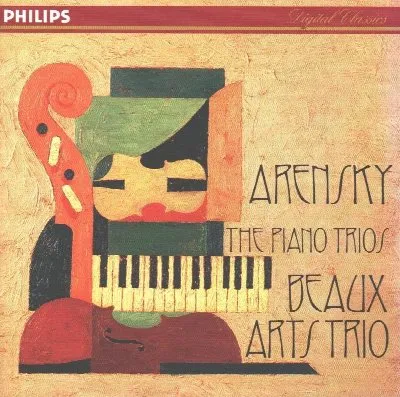
Your first album
The Piano Trios
1995 ·Best starting point
This chamber-music set is a welcoming route into Arensky’s melodic writing and his balance of lyrical flow with richer harmonic tension. The piano-trio format keeps the textures intimate and easy to follow, while the album’s focus gives a first-time listener a coherent view of his instrumental style before branching into orchestral works.
Only have a few minutes?
“Piano Trio No. 1 in D minor, Op. 32”
Its flowing, expressive chamber writing makes this trio an inviting standalone introduction to Arensky’s melodic voice and shifting harmonic tension.
02 · The trail ahead
The records, in order
Every Anton Arensky studio album, from the first. Once the first stop lands, keep going in either direction.
-
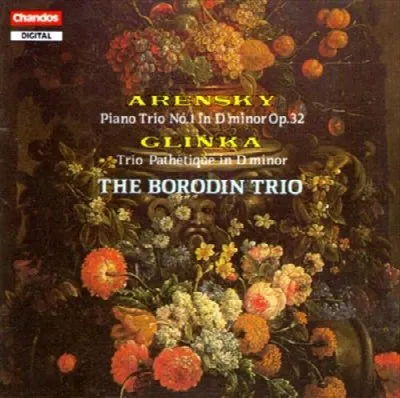
Arensky: Piano Trio no. 1 in D minor, op. 32 / Glinka: Trio Pathétique in D minor 1987 Not yet reviewed
-
A Russian Concert 1987 Not yet reviewed

-
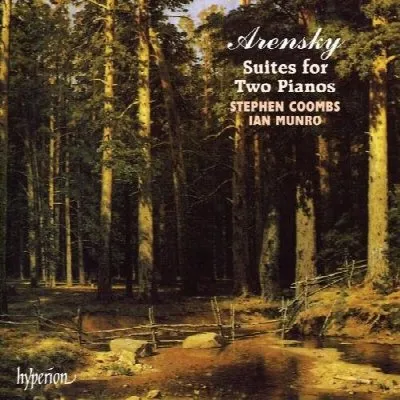
Suites for Two Pianos 1994 Not yet reviewed
-
Arensky: Klaviertrio d-Moll / Smetana: Klaviertrio g-Moll 1994 Not yet reviewed
-
The Piano Trios 1995 Your first stop Not yet reviewed
-
Piano Music 1998 Not yet reviewed

-
Three Suites 2003 Not yet reviewed

-
Symphony no. 1 2003 Not yet reviewed

-
Symphony no. 2 / A Dream of the Volga / Suite no. 3 “Variations” / Nal and Damayanti / Intermezzo 2003 Not yet reviewed

-
The Romantic Violin Concerto, Volume 7: Arensky: Violin Concerto in A minor, op. 54 / Taneyev: Suite de concert, op. 28 2009 Not yet reviewed

03 · Beyond this guide
Where to go next
-
Pyotr Ilyich Tchaikovsky Start here for flowing Romantic melodies, rich harmonic turns, and the Russian orchestral and chamber style that strongly influenced Arensky. Start with The Nutcracker Suite (1990)

-
Alexander Glazunov His polished orchestral writing pairs lyrical themes with intricate counterpoint and harmony in a closely related late-Romantic Russian idiom. Start with The Seasons (1993)

-
Sergei Rachmaninoff His piano and orchestral works offer expansive melodies, lush harmonies, and the same emotionally charged Russian Romantic language. Start with Piano Concerto no. 2 / Rhapsody on a Theme of Paganini (1985)

04 · Keep exploring
The Weekly Dispatch
Every Tuesday, a few more places to start listening.
One short email. Free, unsubscribe anytime. Read this week's.
Common questions
Where should I start with Anton Arensky?
Start with The Piano Trios (1995). This chamber-music set is a welcoming route into Arensky’s melodic writing and his balance of lyrical flow with richer harmonic tension. The piano-trio format keeps the textures intimate and easy to follow, while the album’s focus gives a first-time listener a coherent view of his instrumental style before branching into orchestral works.
What does Anton Arensky sound like?
Arensky’s compositions are characterized by flowing melodies underpinned by intricate harmonic structures that create both tension and resolution throughout the listening experience. Rooted in opera.
In what order should I listen to Anton Arensky's albums?
In release order: "Arensky: Piano Trio no. 1 in D minor, op. 32 / Glinka: Trio Pathétique in D minor" (1987), "A Russian Concert" (1987), "Suites for Two Pianos" (1994), "Arensky: Klaviertrio d-Moll / Smetana: Klaviertrio g-Moll" (1994), "The Piano Trios" (1995), "Piano Music" (1998), "Three Suites" (2003), "Symphony no. 1" (2003), "Symphony no. 2 / A Dream of the Volga / Suite no. 3 “Variations” / Nal and Damayanti / Intermezzo" (2003) and "The Romantic Violin Concerto, Volume 7: Arensky: Violin Concerto in A minor, op. 54 / Taneyev: Suite de concert, op. 28" (2009). New listeners can start with "The Piano Trios" and work outward in either direction.
Which artists should I listen to after Anton Arensky?
Try Pyotr Ilyich Tchaikovsky (start with "The Nutcracker Suite"), Alexander Glazunov (start with "The Seasons") and Sergei Rachmaninoff (start with "Piano Concerto no. 2 / Rhapsody on a Theme of Paganini").