


Photo: Hugh Howard (1675-1737) · Public domain

The Northsound field guide
Where to start with Arcangelo Corelli
Begin with expressive violin sonatas, then hear Corelli’s music open out into orchestral dialogue.
Corelli’s music makes Baroque form easy to follow: violin melodies move clearly over a steady bass, with contrasting sections that build and release tension. Start with the intimate violin sonatas, then move to the concerti grossi to hear those lines shared across a larger ensemble.
- What they sound like
- Expect poised Baroque music built around flowing violin lines, intricate harmony, and a clearly articulated bass. The mood can shift from graceful and measured to animated, especially as sections trade tension and release.
- You'll like this if
- You’ll connect with Corelli if you enjoy instrumental music whose structure is easy to hear and whose drama comes from melody, rhythm, and small shifts in ensemble texture.
01 · Your first stop
Start here.
New to Arcangelo Corelli? You don’t need to hear everything. Start with this.

Your first album
Violin Sonatas, op. 5
1990 ·Strong starting point
This collection of Op. 5 violin sonatas foregrounds the interplay between violin and continuo, making Corelli’s melodic writing and harmonic support easy to follow. Its smaller forces are a more direct first listen than the concerti grossi, and point naturally toward those ensemble works.
Only have a few minutes?
“Sonata in D minor, Op. 5 No. 12 (La Folia)”
Its variations on a recurring bass pattern let you hear how Corelli builds momentum through changes in melody, rhythm, and texture.
Not the album for you? Try one of these instead.
-
‘La Folia’ and other sonatas (1987) Choose this collection if you want to begin with the familiar variation-driven drama of “La Folia” alongside other sonatas.

-
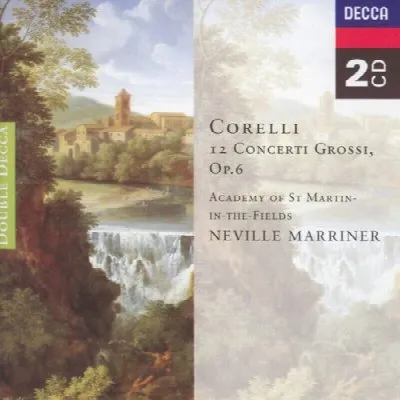
12 Concerti Grossi, op. 6 (1995) Start here if you prefer a larger ensemble sound, with the concerti grossi bringing soloists and accompanying strings into dialogue.
-
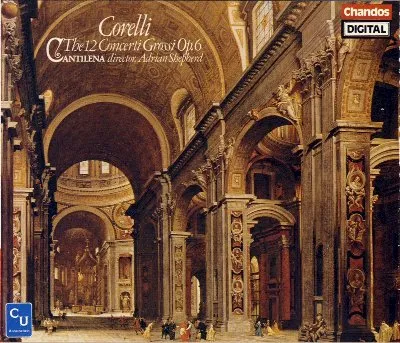
The 12 Concerti Grossi, op. 6 (2003) This complete Op. 6 set suits listeners ready to hear the full range of Corelli’s concerti grossi from the outset.
02 · The trail ahead
The records, in order
Every Arcangelo Corelli studio album, from the first. Once the first stop lands, keep going in either direction.
-
‘La Folia’ and other sonatas 1987 Not yet reviewed
-
Concerti Grossi Op. 6 7-12 1990 Not yet reviewed

-
Violin Sonatas, op. 5 1990 Your first stop Not yet reviewed
-
Complete Concerti Grossi, op. 6 1990 Not yet reviewed

-
6 Concerti grossi, op. 6 1991 Not yet reviewed

-
Sonatas for Strings, Volume 3 (from opp. 3 & 4) 1992 Not yet reviewed

-
12 Concerti Grossi, op. 6 1995 Not yet reviewed
-
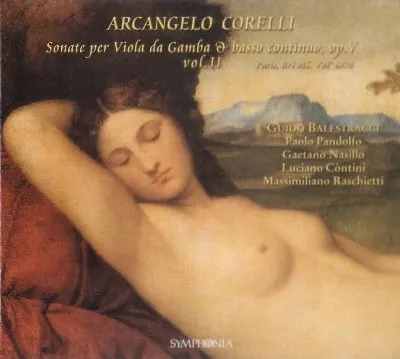
Sonate per Viola da Gamba & basso continuo, op. V 1999 Not yet reviewed
-
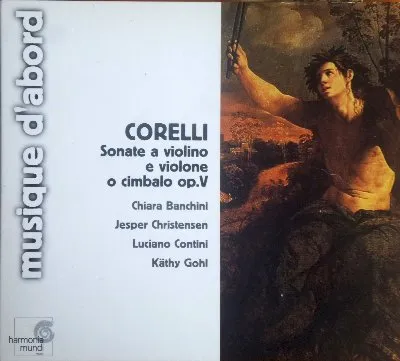
Sonate Op. 5 (Banchini, Christensen, Contini, Gohl) 2000 Not yet reviewed
-
The 12 Concerti Grossi, op. 6 2003 Not yet reviewed
03 · Beyond this guide
Where to go next
-
Antonio Vivaldi If you enjoy Corelli’s interweaving strings and rhythmic drive, Vivaldi brings those elements into brighter, more sharply contrasted concertos. Start with The Four Seasons / La tempesta di mare / Il piacere (2006)

-
Tomaso Albinoni His measured string writing and clear, lyrical melodies make a natural match for Corelli’s graceful movement and composed harmonic flow. Start with 12 Concertos, op. 10 (1981)

-
George Frideric Handel His instrumental sonatas and concerti grossi share Corelli’s stately string textures, balanced counterpoint, and satisfying tension-and-release. Start with Water Music (complete) (1963)

04 · Keep exploring
The Weekly Dispatch
Every Tuesday, a few more places to start listening.
One short email. Free, unsubscribe anytime. Read this week's.
Common questions
Where should I start with Arcangelo Corelli?
Start with Violin Sonatas, op. 5 (1990). This collection of Op. 5 violin sonatas foregrounds the interplay between violin and continuo, making Corelli’s melodic writing and harmonic support easy to follow. Its smaller forces are a more direct first listen than the concerti grossi, and point naturally toward those ensemble works.
What does Arcangelo Corelli sound like?
Expect poised Baroque music built around flowing violin lines, intricate harmony, and a clearly articulated bass. The mood can shift from graceful and measured to animated, especially as sections trade tension and release. Rooted in classical and Baroque music.
In what order should I listen to Arcangelo Corelli's albums?
In release order: "‘La Folia’ and other sonatas" (1987), "Concerti Grossi Op. 6 7-12" (1990), "Violin Sonatas, op. 5" (1990), "Complete Concerti Grossi, op. 6" (1990), "6 Concerti grossi, op. 6" (1991), "Sonatas for Strings, Volume 3 (from opp. 3 & 4)" (1992), "12 Concerti Grossi, op. 6" (1995), "Sonate per Viola da Gamba & basso continuo, op. V" (1999), "Sonate Op. 5 (Banchini, Christensen, Contini, Gohl)" (2000) and "The 12 Concerti Grossi, op. 6" (2003). New listeners can start with "Violin Sonatas, op. 5" and work outward in either direction.
Which artists should I listen to after Arcangelo Corelli?
Try Antonio Vivaldi (start with "The Four Seasons / La tempesta di mare / Il piacere"), Tomaso Albinoni (start with "12 Concertos, op. 10") and George Frideric Handel (start with "Water Music (complete)").