


Photo: anonymous · Public domain

The Northsound field guide
Where to start with Tomaso Albinoni
Begin with a set of twelve concertos to hear Albinoni’s instrumental writing in breadth.
Start with Albinoni’s concertos, where clear melodic lines meet the changing colors of solo instruments and strings. If that balance of poised ensemble writing and expressive solo passages appeals to you, his other concerto collections offer a natural next step.
- What they sound like
- Albinoni’s music pairs singing Baroque melodies with strings and solo instruments in clear, measured exchanges. Expect formal movements and instrumental interplay rather than the large-scale symphonic sound the genre name may suggest.
- You'll like this if
- You’ll connect with Albinoni if you enjoy melodic Baroque music, especially the contrast between a solo instrument and a string ensemble. His concertos suit focused listening without requiring familiarity with the period.
01 · Your first stop
Start here.
New to Tomaso Albinoni? You don’t need to hear everything. Start with this.

Your first album
12 Concertos, op. 10
1981 ·Strong starting point
This collection presents twelve concertos rather than centering the listening experience on the familiar Adagio. Its scope makes it a useful first stop for hearing Albinoni’s exchanges between soloists and ensemble and deciding which part of his instrumental music to follow next.
Only have a few minutes?
“Concerto No. 1 in B-flat major, Op. 10”
Beginning with the first concerto gives you a direct introduction to the collection’s soloist-and-ensemble format before you sample its other works.
Not the album for you? Try one of these instead.
-
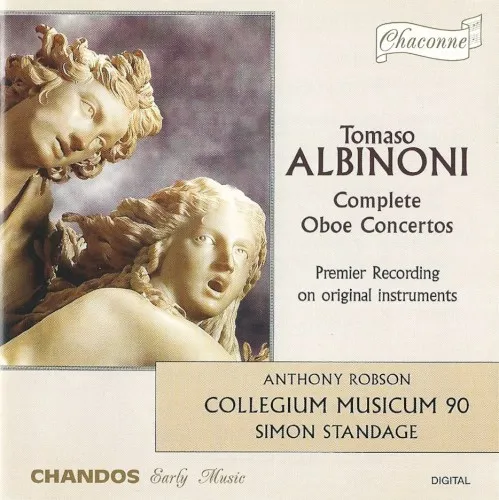
Complete Oboe Concertos (1995) Choose this complete oboe-concerto collection if you want the solo wind instrument’s bright, singing tone to lead your first listen.
-
12 Concertos, op. 9 (1999) Start with the Op. 9 concertos if you would rather compare another substantial concerto collection before exploring Albinoni’s other instrumental forms.

-
Sinfonie, op. 2 (2009) Try this collection of Op. 2 sinfonias if you want to begin with ensemble writing rather than a concerto’s featured soloist.

02 · The trail ahead
The records, in order
Every Tomaso Albinoni studio album, from the first. Once the first stop lands, keep going in either direction.
-
Adagio 1976 Not yet reviewed

-
Adagio / Sonata / 3 Conciertos 1979 Not yet reviewed

-
12 Concertos, op. 10 1981 Your first stop Not yet reviewed
-
12 Concerti, op. 7 / 2 Sonatas, op. 2 1992 Not yet reviewed

-
Oboe Concerti, Volume 1 1993 Not yet reviewed

-
Complete Oboe Concertos 1995 Not yet reviewed
-
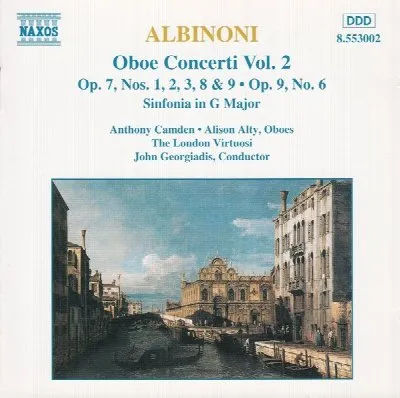
Oboe Concerti, Volume 2 1995 Not yet reviewed
-
12 Concertos, op. 9 1999 Not yet reviewed
-
12 Concerti à cinque, op. 5 2000 Not yet reviewed

-
Oboe Concertos (complete, op. 7 & 9) 2006 Not yet reviewed

03 · Beyond this guide
Where to go next
-
Antonio Vivaldi For vivid Italian Baroque concertos, sweeping violin lines, and richly shaped orchestral contrasts that share Albinoni’s melodic immediacy. Start with The Four Seasons / La tempesta di mare / Il piacere (2006)

-
Arcangelo Corelli Explore his poised concerto grossos and clear, singing string melodies for a closely related Italian Baroque sound. Start with Violin Sonatas, op. 5 (1990)

-
Johann Sebastian Bach His orchestral concertos share the period’s string-led sound, though their denser counterpoint gives the music a more intricate feel. Start with Die Kunst der Fuge BWV 1080 (2001)

04 · Keep exploring
The Weekly Dispatch
Every Tuesday, a few more places to start listening.
One short email. Free, unsubscribe anytime. Read this week's.
Common questions
Where should I start with Tomaso Albinoni?
Start with 12 Concertos, op. 10 (1981). This collection presents twelve concertos rather than centering the listening experience on the familiar Adagio. Its scope makes it a useful first stop for hearing Albinoni’s exchanges between soloists and ensemble and deciding which part of his instrumental music to follow next.
What does Tomaso Albinoni sound like?
Albinoni’s music pairs singing Baroque melodies with strings and solo instruments in clear, measured exchanges. Expect formal movements and instrumental interplay rather than the large-scale symphonic sound the genre name may suggest. Rooted in opera and symphony.
In what order should I listen to Tomaso Albinoni's albums?
In release order: "Adagio" (1976), "Adagio / Sonata / 3 Conciertos" (1979), "12 Concertos, op. 10" (1981), "12 Concerti, op. 7 / 2 Sonatas, op. 2" (1992), "Oboe Concerti, Volume 1" (1993), "Complete Oboe Concertos" (1995), "Oboe Concerti, Volume 2" (1995), "12 Concertos, op. 9" (1999), "12 Concerti à cinque, op. 5" (2000) and "Oboe Concertos (complete, op. 7 & 9)" (2006). New listeners can start with "12 Concertos, op. 10" and work outward in either direction.
Which artists should I listen to after Tomaso Albinoni?
Try Antonio Vivaldi (start with "The Four Seasons / La tempesta di mare / Il piacere"), Arcangelo Corelli (start with "Violin Sonatas, op. 5") and Johann Sebastian Bach (start with "Die Kunst der Fuge BWV 1080").