


Photo: Agence de presse Meurisse · Public domain

The Northsound field guide
Where to start with Camille Saint-Saëns
Clear melodies, nimble orchestral writing, and a striking sense of scale.
Saint-Saëns can move from playful musical portraits to a symphony that fills the room with organ and orchestra. Start with an album pairing the two sides, then follow the sound toward his concertos and opera.
- What they sound like
- Expect clearly shaped melodies, agile rhythms, and orchestral writing that can shift from light, characterful miniatures to bold, full-scale climaxes. The sound is Romantic, but often direct and easy to follow.
- You'll like this if
- You’ll connect with Saint-Saëns if you like orchestral music with memorable themes and vivid changes of mood. His mix of playful character pieces and grand symphonic writing offers several ways in.
01 · Your first stop
Start here.
New to Camille Saint-Saëns? You don’t need to hear everything. Start with this.

Your first album
Symphony No. 3 "Organ Symphony" / Carnival of the Animals
1992 ·Best starting point
The album combines Carnival of the Animals, a sequence of brief, contrasting musical portraits, with the expansive Organ Symphony. That contrast makes it a useful starting point: you can sample Saint-Saëns’s lighter touch before hearing his orchestral writing at full scale.
Only have a few minutes?
“Aquarium” from Le Carnaval des Animaux (Grande Fantaisie Zoologique) (1984)
Its shimmering, delicate textures offer a concise introduction to Saint-Saëns’s knack for making orchestral color and a clear melodic idea work together.
Not the album for you? Try one of these instead.
-
Cello Concertos nos. 1 & 2 / Suite, op. 16 / Allegro Appassionato / The Swan (1997) Start here if you want the cello in the foreground, from the concertos’ broader statements to the intimate melody of The Swan.

-
Samson et Dalila (1956) Choose this opera recording if you want to hear Saint-Saëns build drama through solo voices, chorus, and orchestra.

-
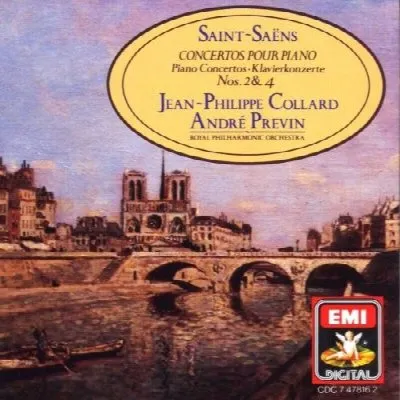
Piano Concertos No. 2 & 4 (1987) Choose the piano concertos if you prefer a soloist-and-orchestra exchange, with the piano carrying the musical argument.
02 · The trail ahead
Listening paths
Pick a route through Camille Saint-Saëns' catalog.
A concise tour from Saint-Saëns’s wit to his grand orchestral and dramatic voice.
-
1The Carnival of the Animals Start with playful orchestral color and instantly clear melodies.

-
2Cello Concertos nos. 1 & 2 / Suite, op. 16 / Allegro Appassionato / The Swan (1997) Hear his lyrical side expand into virtuosic concerto writing.
-
3Symphony no. 3 ”Organ · Orgel-Symphonie” / Danse macabre / Bacchanale / Le Déluge (1976) Move into monumental symphonic writing and vivid orchestral drama.

-
4Samson et Dalila (1987) Finish with the opera that brings his theatrical instincts to the fore.
Begin with familiar melodies, then follow them toward bigger orchestral statements.
Explore less familiar forms, unusual orchestral colors, and unexpected corners of the catalog.
-
1Préludes et Fugues (intégrale) (1972) Begin with intricate keyboard counterpoint rather than orchestral showpieces.
-
2Complete Works for Piano and Winds (1990) Hear his chamber writing in a distinctive instrumental blend.

-
3Hélène / Nuit persane (2008) Turn to rarely heard stage works for a different dramatic palette.
-
4Symphonies 3: Symphony in F major "Urbs Roma" / La Jeunesse d'Hercule / Danse macabre (2015) Close with contrasting symphonic and programmatic orchestral forms.

03 · Beyond this guide
Where to go next
-
Max Bruch Bruch’s concertos balance soloistic virtuosity with direct melodies and warmly expansive Romantic orchestral writing. Start with Concerto no. 1 / Scottish Fantasy (1997)

-
César Franck Franck shares the French symphonic tradition, building broad crescendos from lyrical themes and richly colored orchestration. Start with Symphony in D minor / Le Chasseur maudit (1995)

-
Felix Mendelssohn Mendelssohn’s nimble rhythms, melodic clarity, and sparkling orchestral textures suit listeners drawn to Saint-Saëns’s lighter touch. Start with Symphony no. 3 "Scottish / Symphony no. 4 "Italian" (1993)

04 · Keep exploring
The Weekly Dispatch
Every Tuesday, a few more places to start listening.
One short email. Free, unsubscribe anytime. Read this week's.
Common questions
Where should I start with Camille Saint-Saëns?
Start with Symphony No. 3 "Organ Symphony" / Carnival of the Animals (1992). The album combines Carnival of the Animals, a sequence of brief, contrasting musical portraits, with the expansive Organ Symphony. That contrast makes it a useful starting point: you can sample Saint-Saëns’s lighter touch before hearing his orchestral writing at full scale.
What does Camille Saint-Saëns sound like?
Expect clearly shaped melodies, agile rhythms, and orchestral writing that can shift from light, characterful miniatures to bold, full-scale climaxes. The sound is Romantic, but often direct and easy to follow. Rooted in classical and opera.
In what order should I listen to Camille Saint-Saëns' albums?
In release order: "Symphony no. 3 "Organ"" (1982), "Piano Concertos No. 2 & 4" (1987), "Symphony no. 3 “Organ” / Le Rouet d'Omphale / Bacchanale from “Samson et Delilah”" (1988), "Piano Concertos nos. 2 & 4" (1989), "Saint-Saëns: Le Carnaval des animaux / Poulenc: Concerto pour 2 pianos et orchestre" (1990), "Symphony No. 3 "Organ Symphony" / Carnival of the Animals" (1992), "Dvořák: Cello Concerto / Saint‐Saëns: Cello Concerto no. 1, op. 33" (2000), "The Romantic Piano Concerto, Volume 27: The Complete Works for Piano and Orchestra" (2001), "Complete Works for Piano" (2002) and "Symphony no. 3 op. 78 in C minor / The Carnival of the Animals" (2007). New listeners can start with "Symphony No. 3 "Organ Symphony" / Carnival of the Animals" and work outward in either direction.
Which artists should I listen to after Camille Saint-Saëns?
Try Max Bruch (start with "Concerto no. 1 / Scottish Fantasy"), César Franck (start with "Symphony in D minor / Le Chasseur maudit") and Felix Mendelssohn (start with "Symphony no. 3 "Scottish / Symphony no. 4 "Italian"").