


Photo: Adam Cuerden · Public domain

The Northsound field guide
Where to start with Claude Debussy
Claude Debussy’s catalog can feel daunting, with piano music, orchestral works, and opera to navigate. This guide gives you a clear place to begin with La Mer / Nocturnes, where orchestral color and shifting atmosphere are immediately in focus.
01 · Your first stop
Start here.
New to Claude Debussy? You don’t need to hear everything. Start with this.

Your first album
La Mer / Nocturnes
1988 ·Best starting point
Pairs the vivid orchestral colors of La Mer with the shifting atmosphere of Nocturnes for a compact introduction to Debussy’s orchestral style.
Only have a few minutes?
“Clair de lune” from Suite bergamasque (1973)
Its lyrical piano melody offers an immediate, self-contained introduction to Debussy’s fluid harmonies and delicate textures.
02 · The trail ahead
Listening paths
Pick a route through Claude Debussy's catalog.
Move from familiar piano colors to orchestral scale, opera, and Debussy’s late style.
-
1Children's Corner / Suite Bergamasque / Images (2006) Begin with approachable piano pieces that reveal his changing palette.

-
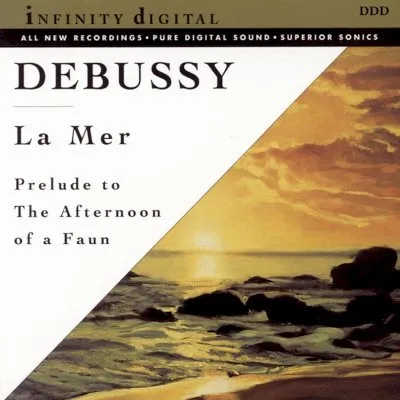
2La Mer (1994) Hear those colors expand into a vivid orchestral landscape.
-
3Pelléas et Mélisande (1998) Explore how his musical language shapes a quietly radical opera.

-
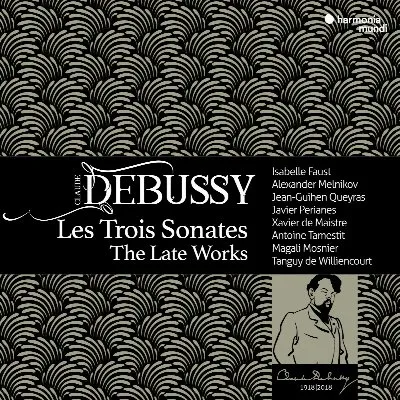
4Les Trois Sonates / The Late Works (2018) End with the spare, concentrated chamber music of his final years.
Start with familiar piano favorites, then open out to orchestral and operatic worlds.
-
1Clair de Lune and other Piano Favourites (1994) A welcoming collection of lyrical, immediately memorable piano music.

-
2Children's Corner / Suite Bergamasque / Images (2006) Broaden the piano palette with playful and atmospheric suites.
-
3La Mer / Nocturnes / Prélude à l'après-midi d'un Faune (1989) Meet his orchestral sound through three richly varied works.

-
4Pelléas et Mélisande (1998) Take the final step into his subtler, more demanding operatic world.
Follow Debussy toward ambiguity, intricate textures, and bold late forms.
-
1Estampes, 12 Etudes pour piano (1989) Start with piano writing that stretches color and technique.

-
2Jeux / Images / Musique pour “Le Roi Lear” (1990) Hear elusive orchestral textures and unconventional dramatic gestures.

-
3Les Trois Sonates / The Late Works (2018) Finish with lean chamber forms that push beyond familiar impressionism.
03 · Beyond this guide
Where to go next
-
Maurice Ravel For finely shaded orchestral colors, fluid harmonies, and piano writing that turns delicate textures into vivid sound worlds, start here. Start with Boléro / Rapsodie Espagnole / La Valse (1994)

-
Gabriel Fauré Listen for supple melodic lines and subtle, shifting harmonies that balance lyrical warmth with moments of unresolved tension. Start with Fauré: Requiem, Cantique de Jean Racine (1984)

-
Ottorino Respighi His orchestral writing favors vivid timbral layers and atmospheric scenes, especially in works that evoke light, place, and shifting moods. Start with Roman Trilogy (2007)

04 · Keep exploring
The Weekly Dispatch
Every Tuesday, a few more places to start listening.
One short email. Free, unsubscribe anytime. Read this week's.
Common questions
Where should I start with Claude Debussy?
Start with La Mer / Nocturnes (1988). Pairs the vivid orchestral colors of La Mer with the shifting atmosphere of Nocturnes for a compact introduction to Debussy’s orchestral style.
What does Claude Debussy sound like?
Debussy’s compositions weave intricate layers of harmony and texture, creating moments of suspension that breathe with both tension and release. Rooted in classical and opera.
In what order should I listen to Claude Debussy's albums?
In release order: "Suite bergamasque" (1973), "Images (1894) / Estampes / Images Series I & II" (1979), "String Quartets" (1986), "Préludes, Livres I & II" (1987), "La Mer / Nocturnes" (1988), "L’Œuvre pour piano, Vol. IV" (1992), "Le Martyre de Saint Sebastien" (1992), "Piano Works" (1994), "La Mer / Nocturnes / Jeux / Rhapsodie pour clarinette et orchestre" (1995) and "Essential Debussy: 26 of His Greatest Masterpieces" (2002). New listeners can start with "La Mer / Nocturnes" and work outward in either direction.
Which artists should I listen to after Claude Debussy?
Try Maurice Ravel (start with "Boléro / Rapsodie Espagnole / La Valse"), Gabriel Fauré (start with "Fauré: Requiem, Cantique de Jean Racine") and Ottorino Respighi (start with "Roman Trilogy").