


Photo: Unknown authorUnknown author The image holder, the Bibliothèque nationale de France has not identified a photographer. (Follow link and click on "Detailed information".) · Public domain

The Northsound field guide
Where to start with Maurice Ravel
Start with three orchestral works, then choose between ballet, opera, and piano.
Ravel’s orchestral music makes changing color part of the drama: a repeating pulse can build into a forceful climax, while a dance can turn tense and unsettled. Start with three contrasting orchestral works, then follow whichever sound catches you toward ballet, opera, or piano music.
- What they sound like
- Expect carefully layered orchestral colors, precise rhythms, and melodies that shift between delicacy and intensity. Ravel’s music often builds its effect through changing texture as much as through melody.
- You'll like this if
- You’ll connect with Ravel if you enjoy orchestral music where timbre and rhythm keep changing the mood. His piano works are also a good fit if you like detailed, technically demanding writing.
01 · Your first stop
Start here.
New to Maurice Ravel? You don’t need to hear everything. Start with this.
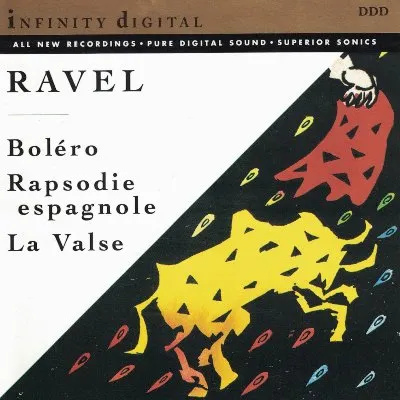
Your first album
Boléro / Rapsodie Espagnole / La Valse
1994 ·Best starting point
Boléro, Rapsodie Espagnole, and La Valse offer three clear ways into Ravel’s orchestral writing: repetition, rhythmic color, and a dance that grows increasingly unstable. The contrast makes it easier to decide which side of his music you want to explore next.
Only have a few minutes?
“Boléro” from Ravel : Boléro - Alborada - Pavane (1954)
Its repeated rhythm and gradually changing orchestral colors make Ravel’s control of texture easy to follow from the opening onward.
Not the album for you? Try one of these instead.
-
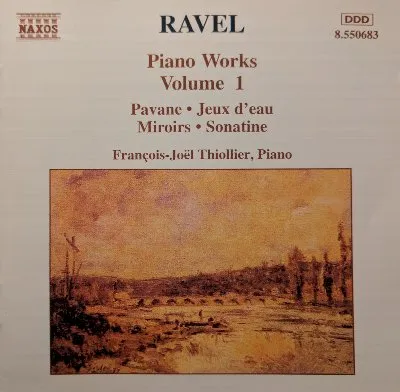
Piano Works, Volume 1: Pavane / Jeux d'eau / Miroirs / Sonatine (1994) Choose this piano collection if you want to hear Ravel’s shifting colors and detailed writing in a more intimate setting.
-
Daphnis et Chloé (1981) Start here if you want an extended ballet work, where orchestral color can unfold across a larger span.

-
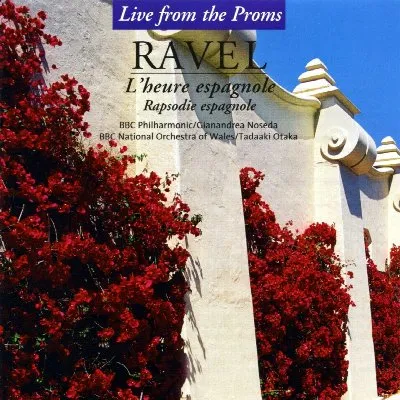
BBC Music, Volume 11, Number 12: L’ heure espagnole / Rapsodie espagnole (2003) Choose this if theatrical storytelling interests you, with the opera L’heure espagnole alongside the orchestral Rapsodie espagnole.
02 · The trail ahead
Listening paths
Pick a route through Maurice Ravel's catalog.
A compact tour from vivid orchestral color to intimate and virtuosic Ravel.
-
1Boléro / La Valse / Rapsodie espagnole / Pavane pour une infante défunte / Ma mère l’Oye (1995) Start with rhythmic drive, orchestral color, and contrasting moods.

-
2Daphnis et Chloé (SWR Symphony Orchestra feat. conductor: Michael Gielen) (2006) Hear his orchestral palette expand across a sweeping ballet.

-
3The Piano Concertos (1983) Move to sharper contrasts between piano virtuosity and orchestra.

-
4Complete Music for Solo Piano (1974) Finish with the intricate keyboard writing behind his sound.

Begin with familiar orchestral highlights, then explore longer and more varied forms.
-
1Bolero / Rapsodie Espagnole / La Valse (1974) A direct entry through memorable rhythms and orchestral spectacle.

-
2Ma Mère l’Oye / Pavane pour une infante défunte / Le Tombeau de Couperin / Valses nobles et sentimentales (1984) Gentler orchestral miniatures offer a softer next step.

-
3The Piano Concertos (1983) Accessible melodies meet lively, distinct piano-orchestra dialogue.
-
4Daphnis et Chloé (SWR Symphony Orchestra feat. conductor: Michael Gielen) (2006) Take on a longer, richly layered orchestral journey.
Follow Ravel into demanding piano textures, chamber interplay, and theatrical color.
-
1Miroirs / Le Tombeau de Couperin (1984) Enter through shifting piano textures and finely drawn detail.

-
2Gaspard de la Nuit / Sonatine / Valses nobles et sentimentales (1975) Increase the challenge with exposed, virtuosic piano writing.

-
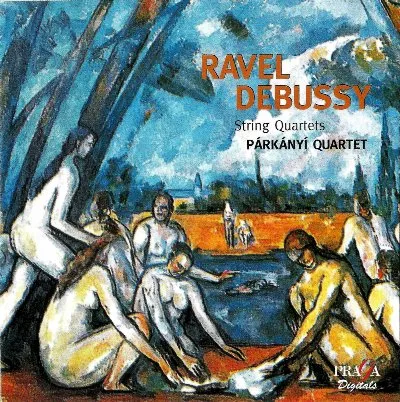
3String Quartets (2004) Hear his precision and color in intimate chamber music.
-
4L'enfant et les sortilèges (1987) End with a theatrical work that transforms sound into scene.

03 · Beyond this guide
Where to go next
-
Claude Debussy For finely shaded orchestral color, fluid harmonies, and impressionistic textures that let musical tension emerge gradually. Start with La Mer / Nocturnes (1988)

-
Igor Stravinsky Try his ballets for incisive rhythms, shifting orchestral layers, and the dramatic build-and-release that also animates Ravel. Start with The Rite of Spring (1960)

-
Nikolai Rimsky-Korsakov His brilliant orchestral writing offers a similarly intricate mix of instrumental colors, sparkling detail, and sweeping climaxes. Start with Scheherazade / Capriccio Espagnol (1984)

04 · Keep exploring
The Weekly Dispatch
Every Tuesday, a few more places to start listening.
One short email. Free, unsubscribe anytime. Read this week's.
Common questions
Where should I start with Maurice Ravel?
Start with Boléro / Rapsodie Espagnole / La Valse (1994). Boléro, Rapsodie Espagnole, and La Valse offer three clear ways into Ravel’s orchestral writing: repetition, rhythmic color, and a dance that grows increasingly unstable. The contrast makes it easier to decide which side of his music you want to explore next.
What does Maurice Ravel sound like?
Expect carefully layered orchestral colors, precise rhythms, and melodies that shift between delicacy and intensity. Ravel’s music often builds its effect through changing texture as much as through melody. Rooted in classical and opera.
In what order should I listen to Maurice Ravel's albums?
In release order: "Boléro / Pavane pour une infante défunte / Alborada del gracioso / La Valse / Une barque sur l’océan / Menuet antique" (1985), "Piano Music, Volume 1" (1989), "Complete Works for Orchestra, Vol. I" (1991), "Bolero" (1993), "Boléro / Rapsodie Espagnole / La Valse" (1994), "Boléro / Ma mère l’Oye / Rapsodie espagnole / Alborada del Gracioso" (1994), "Daphnis et Chloé / La Valse" (1995), "Boléro / La Valse / Ma Mère l'Oye / Concerto pour Piano" (1995), "The Piano Concertos / Valses nobles et sentimentales" (1998) and "Bolero / Pavane / Valses nobles / Rhapsodie Espagnole" (2001). New listeners can start with "Boléro / Rapsodie Espagnole / La Valse" and work outward in either direction.
Which artists should I listen to after Maurice Ravel?
Try Claude Debussy (start with "La Mer / Nocturnes"), Igor Stravinsky (start with "The Rite of Spring") and Nikolai Rimsky-Korsakov (start with "Scheherazade / Capriccio Espagnol").