


Photo: After Pierre-Roch Vigneron · Public domain
The Northsound field guide
Where to start with Johann Nepomuk Hummel
Johann Nepomuk Hummel’s catalog can be hard to enter without a clear starting point. His concertos pair a singing piano line with orchestral phrases that add breadth and momentum. This guide gives you a first album and paths onward through his piano writing, chamber music, and sacred works.
01 · Your first stop
Start here.
New to Johann Nepomuk Hummel? You don’t need to hear everything. Start with this.
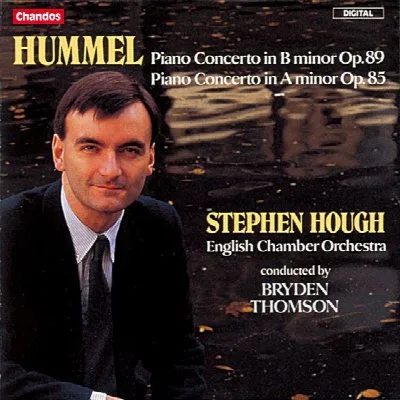
Your first album
Piano Concerto in B minor, op. 89 / Piano Concerto in A minor, op. 85
1987 ·Best starting point
These two concertos introduce Hummel through the clear dialogue of solo piano and orchestra, with the piano carrying the melodic line while the ensemble supplies breadth and momentum. Hearing both works together gives a cohesive sense of his concerto writing and its balance of graceful phrasing and rhythmic energy, without requiring familiarity with classical forms.
Only have a few minutes?
“Trumpet Concerto in E major” from Classical Trumpet Concertos (2001)
The concerto’s bright, agile solo writing makes Hummel’s melodic elegance and forward drive easy to grasp in a single listen.
02 · The trail ahead
Listening paths
Pick a route through Johann Nepomuk Hummel's catalog.
Trace Hummel’s range from piano writing to concertos and richly varied chamber music.
-
1Complete Piano Sonatas (2018) Start with his piano voice and the breadth of his sonata writing.

-
2Piano Concerto in B minor, op. 89 / Piano Concerto in A minor, op. 85 (1987) Move from solo piano to bold, expansive orchestral dialogue.
-
3Complete Piano Trios (1989) Hear his melodic and contrapuntal instincts in chamber form.

-
4Septets, op. 74 / op. 114 (2016) Close with colorful ensemble writing that broadens the chamber palette.

Begin with tuneful, clearly framed works, then explore more intricate chamber textures.


Follow Hummel into unusual ensembles and the expressive range of his sacred music.
-
1Concerto pour trompette (1982) Begin with a bright solo voice outside the familiar piano repertoire.

-
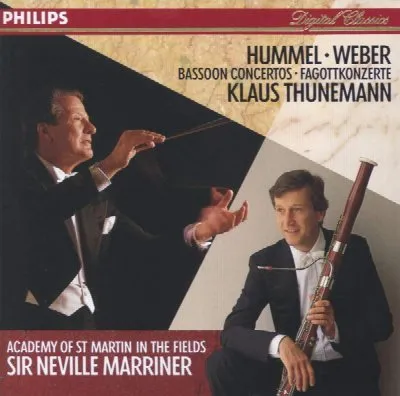
2Bassoon Concertos (1991) Explore another distinctive solo timbre and its orchestral interplay.
-
3Piano Septets (2010) Take in an expansive ensemble sound with shifting instrumental colors.

-
4Mass in D minor / Salve Regina (2005) End with sacred works that reveal a contrasting side of his output.

03 · Beyond this guide
Where to go next
-
Ludwig van Beethoven Try his early piano concertos for a closely related classical framework energized by stronger rhythmic drive and dramatic tension. Start with Symphony no. 3 “Eroica” (1969)

-
Muzio Clementi Explore his sonatas and concertos for clear classical forms, nimble keyboard writing, and a similarly purposeful rhythmic pulse. Start with Six Sonatinas for the Piano, op. 36

-
Carl Maria von Weber His concertos and chamber works retain classical polish while adding more expansive Romantic color and buoyant orchestral momentum. Start with Complete Overtures (2015)

04 · Keep exploring
The Weekly Dispatch
Every Tuesday, a few more places to start listening.
One short email. Free, unsubscribe anytime. Read this week's.
Common questions
Where should I start with Johann Nepomuk Hummel?
Start with Piano Concerto in B minor, op. 89 / Piano Concerto in A minor, op. 85 (1987). These two concertos introduce Hummel through the clear dialogue of solo piano and orchestra, with the piano carrying the melodic line while the ensemble supplies breadth and momentum. Hearing both works together gives a cohesive sense of his concerto writing and its balance of graceful phrasing and rhythmic energy, without requiring familiarity with classical forms.
What does Johann Nepomuk Hummel sound like?
Hummel’s music swells with rich textures and intricate counterpoint, maintaining a graceful tension between melodic exploration and rhythmic drive. Rooted in opera and sardana.
In what order should I listen to Johann Nepomuk Hummel's albums?
In release order: "Piano Concerto in B minor, op. 89 / Piano Concerto in A minor, op. 85" (1987), "Bassoon Concertos" (1991), "Piano Concertos no.2, op. 85 / no. 3, op. 89" (1993), "Wind Serenades" (1993), "Piano Trios" (1998), "Piano Sonatas, Volume 1: Opp. 13, 20 & 81" (1998), "Classical Trumpet Concertos" (2001), "Piano Concerto in F major / Theme and Variations in F major / Piano Concerto in A major" (2001), "Piano Concerto in C major / Rondo brillant, Op. 56 / Rondo brillant, Op. 98" (2004) and "Fantasies" (2005).
Which artists should I listen to after Johann Nepomuk Hummel?
Try Ludwig van Beethoven (start with "Symphony no. 3 “Eroica”"), Muzio Clementi (start with "Six Sonatinas for the Piano, op. 36") and Carl Maria von Weber (start with "Complete Overtures").