


Photo: Karl Fischer · Public domain

The Northsound field guide
Where to start with Nikolai Rimsky-Korsakov
Orchestral color, vivid storytelling, and melodies that move between solo voices and full ensemble.
Start with the orchestral storytelling of Scheherazade, where solo violin, winds, and full orchestra shift between intimate passages and sweeping scenes. Then use Capriccio Espagnol as a shorter, more rhythmically animated counterpoint before deciding whether to explore his operas and other orchestral works.
- What they sound like
- Expect orchestral music built around vivid changes in color: solo instruments emerge from the ensemble, then give way to energetic full-orchestra passages. His writing often suggests a scene or story, even when there are no words.
- You'll like this if
- You’ll connect with this if you enjoy instrumental music that feels narrative, with memorable melodies and clear contrasts between solo lines and a large orchestra. It also suits listeners curious about how opera-like storytelling can work without singers.
01 · Your first stop
Start here.
New to Nikolai Rimsky-Korsakov? You don’t need to hear everything. Start with this.
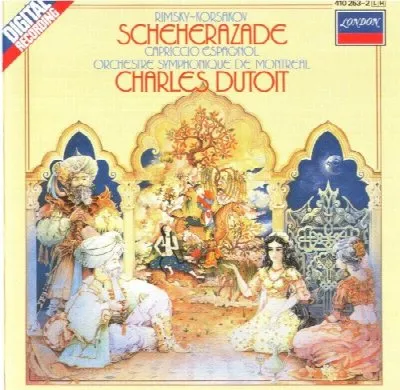
Your first album
Scheherazade / Capriccio Espagnol
1984 ·Best starting point
This pairing offers a clear first listen without requiring familiarity with opera or Russian folklore. Scheherazade gives you time to settle into changing orchestral scenes, while Capriccio Espagnol quickly changes the pace with a more dance-like character.
Only have a few minutes?
“The Sea and Sinbad's Ship” from Scherherazade, Op. 35 (1970)
The opening movement introduces the contrast between a prominent solo violin and broad orchestral passages that makes Scheherazade rewarding to follow.
Not the album for you? Try one of these instead.
-
3 Symphonies / Capriccio espagnol / Russian Easter Overture (1988) If you want to hear his orchestral writing beyond Scheherazade, this collection pairs symphonies with Capriccio espagnol and Russian Easter Overture.

-
La Nuit de Noël / Christmas Eve (1991) If you would rather begin with opera, La Nuit de Noël / Christmas Eve offers a direct route into his stage music.

-
Le Conte du Tsar Saltan (1990) If you are drawn to fairy-tale settings, Le Conte du Tsar Saltan points toward the imaginative world of his operas.

02 · The trail ahead
Listening paths
Pick a route through Nikolai Rimsky-Korsakov's catalog.
Follow the signature orchestral showpiece into the operatic and symphonic worlds around it.
-
1Scheherazade: Symphonic Suite, op. 35 / Russian Easter Festival Overture, Op. 36 (1994) Start with the vivid orchestral storytelling that defines his reputation.

-
2Capriccio Espagnol / Russian Easter Festival Overture / The Tsar's Bride Overture / May Night Overture / The Golden Cockerel Suite (1994) Broaden the picture with colorful overtures and an opera suite.

-
3Symphony no. 1 in E minor / Symphony no. 2 in E minor "Antar" (1994) Hear his earlier symphonic voice and the programmatic Antar.

-
4The Snow Maiden / The Golden Cockerel / Mlada (1991) Finish with the range and theatrical imagination of his operas.

Begin with familiar orchestral color, then branch into suites and a full opera.
-
1Scheherazade / Capriccio Espagnol / Flight of the Bumble Bee (1999) A lively sampler of memorable melodies and orchestral brilliance.

-
2The Tale of Tsar Saltan Suite, op. 57 / May Night Overture / Russian Easter Festival Overture, op. 36 (1966) Keep the vivid orchestral scenes while widening the repertoire.
-
3Antar / Tsar Saltan / May Night / Capriccio Espagnol (2008) Move into less familiar works without leaving colorful orchestration.
-
4The Golden Cockerel / Der goldene Hahn / Le coq d’or (1996) Take the final step into the composer's distinctive operatic world.

Explore the less-traveled symphonies, chamber music, and operatic landscapes.
-
1Works for String Quartet Begin with intimate textures far from his famous orchestral sound.
-
2Quintet for piano and winds / String sextet (2003) Expand into unusual chamber combinations and instrumental dialogue.

-
3Symphony No. 3 in C major / Sinfonietta on Russion Themes in A minor, Op. 31 (St. Petersburg State Symphony Orchestra feat. conductor: André Anichanov) (1994) Hear the symphonic side beyond the better-known showpieces.
-
4The Legend of the Invisible City of Kitezh and the Maiden Fevroniya (2007) End with an expansive operatic world and mythic scope.
03 · Beyond this guide
Where to go next
-
Pyotr Ilyich Tchaikovsky Tchaikovsky shares the sweeping melodies and dramatic orchestral contrasts, with especially vivid color in his ballets and operas. Start with The Nutcracker Suite (1990)

-
Hector Berlioz Berlioz is a good next stop for adventurous orchestration, vivid instrumental contrasts, and music that unfolds like a dramatic scene. Start with Symphonie fantastique (1993)

-
Claude Debussy Debussy shifts toward impressionistic harmony, but his orchestral works share Rimsky-Korsakov’s fascination with shimmering timbres and fine-grained texture. Start with La Mer / Nocturnes (1988)

04 · Keep exploring
The Weekly Dispatch
Every Tuesday, a few more places to start listening.
One short email. Free, unsubscribe anytime. Read this week's.
Common questions
Where should I start with Nikolai Rimsky-Korsakov?
Start with Scheherazade / Capriccio Espagnol (1984). This pairing offers a clear first listen without requiring familiarity with opera or Russian folklore. Scheherazade gives you time to settle into changing orchestral scenes, while Capriccio Espagnol quickly changes the pace with a more dance-like character.
What does Nikolai Rimsky-Korsakov sound like?
Expect orchestral music built around vivid changes in color: solo instruments emerge from the ensemble, then give way to energetic full-orchestra passages. His writing often suggests a scene or story, even when there are no words. Rooted in classical and opera.
In what order should I listen to Nikolai Rimsky-Korsakov's albums?
In release order: "Scheherazade / Polovtsian Dances" (1961), "Scheherazade / Capriccio Espagnol" (1984), "Le Conte du Tsar Saltan" (1990), "The Snow Maiden / The Golden Cockerel / Mlada" (1991), "La Nuit de Noël / Christmas Eve" (1991), "Scheherazade / Russian Easter Overture" (1993), "Scheherazade" (1993), "Sheherazade, op. 35 / The Tale of Tsar Saltan, op. 57" (1993), "BBC Music, Volume 2, Number 9: Rimsky-Korsakov: The Golden Cockerel, Capriccio Espagnol / Mussorgsky: Pictures at an Exhibition" (1994) and "Symphony No. 3 / Sadko / Three Miracles / Procession from "Mlada" / Overtures (State Symphony Orchestra of Russia feat. conductor: Evgeny Svetlanov)" (1995). New listeners can start with "Scheherazade / Capriccio Espagnol" and work outward in either direction.
Which artists should I listen to after Nikolai Rimsky-Korsakov?
Try Pyotr Ilyich Tchaikovsky (start with "The Nutcracker Suite"), Hector Berlioz (start with "Symphonie fantastique") and Claude Debussy (start with "La Mer / Nocturnes").