


Photo: Bain News Service, publisher · Public domain

The Northsound field guide
Where to start with Sergei Prokofiev
Start with a witty symphony and a more expansive, dramatic one.
Prokofiev can move from crisp, almost classical poise to pounding rhythms and unsettling orchestral drama. Start with a pairing that lets you hear both sides, then follow the sound toward ballet, concertos, or darker orchestral writing.
- What they sound like
- Expect sharply defined rhythms, sudden changes in mood, and melodies that can turn from playful to tense. His orchestral music often makes those contrasts easy to hear.
- You'll like this if
- You’ll connect with Prokofiev if you like orchestral music with strong momentum, clear dramatic turns, and a touch of wit. His denser, more dissonant passages may take more patience.
01 · Your first stop
Start here.
New to Sergei Prokofiev? You don’t need to hear everything. Start with this.
Your first album
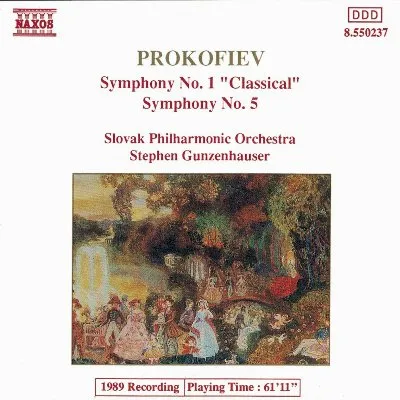
Symphony no. 1 "Classical" / Symphony no. 5
1989 ·Best starting point
The First Symphony offers a concise introduction to Prokofiev’s playful handling of classical forms, while the Fifth expands into a more sustained symphonic argument. The contrast gives you a useful first impression of both his lightness and his force.
Only have a few minutes?
“Symphony No. 1 in D major, Op. 25: I. Allegro” from Symphonies nos. 1 and 5 (2017)
Its brisk pace and clean orchestral lines introduce the First Symphony’s nimble, classical surface before the album turns to the Fifth’s larger scale.
Not the album for you? Try one of these instead.
-
Captain Kangaroo Narrates Peter and the Wolf Choose this narrated Peter and the Wolf recording if you want a story-led introduction in which orchestral instruments are presented as distinct characters.

-
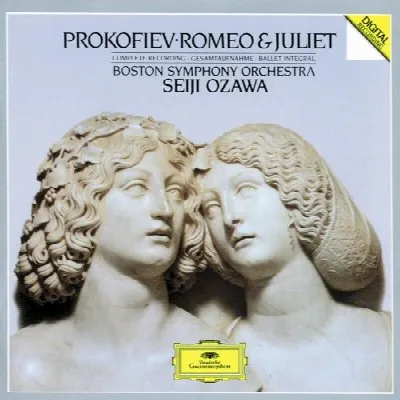
Romeo & Juliet (1987) Start here if ballet appeals to you: Romeo & Juliet brings Prokofiev’s dramatic contrasts and memorable melodic writing into a continuous theatrical world.
-
Piano Concertos: No. 1, op. 10 / No. 3, op. 26 / No. 4, op. 53 (1992) Choose these piano concertos if you are drawn to a soloist pushed into fast, sharply accented exchanges with the orchestra.

02 · The trail ahead
Listening paths
Pick a route through Sergei Prokofiev's catalog.
A compact tour through Prokofiev’s orchestral voice, dramatic storytelling, and piano writing.
-
1Symphony No.1 In D Major 'Classical' (2005) Start with his witty, clear reimagining of classical form.

-
2Romeo and Juliet (Complete Ballet in Four Acts) (1995) Hear his gift for vivid character and sweeping theatrical drama.

-
3Symphony No. 5 (1960) Move into a broad, powerful statement from his wartime years.

-
4Piano Sonatas Nos. 7, 8 Finish with the taut, forceful piano style of the war sonatas.

Begin with memorable orchestral stories, then explore a more concentrated symphonic work.
-
1Peter and the Wolf, op. 67 (1939) A welcoming introduction built around clear musical characters.

-
2Romeo and Juliet: Highlights (1992) Concise ballet excerpts make his dramatic orchestral style easy to enter.

-
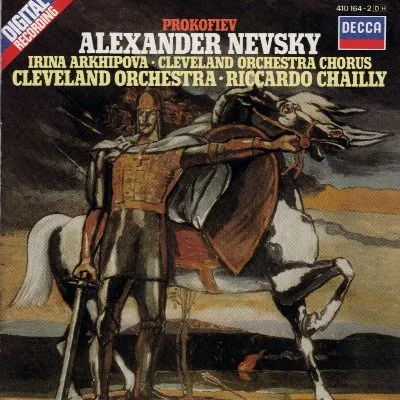
3Alexander Nevsky (1984) A bold, cinematic cantata broadens the scale and intensity.
-
4Symphony No. 5 (1960) End with a sustained symphonic journey and greater structural depth.
Trace Prokofiev’s sharper edges through restless ballet, modernist piano, and darker drama.
-
1Love for Three Oranges (2000) Its theatrical suite introduces his irreverent, high-contrast side.

-
2Scythian Suite / Symphony No. 5 (1999) Pair raw orchestral force with the more expansive symphonic voice.

-
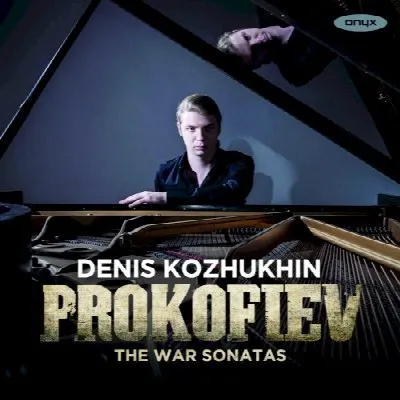
3The War Sonatas (2013) The piano sonatas bring concentrated dissonance and rhythmic pressure.
-
4The Fiery Angel (1991) Close with an unsettling operatic world at full dramatic intensity.

03 · Beyond this guide
Where to go next
-
Igor Stravinsky Start here for ballets driven by pounding rhythms, crisp orchestral colors, and abrupt shifts between tension and release. Start with The Rite of Spring (1960)

-
Dmitri Shostakovich His symphonies and operas pair propulsive motifs and sharply contrasting textures with a similarly sardonic, high-pressure edge. Start with Symphony No. 5, Op. 47 (2014)

-
Béla Bartók Explore his music for muscular rhythms, folk-inflected melodies, and dense, percussive writing that can turn suddenly ominous. Start with Concerto for Orchestra / Music for Strings, Percussion and Celesta (1990)

04 · Keep exploring
The Weekly Dispatch
Every Tuesday, a few more places to start listening.
One short email. Free, unsubscribe anytime. Read this week's.
Common questions
Where should I start with Sergei Prokofiev?
Start with Symphony no. 1 "Classical" / Symphony no. 5 (1989). The First Symphony offers a concise introduction to Prokofiev’s playful handling of classical forms, while the Fifth expands into a more sustained symphonic argument. The contrast gives you a useful first impression of both his lightness and his force.
What does Sergei Prokofiev sound like?
Expect sharply defined rhythms, sudden changes in mood, and melodies that can turn from playful to tense. His orchestral music often makes those contrasts easy to hear. Rooted in classical and opera.
In what order should I listen to Sergei Prokofiev's albums?
In release order: "Symphony No. 6 in E-flat minor, Op. 111 / Three Waltzes, Op. 110" (1985), "Romeo & Juliet" (1987), "Romeo & Juliet (Highlights)" (1990), "Romeo and Juliet (Chicago Symphony Orchestra feat. conductor: Sir Georg Solti)" (1991), "Romeo and Juliet" (1992), "Cinderella Suites nos. 1-3 / Scythian Suite / “On the Dnieper”" (1994), "Violin Concertos nos. 1 and 2 / Sonata for Solo Violin" (1996), "Cantata "Alexandr Nevsky" / Balletto "Romeo e Giulietta"" (1996), "Peter en de Wolf" (1997) and "BBC Music, Volume 11, Number 8: Symphony No.5 / War and Peace (excerpts)" (2003).
Which artists should I listen to after Sergei Prokofiev?
Try Igor Stravinsky (start with "The Rite of Spring"), Dmitri Shostakovich (start with "Symphony No. 5, Op. 47") and Béla Bartók (start with "Concerto for Orchestra / Music for Strings, Percussion and Celesta").