


Photo: RIA Novosti · CC BY-SA 3.0

The Northsound field guide
Where to start with Béla Bartók
Bartók’s large catalog can make it hard to know where to begin. This guide offers a clear entry point through orchestral music shaped by intricate rhythms, shifting textures, and folk-inflected color. Start with a paired orchestral introduction, then follow a path into his chamber and more experimental works.
01 · Your first stop
Start here.
New to Béla Bartók? You don’t need to hear everything. Start with this.
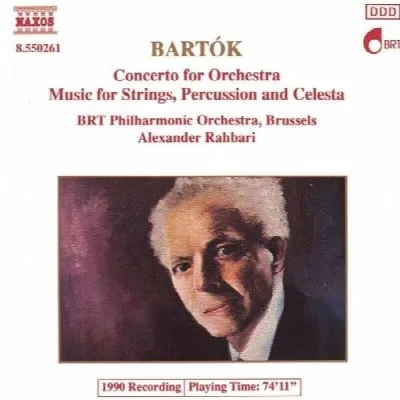
Your first album
Concerto for Orchestra / Music for Strings, Percussion and Celesta
1990 ·Best starting point
Pairs two vivid orchestral works, introducing Bartók’s rhythmic energy, shifting textures, and folk-inflected sound.
Only have a few minutes?
“Romanian Folk Dances” from The Miraculous Mandarin / Hungarian Peasant Songs / Roumanian Folk Dances (1996)
Its concise, lively dance movements offer an immediate introduction to Bartók’s folk-inspired melodies and rhythmic flair.
02 · The trail ahead
Listening paths
Pick a route through Béla Bartók's catalog.
Follow Bartók from folk-inflected color through chamber intensity to orchestral command.
-
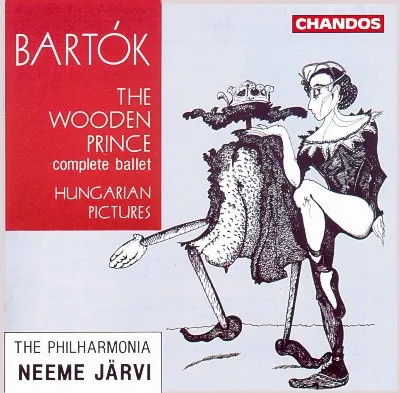
1The Wooden Prince / Hungarian Pictures (1991) Start with vivid orchestral storytelling and Hungarian color.
-
2The Six String Quartets (1997) Hear his development in a concentrated tour of his chamber music.

-
3Music for Strings, Percussion and Celesta (1959) Encounter his taut rhythms and striking instrumental textures.

-
4Concerto for Orchestra / Dance Suite (1982) Finish with a broad, welcoming showcase of orchestral invention.

Begin with memorable orchestral gestures, then move toward sharper edges and deeper complexity.
-
1Concerto for Orchestra (1956) Its vivid contrasts make an inviting first encounter.

-
2The Miraculous Mandarin / Hungarian Peasant Songs / Roumanian Folk Dances (1996) Familiar folk colors ease the move into bolder orchestral writing.

-
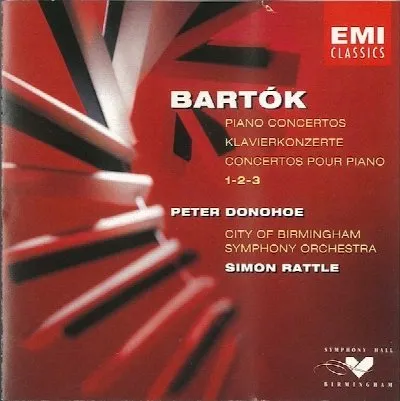
3Piano Concertos 1-3 (1993) Explore his more forceful, rhythmically demanding concertos.
-
4The Six String Quartets (1997) Close with his most concentrated and challenging chamber cycle.
Trace Bartók's stranger colors, percussive experiments, and most searching chamber works.
-
1Out of Doors: Piano Music of Béla Bartók (1998) Start with piano writing that turns nature and rhythm into sound.

-
2Sonata for Two Pianos and Percussion / Suite for Two Pianos (1992) Hear piano transformed into a sharply percussive ensemble.

-
3The Miraculous Mandarin / Music For Strings, Percussion and Celesta (1985) Push into vivid, unsettling orchestral color and tension.

-
4The Complete String Quartets (2002) End with six quartets that reveal his most radical structural ideas.

03 · Beyond this guide
Where to go next
-
Igor Stravinsky Try Stravinsky for driving irregular rhythms, percussive orchestration, and sudden shifts in intensity that echo Bartók’s tightly controlled tension and release. Start with The Rite of Spring (1960)

-
Zoltán Kodály Kodály pairs Hungarian folk-derived melodies and rhythms with a similarly vivid, sharply articulated modern classical language. Start with Háry János Suite / Dances of Galánta / Peacock Variations (1996)

-
Sergei Prokofiev Explore Prokofiev for muscular rhythms, biting piano writing, and dramatic contrasts built into clearly shaped forms. Start with Symphony no. 1 "Classical" / Symphony no. 5 (1989)

04 · Keep exploring
The Weekly Dispatch
Every Tuesday, a few more places to start listening.
One short email. Free, unsubscribe anytime. Read this week's.
Common questions
Where should I start with Béla Bartók?
Start with Concerto for Orchestra / Music for Strings, Percussion and Celesta (1990). Pairs two vivid orchestral works, introducing Bartók’s rhythmic energy, shifting textures, and folk-inflected sound.
What does Béla Bartók sound like?
Bartók's music features intricate rhythms and shifting dynamics that create tension and release within a tightly woven structural framework. Rooted in classical and opera.
In what order should I listen to Béla Bartók's albums?
In release order: "Die 6 Streichquartette" (1988), "Piano Concertos" (1990), "Violin Concertos 1 & 2" (1990), "20 Piano Pieces for Children / Piano Concerto No. 2" (1991), "The Wooden Prince / Cantata Profana" (1992), "Concerto for Orchestra / The Miraculous Mandarin" (1994), "Sonata for Solo Violin, Sz. 117 / 44 Duos for Two Violins" (1994), "44 Duets for Two Violins" (1997), "Solo Piano Works, Volume 1" (1998) and "The Complete String Quartets" (2002).
Which artists should I listen to after Béla Bartók?
Try Igor Stravinsky (start with "The Rite of Spring"), Zoltán Kodály (start with "Háry János Suite / Dances of Galánta / Peacock Variations") and Sergei Prokofiev (start with "Symphony no. 1 "Classical" / Symphony no. 5").