

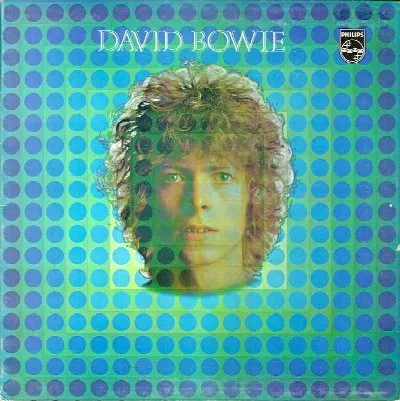
Released 57 years ago this November
David Bowie
David Bowie · 1969
45 min · 9 tracks · alternative rock
Acoustic folk opens into orchestral spaceflight and ragged rock before a festival singalong stretches toward the horizon.
Top tracks — play these first
-
→
Space Oddity Start here — A staged exchange between ground control and Major Tom turns a space mission into a miniature drama, with acoustic guitar giving way to an eerie electronic expanse.
-
→
Letter to Hermione — A close, understated acoustic performance leaves little between the listener and its intimate address to a former lover.
-
→
Cygnet Committee — Over more than nine minutes, the song moves from acoustic meditation into an increasingly forceful indictment of followers and failed ideals.
-
→
The Wild Eyed Boy From Freecloud — Orchestral accompaniment gives this tale of an outsider a sweeping scale, setting its fairy-tale strangeness apart from the record's sparer folk songs.
-
→
Memory of a Free Festival — Recollections of a gathering give way to an extended communal refrain, turning the album's ending into a loose, persistent singalong.
Elevation
Our rating, out of 100 — and why.
AI-generated from five scored dimensions. An opinion, not a measurement.
Bowie's second album showcases eclectic influences and theatrical elements, marking a notable step in his artistic evolution.
What we noticed
- The album opens with 'Space Oddity', which features a distinct narrative structure and shifts in dynamics, setting a theatrical tone.
- Several songs feature unconventional song structures, such as extended instrumental sections and abrupt tempo changes, which challenge traditional rock formats.
- Composition 25% of the score
-
7/10
- Craft 20% of the score
-
6/10
- Durability 25% of the score
-
6/10
- Distinctiveness 18% of the score
-
7/10
- Sequencing 12% of the score
-
5/10
the writing — melody, harmony, structure, lyrics
production, performance, arrangement
whether it rewards returning to it
whether it sounds like itself
running order, pacing, length
Significant within its genre. Reported but not counted — how far a record travelled describes its reception rather than the record, and a newer release has had less time to travel than an older one.
Is this for you?
Good fit if you like
- theatrical storytelling through sound
- reflective moments of quiet introspection
- surreal imagery and vivid narratives
- whimsical melodies for daydreaming
- immersive journeys into imagination
Maybe skip if you
- seekers of instant gratification
- prefer straightforward song structures
Where this album fits
- In the catalog
- Breakthrough — This album marked Bowie's transition to mainstream recognition, especially with 'Space Oddity'.
- Themes
- late '60s counterculture· space exploration isolation· lost love reflections
- Career context
- Released in 1969, this was David Bowie's second album, following his 1967 self-titled debut. It arrived after the UK success of the single “Space Oddity” and was later reissued under that song's title.
- Stylistic neighbors
- Brian Eno· Roxy Music· Talking Heads
Tracklist
- 1 Space Oddity Start here 5:22
- 2 Unwashed and Somewhat Slightly Dazed 6:12
- 3 Letter to Hermione 2:35
- 4 Cygnet Committee 9:37
- 5 Janine 3:26
- 6 An Occasional Dream 3:01
- 7 The Wild Eyed Boy From Freecloud 4:51
- 8 God Knows I’m Good 3:22
- 9 Memory of a Free Festival 7:08
What to play next

The Man Who Sold the World
1970
Continues the exploratory sound with darker themes and a more rock-oriented edge.

London Bye, Ta-Ta
1969
Offers a smooth transition with similar whimsical elements and late 60s vibes.
If this landed
Records by other artists that run on the same instinct.
Reference: Wikipedia · MusicBrainz · Wikidata
Sync your library
Everything you track here works immediately — no account needed. Create one when you want to sync across devices.