

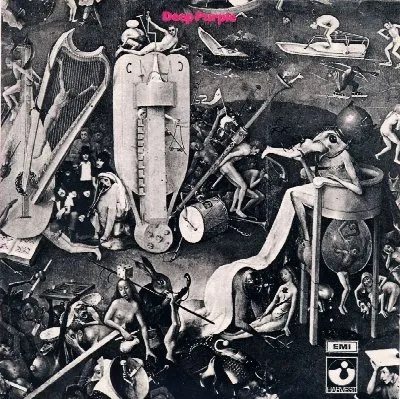
Deep Purple
Deep Purple · 1969
59 min · 13 tracks · hard rock
A fusion of hard rock and progressive elements that showcases the band's early exploration into complex compositions and intricate musicianship.
Top tracks — play these first
-
→
Chasing Shadows Start here — This track exemplifies the band's early hard rock sound combined with introspective lyrics, showcasing their ability to balance melody with power.
-
→
Lalena — Featuring rich harmonies and emotional depth, this song highlights the band's melodic sensibilities while retaining a psychedelic flair.
-
→
April — At over twelve minutes long, this track represents Deep Purple's progressive side, combining intricate arrangements with lyrical storytelling that anticipates their later work.
Elevation
Our rating, out of 100 — and why.
AI-generated from five scored dimensions. An opinion, not a measurement.
The album showcases a blend of hard rock and progressive elements but is somewhat disrupted by bonus tracks.
What we noticed
- The first four tracks feature heavy guitar riffs paired with intricate keyboard melodies, establishing a hard rock sound.
- Tracks like 'Chasing Shadows' and 'Lalena' incorporate shifts in tempo and dynamics, blending heavier sections with softer, melodic passages.
- The album includes two alternate versions of tracks and three BBC session recordings, which may disrupt the original flow intended for the studio release.
- Composition 25% of the score
-
7/10
- Craft 20% of the score
-
6/10
- Durability 25% of the score
-
5/10
- Distinctiveness 18% of the score
-
6/10
- Sequencing 12% of the score
-
4/10
the writing — melody, harmony, structure, lyrics
production, performance, arrangement
whether it rewards returning to it
whether it sounds like itself
running order, pacing, length
Significant within its genre. Reported but not counted — how far a record travelled describes its reception rather than the record, and a newer release has had less time to travel than an older one.
Is this for you?
Good fit if you like
- dynamic emotional journeys
- long immersive listening sessions
- wave-like pacing experiences
- introspective late-night moods
Where this album fits
- In the catalog
- Breakthrough — This album marked their shift to a heavier style, establishing their reputation.
- Themes
- psychedelic haze· heavy rock riffs· musical exploration
- Moods
- Dreamy· Melancholy
- Career context
- Released on June 21, 1969, 'Deep Purple' was the band's self-titled third album, following their breakthrough with 'Shades of Deep Purple' in 1968. At this point, Deep Purple was solidifying their identity within the burgeoning heavy rock scene, experimenting with a blend of classical influences and psychedelic sounds that would define their trajectory in the early 70s.
- Stylistic neighbors
- Led Zeppelin· Black Sabbath· Rainbow
Tracklist
- 1 Chasing Shadows Start here 5:34
- 2 Blind 5:26
- 3 Lalena 5:05
- 4 Fault Line 1:46
- 5 The Painter 3:51
- 6 Why Didn’t Rosemary? 5:04
- 7 Bird Has Flown 5:36
- 8 April 12:10
- 9 The Bird Has Flown (alternate a‐side version) 2:54
- 10 Emmaretta (studio b‐side) 3:00
- 11 Emmaretta (BBC Top Gear session) 3:09
- 12 Lalena (BBC radio session) 3:33
- 13 The Painter (BBC radio session) 2:17

If this landed
Records by other artists that run on the same instinct.

Paranoid
Black Sabbath
Shares heavy rock riffs and a darker psychedelic edge, capturing an evolving heavy metal sound.

Led Zeppelin II
Led Zeppelin
Combines intricate melodies with hard rock energy, creating a similar heavy yet exploratory listening experience.

The Soft Parade
The Doors
Offers a blend of psychedelic haze and musical exploration through rich instrumentation and layered compositions.
Reference: Wikipedia · MusicBrainz · Wikidata
Sync your library
Everything you track here works immediately — no account needed. Create one when you want to sync across devices.