

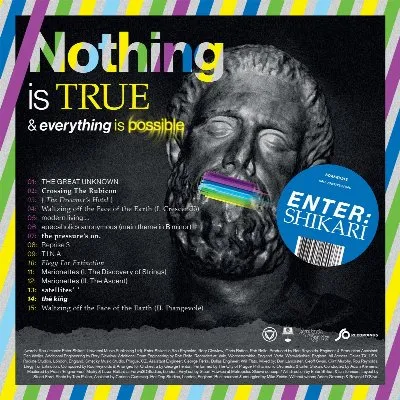
Nothing Is True & Everything Is Possible
Enter Shikari · 2020
43 min · 15 tracks · post-hardcore
A frenetic blend of electronic beats and post-hardcore energy that tackles contemporary anxieties with unyielding intensity.
Top tracks — play these first
-
→
THE GREAT UNKNOWN Start here — establishes the sonic palette early
-
→
Crossing the Rubicon — This track encapsulates the album's urgent themes by juxtaposing aggressive instrumentals with introspective lyrics about challenging personal limits and societal expectations.
-
→
the pressure’s on. — With its driving rhythm and potent commentary on mental health pressures in modern life, this song serves as an anthem for those feeling overwhelmed by external demands.
-
→
T.I.N.A. — The title references the phrase 'There Is No Alternative,' critiquing political apathy through a mix of sharp lyricism and infectious energy that reflects the band's signature style.
-
→
Elegy for Extinction — This poignant track confronts environmental degradation with a haunting soundscape, blending beauty and despair while highlighting the urgency of ecological issues.
Elevation
Our rating, out of 100 — and why.
AI-generated from five scored dimensions. An opinion, not a measurement.
The album blends electronic elements with post-hardcore intensity, showcasing strong writing and production choices.
What we noticed
- The album opens with a high-energy track that features rapid electronic beats layered over aggressive guitar riffs, setting a frenetic tone.
- Several tracks incorporate spoken word segments that contrast with the intense instrumentation, creating dynamic shifts in energy.
- The last three tracks feature a gradual decrease in tempo and intensity, allowing for a reflective conclusion to the album.
- Lyrically, the album addresses contemporary issues such as mental health and societal pressures, often using metaphorical language.
- Composition 25% of the score
-
7/10
- Craft 20% of the score
-
8/10
- Durability 25% of the score
-
6/10
- Distinctiveness 18% of the score
-
8/10
- Sequencing 12% of the score
-
7/10
the writing — melody, harmony, structure, lyrics
production, performance, arrangement
whether it rewards returning to it
whether it sounds like itself
running order, pacing, length
Known within its scene. Reported but not counted — how far a record travelled describes its reception rather than the record, and a newer release has had less time to travel than an older one.
Is this for you?
Good fit if you like
- steady mid-tempo exploration
- introspective themes throughout
- short tracks for quick bursts
- cathartic moments of release
- consistent flow invites deep listening
Maybe skip if you
- desire for instant gratification
- prefer standalone hit singles
Where this album fits
- In the catalog
- Breakthrough — Debuted at number one on the UK Albums Chart, marking a significant career milestone.
- Themes
- environmental anxiety· navigating uncertainty· digital chaos
- Career context
- Released on April 17, 2020, Nothing Is True & Everything Is Possible is Enter Shikari's fifth studio album, following their critically acclaimed 2017 release, The Spark. At this point in their career, the band was solidifying their reputation as genre-bending innovators while exploring deeper societal themes within their music.
- Stylistic neighbors
- Architects· While She Sleeps· Underoath
Tracklist
- 1 THE GREAT UNKNOWN Start here 3:25
- 2 Crossing the Rubicon 3:18
- 3 { The Dreamer’s Hotel } 2:53
- 4 Waltzing off the Face of the Earth (I. Crescendo) 3:27
- 5 modern living.... 2:53
- 6 apøcaholics anonymøus (main theme in B minor) 1:37
- 7 the pressure’s on. 2:59
- 8 Reprise 3 0:46
- 9 T.I.N.A. 3:05
- 10 Elegy for Extinction 3:50
- 11 Marionettes (I. The Discovery of Strings) 2:53
- 12 Marionettes (II. The Ascent) 3:19
- 13 satellites* * 3:47
- 14 thē kĭñg 2:49
- 15 Waltzing off the Face of the Earth (II. Piangevole) 2:50

If this landed
Records by other artists that run on the same instinct.

All Our Gods Have Abandoned Us
Architects
Shares themes of existential dread and features a blend of heavy riffs with electronic elements.

Amo
Bring Me the Horizon
Explores digital chaos and emotional turmoil through eclectic sounds and introspective lyrics.

Strength in Numb333rs
Fever 333
Combines intense energy with socio-political themes, merging hardcore elements with experimental production.
Reference: Wikipedia · MusicBrainz · Wikidata
Sync your library
Everything you track here works immediately — no account needed. Create one when you want to sync across devices.