

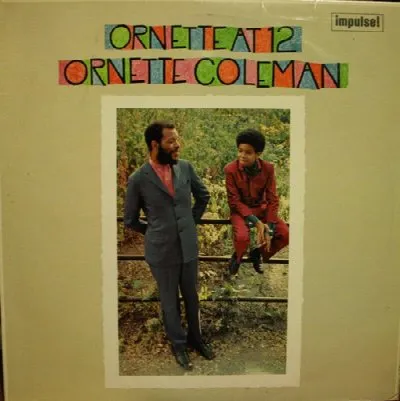
Ornette at 12
Ornette Coleman · 1969
32 min · 4 tracks · jazz
A vibrant tapestry of spontaneous improvisation and intricate melodies, capturing the essence of free jazz in an expansive soundscape.
Top tracks — play these first
-
→
C.O.D. — This track exemplifies Coleman's unique approach to melody and rhythm, using complex harmonic structures that challenge conventional jazz forms.
-
→
Rainbows — The interplay between instruments in this piece highlights Coleman's signature style of collective improvisation, creating a fluid conversation among musicians.
-
→
New York — Evoking the pulse of urban life, this track captures the energy and chaos of New York City through its dynamic shifts and emotive playing.
Elevation
Our rating, out of 100 — and why.
AI-generated from five scored dimensions. An opinion, not a measurement.
InstrumentalThe album's innovative improvisation and distinct sound mark it as a notable entry in free jazz.
What we noticed
- The album features four tracks, each varying in length and structure, with improvisation taking precedence over traditional forms.
- Each track showcases a different ensemble configuration, allowing for diverse interactions between musicians.
- The opening track 'C.O.D.' begins with a rapid tempo and complex melodic lines, while the final track 'Bells and Chimes' slows down significantly, creating a contrasting dynamic.
- Composition 25% of the score
-
8/10
- Craft 20% of the score
-
7/10
- Durability 25% of the score
-
8/10
- Distinctiveness 18% of the score
-
9/10
- Sequencing 12% of the score
-
6/10
the writing — melody, harmony, structure, lyrics
production, performance, arrangement
whether it rewards returning to it
whether it sounds like itself
running order, pacing, length
Significant within its genre. Reported but not counted — how far a record travelled describes its reception rather than the record, and a newer release has had less time to travel than an older one.
Where this album fits
- In the catalog
- Experimental — Represents a unique blend of structured and free improvisation in Coleman's catalog.
- Career context
- By 1969, Ornette Coleman had already established himself as a pioneering figure in jazz with albums like 'The Shape of Jazz to Come' (1959) and 'Free Jazz' (1960). 'Ornette at 12' represents a unique phase in his career, showcasing his evolving approach to composition and improvisation while introducing new musicians into his ensemble.
- Stylistic neighbors
- Albert Ayler· John Coltrane· Cecil Taylor
Tracklist
Best experienced from track one — press play and let it unfold.
- 1 C.O.D. 7:40
- 2 Rainbows 9:06
- 3 New York 8:29
- 4 Bells and Chimes 7:24
Reference: Wikipedia · MusicBrainz · Wikidata
Sync your library
Everything you track here works immediately — no account needed. Create one when you want to sync across devices.