

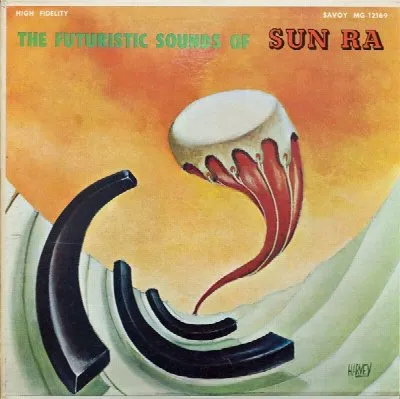
Top tracks — play these first
-
→
Bassism Start here — A bass-centered opening gives the rhythm section unusual prominence, introducing the Arkestra through texture and pulse rather than a conventional big-band fanfare.
-
→
Of Sounds and Something Else — Angular ensemble writing and nimble piano put Sun Ra’s interest in reshaping jazz conventions on display without abandoning the music’s swing.
-
→
Tapestry From an Asteroid — Its shifting instrumental colors make the space-age title feel less like decoration than a cue for listening to the band’s unusual orchestration.
-
→
We Travel the Spaceways — The group chant turns interplanetary travel into a communal declaration, offering a direct introduction to the Arkestra’s space mythology.
Elevation
Our rating, out of 100 — and why.
AI-generated from five scored dimensions. An opinion, not a measurement.
InstrumentalInnovative arrangements and avant-garde textures create a distinct cosmic jazz experience.
What we noticed
- The album features complex arrangements with multiple layers of instrumentation, often shifting between dissonance and harmony.
- The use of extended techniques on instruments, such as unusual bowing or percussive effects, contributes to the avant-garde sound.
- Tracks often blend together without clear breaks, enhancing the immersive experience of the cosmic themes.
- Composition 25% of the score
-
8/10
- Craft 20% of the score
-
9/10
- Durability 25% of the score
-
7/10
- Distinctiveness 18% of the score
-
9/10
- Sequencing 12% of the score
-
8/10
the writing — melody, harmony, structure, lyrics
production, performance, arrangement
whether it rewards returning to it
whether it sounds like itself
running order, pacing, length
Significant within its genre. Reported but not counted — how far a record travelled describes its reception rather than the record, and a newer release has had less time to travel than an older one.
Is this for you?
Good fit if you like
- dynamic exploration of soundscapes
- wave-like pacing invites reflection
- cosmic journey through imagination
- headphone detail for immersive experience
- evokes feelings of vastness
Maybe skip if you
- seeking straightforward song structures
- prefer instant gratification tracks
Where this album fits
- In the catalog
- Breakthrough — This album helped establish Sun Ra's unique vision and gained wider recognition.
- Themes
- cosmic exploration· interstellar travel· avant-garde improvisation
- Career context
- Recorded in 1961 after Sun Ra and members of his Arkestra moved from Chicago to the New York area, the album found the band at the beginning of a new phase. Producer Tom Wilson recorded the group for Savoy, giving its music a release outside the small Saturn label Sun Ra had used in Chicago.
- Stylistic neighbors
- Ornette Coleman· Pharoah Sanders· Albert Ayler
Moments worth listening for
Where the writing does something specific.
-
We Travel the Spaceways
A group chant repeats its declaration of space travel and moves from one celestial destination to another.
The compact refrain works like a collective invocation rather than a story with individual characters.
Tracklist
- 1 Bassism Start here 4:08
- 2 Of Sounds and Something Else 2:55
- 3 What’s That? 2:17
- 4 Where Is Tomorrow? 2:51
- 5 The Beginning 6:31
- 6 New Day 3:26
- 7 Tapestry From an Asteroid 5:19
- 8 Jet Flight 3:03
- 9 Looking Outward 3:17
- 10 Space Jazz Reverie 2:51
- 11 China Gates 4:53
- 12 Early Autumn 4:50
- 13 Kingdom of Thunder 3:50
- 14 Distant Stars 2:57
- 15 Onward 3:31
- 16 Space Aura 3:10
- 17 We Travel the Spaceways 3:24
- 18 Space Loneliness 4:32
What to play next

Art Forms of Dimensions Tomorrow
1962
Continues the innovative cosmic jazz with expanded textures and themes.
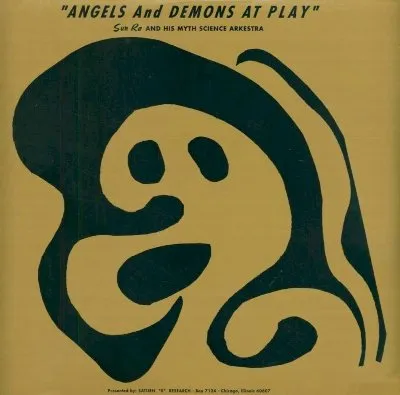
Angels and Demons at Play
1960
Sets the stage with similar avant-garde elements leading into the current album.
If this landed
Records by other artists that run on the same instinct.
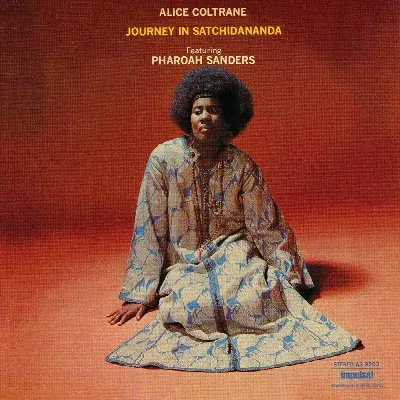
Journey in Satchidananda
Alice Coltrane
Explores cosmic themes through spiritual jazz, blending avant-garde textures with rich harmonies.
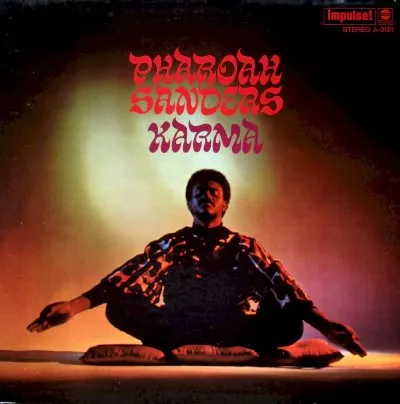
Karma
Pharoah Sanders
Shares a similar exploration of spirituality and cosmic themes with free-form improvisation.
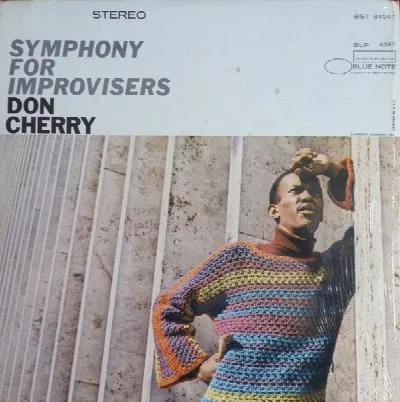
Symphony for Improvisers
Don Cherry
Innovative blend of avant-garde jazz and world music, echoing themes of exploration and experimentation.
Reference: Wikipedia · MusicBrainz · Wikidata
Sync your library
Everything you track here works immediately — no account needed. Create one when you want to sync across devices.