


Photo: Wikimedia Commons · Public domain

The Northsound field guide
Where to start with Alexander Borodin
Begin with a sweeping symphony and the dance-rich music of Prince Igor.
Borodin pairs long, memorable melodies with orchestral color and rhythms shaped by dance. Start with a recording that puts his Second Symphony beside music from Prince Igor, then follow whichever side draws you in: the symphonic sweep or the stage drama.
- What they sound like
- Expect broad orchestral melodies, shifting harmonies, and lively dance rhythms, alongside chamber music built around strings. Borodin’s music often balances a spacious, songful quality with tightly shaped instrumental writing.
- You'll like this if
- You’ll connect with Borodin if you like orchestral music with clear melodies and vivid rhythmic contrasts. His work also suits listeners curious about Russian opera and expressive string quartets.
01 · Your first stop
Start here.
New to Alexander Borodin? You don’t need to hear everything. Start with this.
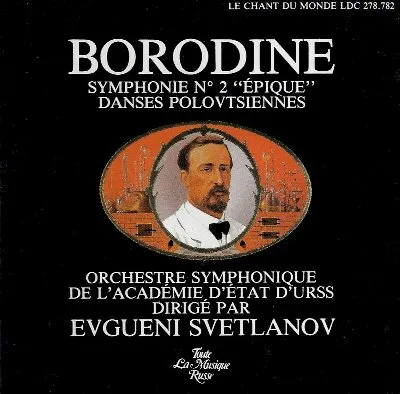
Your first album
Symphonie no. 2 “Épique” / Danses Polovtsiennes
1986 ·Best starting point
The pairing of the Second Symphony and dances from Prince Igor gives you a direct way to test Borodin’s broad melodic writing against his more rhythmically driven orchestral music. It is a useful first stop before deciding whether to explore his opera or string quartets.
Only have a few minutes?
“Polovtsian Dances”
Its changing dance rhythms and colorful orchestral writing offer a concise introduction to the more vivid, theatrical side of Borodin.
Not the album for you? Try one of these instead.
-
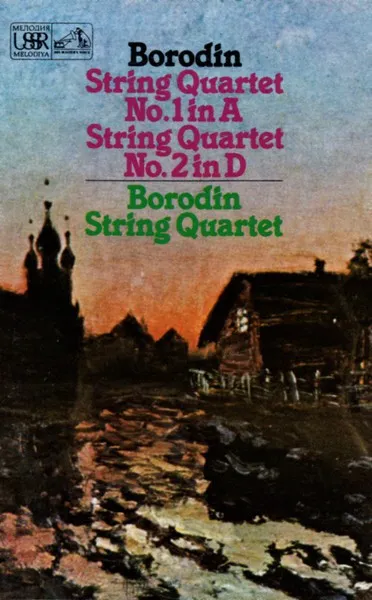
String Quartets nos. 1 & 2 (1982) Choose the two string quartets if you want to hear Borodin’s melodies and harmonic turns in a smaller, string-led setting.
-
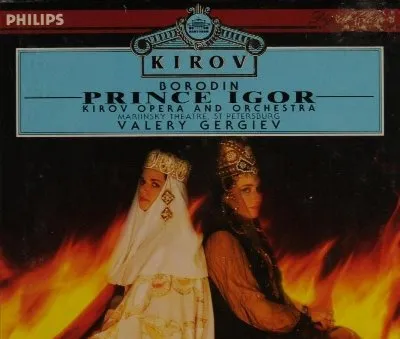
Prince Igor (1995) Start with Prince Igor if you are drawn to opera and want to hear the dramatic context behind the Polovtsian dances.
-
Symphony no. 2 in B minor (2005) Pick this Second Symphony recording if you would rather focus on one extended orchestral work before branching out.

02 · The trail ahead
The records, in order
Every Alexander Borodin studio album, from the first. Once the first stop lands, keep going in either direction.
-
String Quartets nos. 1 & 2 1982 Not yet reviewed
-
Symphonie no. 2 “Épique” / Danses Polovtsiennes 1986 Your first stop Not yet reviewed
-
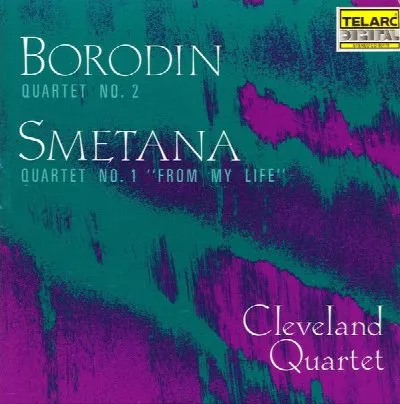
Borodin: Quartet No. 2 / Smetana: Quartet No. 1 "From My Life" 1989 Not yet reviewed
-
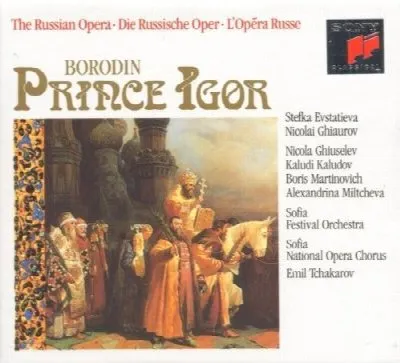
Prince Igor 1990 Not yet reviewed
-
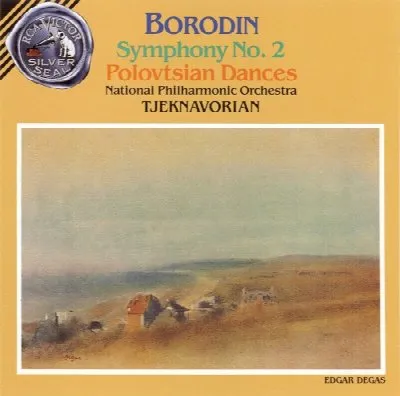
Symphony no. 2 / In the Steppes of Central Asia / Prince Igor 1991 Not yet reviewed
-
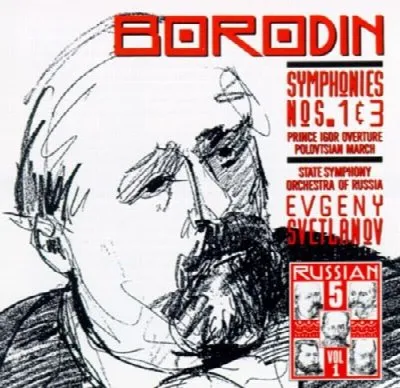
Symphonies nos. 1 & 3 / Prince Igor Overture / Polovtsian March 1993 Not yet reviewed
-
Prince Igor 1995 Not yet reviewed
-
String Quartet No. 2 / Cello Sonata / Piano Quintet 1999 Not yet reviewed

-
Symphonies nos. 1-3 2004 Not yet reviewed

-
Danses polovtsiennes du Prince Igor / Symphonie n° 8 2008 Not yet reviewed

03 · Beyond this guide
Where to go next
-
Nikolai Rimsky-Korsakov For richly colored orchestration, sweeping Russian melodies, and operatic scenes that build to vivid climaxes, start here. Start with Scheherazade / Capriccio Espagnol (1984)

-
Pyotr Ilyich Tchaikovsky Look to his symphonies and operas for the same broad, memorable melodies and emotionally charged orchestral surges. Start with The Nutcracker Suite (1990)

-
Alexander Glazunov His late-Romantic symphonies and chamber music combine lush melodic writing with the polished orchestral sound of Borodin’s circle. Start with The Seasons (1993)

04 · Keep exploring
The Weekly Dispatch
Every Tuesday, a few more places to start listening.
One short email. Free, unsubscribe anytime. Read this week's.
Common questions
Where should I start with Alexander Borodin?
Start with Symphonie no. 2 “Épique” / Danses Polovtsiennes (1986). The pairing of the Second Symphony and dances from Prince Igor gives you a direct way to test Borodin’s broad melodic writing against his more rhythmically driven orchestral music. It is a useful first stop before deciding whether to explore his opera or string quartets.
What does Alexander Borodin sound like?
Expect broad orchestral melodies, shifting harmonies, and lively dance rhythms, alongside chamber music built around strings. Borodin’s music often balances a spacious, songful quality with tightly shaped instrumental writing. Rooted in classical and opera.
In what order should I listen to Alexander Borodin's albums?
In release order: "String Quartets nos. 1 & 2" (1982), "Symphonie no. 2 “Épique” / Danses Polovtsiennes" (1986), "Borodin: Quartet No. 2 / Smetana: Quartet No. 1 "From My Life"" (1989), "Prince Igor" (1990), "Symphony no. 2 / In the Steppes of Central Asia / Prince Igor" (1991), "Symphonies nos. 1 & 3 / Prince Igor Overture / Polovtsian March" (1993), "Prince Igor" (1995), "String Quartet No. 2 / Cello Sonata / Piano Quintet" (1999), "Symphonies nos. 1-3" (2004) and "Danses polovtsiennes du Prince Igor / Symphonie n° 8" (2008). New listeners can start with "Symphonie no. 2 “Épique” / Danses Polovtsiennes" and work outward in either direction.
Which artists should I listen to after Alexander Borodin?
Try Nikolai Rimsky-Korsakov (start with "Scheherazade / Capriccio Espagnol"), Pyotr Ilyich Tchaikovsky (start with "The Nutcracker Suite") and Alexander Glazunov (start with "The Seasons").