


Photo: Herbert Lambert (1881-1936) · Public domain

The Northsound field guide
Where to start with Arnold Bax
Expansive orchestral writing, shifting moods, and melodies that unfold across long spans.
Bax is a good fit if you like orchestral music that builds atmosphere as much as melody. Start with a record that pairs a full symphony with the concise, vividly pictorial tone poem “Tintagel,” then follow whichever side draws you in.
- What they sound like
- Bax’s orchestral music moves between broad, romantic melodies and dense, changing textures. Expect long stretches of atmosphere and momentum rather than sharply separated tunes.
- You'll like this if
- You’ll connect with Bax if you enjoy orchestral music that shifts between reflective passages and surges of color. His longer symphonies reward patient listening.
01 · Your first stop
Start here.
New to Arnold Bax? You don’t need to hear everything. Start with this.
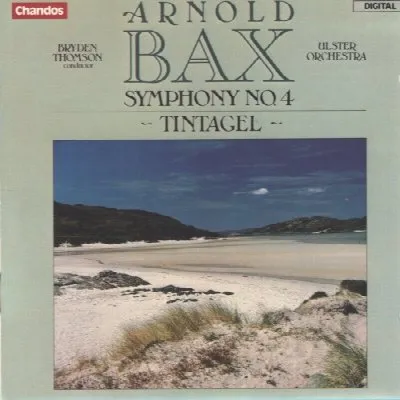
Your first album
Symphony no. 4 / Tintagel
1983 ·Strong starting point
Symphony no. Start with “Tintagel” for a concentrated taste of his atmospheric writing, then try the symphony to hear how he develops that approach over a longer span.
Only have a few minutes?
“Tintagel”
Its compact tone-poem form makes Bax’s shifting orchestral colors and sense of landscape easier to take in than a full symphony.
Not the album for you? Try one of these instead.
-
Symphony no. 2 / November Woods (1999) Choose Symphony no. 2 / November Woods if you want a darker, more restless introduction to Bax’s orchestral writing.

-
Symphony no. 1 / In the Faery Hills / The Garden of Fand (1998) Choose Symphony no. 1 / In the Faery Hills / The Garden of Fand if you want a pairing that places a symphony alongside two atmospheric shorter works.

-
Sonata for Flute and Harp (1994) Choose Sonata for Flute and Harp if you would rather begin with a more intimate chamber texture than a full orchestra.

02 · The trail ahead
Listening paths
Pick a route through Arnold Bax's catalog.
Follow Bax from evocative tone poems into the symphonic works that define his orchestral voice.
-
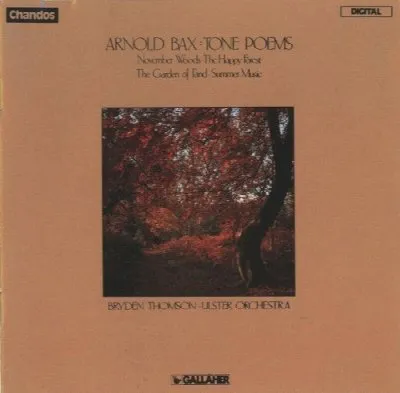
1Tone Poems (1983) Begin with the concentrated orchestral landscapes that frame his style.
-
2Symphony no. 1 / In the Faery Hills / The Garden of Fand (1998) Hear those atmospheric colors expand into a full symphonic statement.
-
3Symphony no. 2 / November Woods (1999) Deepen the journey with a darker, more forceful orchestral world.
-
4The Symphonies (2003) Take in the larger arc of Bax's symphonic imagination.

Start with vivid orchestral highlights, then move toward Bax's broader symphonic language.
-
1Symphony no. 7 / Tintagel (Tone Poem) (2003) A direct pairing of a sweeping symphony and a vivid tone poem.

-
2Tone Poems, Volume 2: Into the Twilight / In the Faery Hills / Roscatha / The Tale the Pine-Trees Knew (1985) Stay with the colorful orchestral miniatures before widening the scope.

-
3Symphony no. 4 / Nympholept (2002) Step into a more expansive, less immediately familiar symphonic landscape.

Explore restless early orchestral writing, unusual forces, and music for the screen.
-
1Spring Fire / Symphonic Scherzo / Northern Ballad No. 2 (1986) Open with energetic early works and their shifting orchestral textures.

-
2Octet / String Quintet / Concerto for Flute, Oboe, Harp and String Quartet / Threnody and Scherzo / In Memoriam (1998) Hear Bax recast his sound for chamber ensembles and unusual combinations.

-
3The Film Music of Sir Arnold Bax (2003) Discover how his distinctive atmosphere works in a cinematic setting.

-
4Concertante for Piano (Left Hand) and Orchestra / In Memoriam / The Bard of the Dimbovitza (1999) Finish with a less conventional concerto and contrasting vocal-orchestral works.

03 · Beyond this guide
Where to go next
-
Jean Sibelius For broad symphonic arcs, shifting tonal landscapes, and orchestration that moves between brooding stillness and surging grandeur. Start with Symphony no. 2 / Finlandia / Karelia Suite (1992)

-
Ralph Vaughan Williams His expansive symphonies pair long-breathed melodies with richly layered orchestration and a distinctly British pastoral character. Start with Symphony no. 5 in D / The Lark Ascending (1987)

-
Gustav Holst Holst's orchestral music shares Bax's appetite for vivid instrumental color, broad gestures, and dramatic changes in texture. Start with The Planets (1989)

04 · Keep exploring
The Weekly Dispatch
Every Tuesday, a few more places to start listening.
One short email. Free, unsubscribe anytime. Read this week's.
Common questions
Where should I start with Arnold Bax?
Start with Symphony no. 4 / Tintagel (1983). Symphony no. Start with “Tintagel” for a concentrated taste of his atmospheric writing, then try the symphony to hear how he develops that approach over a longer span.
What does Arnold Bax sound like?
Bax’s orchestral music moves between broad, romantic melodies and dense, changing textures. Expect long stretches of atmosphere and momentum rather than sharply separated tunes. Rooted in opera and symphony.
In what order should I listen to Arnold Bax's albums?
In release order: "Tone Poems" (1983), "Symphony no. 4 / Tintagel" (1983), "Sonata for Flute and Harp" (1994), "Symphony no. 1 / In the Faery Hills / The Garden of Fand" (1998), "Quintet for Harp and Strings / Elegiac Trio / Fantasy Sonata / Sonata for Flute and Harp" (2000), "String Quartets nos. 1 and 2" (2001), "Symphony no. 7 / Tintagel (Tone Poem)" (2003), "Symphony no. 6 / Into the Twilight" (2003), "Piano Sonatas nos. 1 and 2 / Dream in Exile / Nereid" (2004) and "Clarinet Sonatas / Piano Trio / Trio in One Movement" (2006). New listeners can start with "Symphony no. 4 / Tintagel" and work outward in either direction.
Which artists should I listen to after Arnold Bax?
Try Jean Sibelius (start with "Symphony no. 2 / Finlandia / Karelia Suite"), Ralph Vaughan Williams (start with "Symphony no. 5 in D / The Lark Ascending") and Gustav Holst (start with "The Planets").