


Photo: James Bacon and Sons, Leeds · Public domain

The Northsound field guide
Where to start with Ralph Vaughan Williams
Begin with a lyrical violin work and a spacious, quietly searching symphony.
Vaughan Williams moves between folk-inflected melody, spacious orchestral writing and restless symphonic drama. Start with a pairing of his Fifth Symphony and The Lark Ascending: one gives you room to settle into his lyrical side, while the other shows how he builds a larger musical argument.
- What they sound like
- Expect long, singable melodies, rich orchestral colors and harmonies that can feel both rooted in folk music and quietly unsettled. His music ranges from hushed reflection to forceful symphonic tension.
- You'll like this if
- You'll connect with this if you enjoy orchestral music that lets melodies unfold gradually, especially when calm pastoral passages give way to deeper or more searching moods.
01 · Your first stop
Start here.
New to Ralph Vaughan Williams? You don’t need to hear everything. Start with this.

Your first album
Symphony no. 5 / Norfolk Rhapsody no. 1 / The Lark Ascending
1996 ·Best starting point
This album pairs Symphony No. 5 with The Lark Ascending, making the contrast between Vaughan Williams's expansive symphonic writing and his delicate violin-led lyricism easy to hear. Norfolk Rhapsody No. 1 adds another view of his folk-influenced orchestral style.
Only have a few minutes?
“The Lark Ascending” from Fantasia on a Theme by Thomas Tallis / Fantasia on Greensleeves / The Lark Ascending / Five Variants on Dives and Lazurus (1972)
Its solo violin line floats above a gently shifting orchestral backdrop, offering a direct introduction to Vaughan Williams's lyrical and spacious side.
Not the album for you? Try one of these instead.
-
Fantasia on Greensleeves / Fantasia on a Theme by Thomas Tallis / The Lark Ascending (1994) Start here if you want a focused first listen to atmospheric pieces, including The Lark Ascending and Fantasia on a Theme by Thomas Tallis.

-
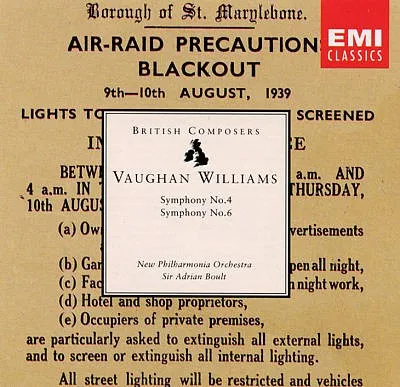
Symphony no. 4 / Symphony no. 6 (1991) Choose this pairing of Symphonies Nos. 4 and 6 if you prefer orchestral writing with sharper tension and less pastoral calm.
-
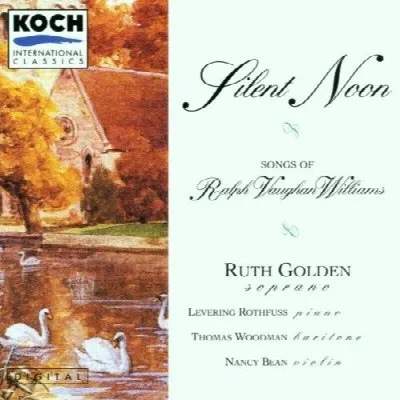
Silent Noon: Songs of Ralph Vaughan Williams (1993) Begin with these songs if you would rather hear intimate vocal writing than a full orchestra.
02 · The trail ahead
The records, in order
Every Ralph Vaughan Williams studio album, from the first. Once the first stop lands, keep going in either direction.
-
Fantasia on a Theme by Thomas Tallis / Fantasia on Greensleeves / The Lark Ascending / Five Variants on Dives and Lazurus 1972 Not yet reviewed

-
A London Symphony / Fantasia on a Theme by Thomas Tallis 1985 Not yet reviewed

-
Symphony no. 5 in D / Flos Campi 1987 Not yet reviewed

-
Symphony no. 4 / Symphony no. 6 1991 Not yet reviewed
-
Symphony No. 6 / Tuba Concerto 1991 Not yet reviewed

-
Silent Noon: Songs of Ralph Vaughan Williams 1993 Not yet reviewed
-
Symphony no. 5 / Norfolk Rhapsody no. 1 / The Lark Ascending 1996 Your first stop Not yet reviewed
-
Hickox Conducts Vaughan Williams 2000 Not yet reviewed

-
Hodie / Fantasia on Christmas Carols 2000 Not yet reviewed

-
Orchestral Works 2005 Not yet reviewed

03 · Beyond this guide
Where to go next
-
Gustav Holst Try Holst for similarly spacious orchestral writing, modal color, and English folk inflections, especially in his quieter works. Start with The Planets (1989)

-
Arnold Bax Bax pairs broad symphonic canvases with lyrical themes and rich, atmospheric orchestration that can feel both reflective and stormy. Start with Symphony no. 4 / Tintagel (1983)

-
Edward Elgar For another strand of English orchestral music, Elgar brings expansive melodies, resonant harmonies, and carefully built emotional climaxes. Start with Enigma Variations / Serenade for Strings / In the South (1990)

04 · Keep exploring
The Weekly Dispatch
Every Tuesday, a few more places to start listening.
One short email. Free, unsubscribe anytime. Read this week's.
Common questions
Where should I start with Ralph Vaughan Williams?
Start with Symphony no. 5 / Norfolk Rhapsody no. 1 / The Lark Ascending (1996). This album pairs Symphony No. 5 with The Lark Ascending, making the contrast between Vaughan Williams's expansive symphonic writing and his delicate violin-led lyricism easy to hear. Norfolk Rhapsody No. 1 adds another view of his folk-influenced orchestral style.
What does Ralph Vaughan Williams sound like?
Expect long, singable melodies, rich orchestral colors and harmonies that can feel both rooted in folk music and quietly unsettled. His music ranges from hushed reflection to forceful symphonic tension. Rooted in classical and opera.
In what order should I listen to Ralph Vaughan Williams' albums?
In release order: "Fantasia on a Theme by Thomas Tallis / Fantasia on Greensleeves / The Lark Ascending / Five Variants on Dives and Lazurus" (1972), "A London Symphony / Fantasia on a Theme by Thomas Tallis" (1985), "Symphony no. 5 in D / Flos Campi" (1987), "Symphony no. 4 / Symphony no. 6" (1991), "Symphony No. 6 / Tuba Concerto" (1991), "Silent Noon: Songs of Ralph Vaughan Williams" (1993), "Symphony no. 5 / Norfolk Rhapsody no. 1 / The Lark Ascending" (1996), "Hickox Conducts Vaughan Williams" (2000), "Hodie / Fantasia on Christmas Carols" (2000) and "Orchestral Works" (2005). New listeners can start with "Symphony no. 5 / Norfolk Rhapsody no. 1 / The Lark Ascending" and work outward in either direction.
Which artists should I listen to after Ralph Vaughan Williams?
Try Gustav Holst (start with "The Planets"), Arnold Bax (start with "Symphony no. 4 / Tintagel") and Edward Elgar (start with "Enigma Variations / Serenade for Strings / In the South").