


Photo: Pál M. Vajda · Public domain

The Northsound field guide
Where to start with Zoltán Kodály
Folk-shaped melodies, vivid orchestral color, and rhythms that keep moving.
Kodály’s orchestral music turns Hungarian folk-inspired melodies into vivid, carefully shaped concert pieces. Start with a collection that moves from theatrical scenes to brisk dances and a set of variations, then follow whichever sound catches your ear.
- What they sound like
- Expect lyrical melodies and strong dance rhythms, often colored by orchestral writing that evokes Hungarian folk music. His music ranges from bright, theatrical suites to intimate chamber works.
- You'll like this if
- You’ll connect with Kodály if you enjoy classical music with memorable melodies, lively rhythmic turns, and folk-inflected orchestral color. His quieter cello and string works offer a different route if you prefer chamber music.
01 · Your first stop
Start here.
New to Zoltán Kodály? You don’t need to hear everything. Start with this.
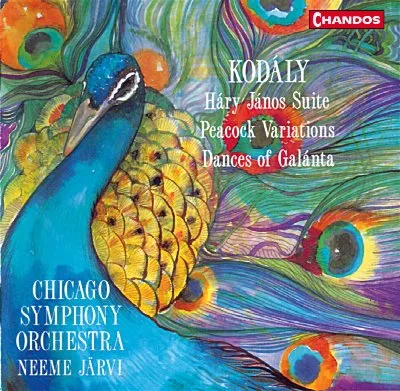
Your first album
Háry János Suite / Peacock Variations / Dances of Galánta
1990 ·Best starting point
Háry János Suite / Peacock Variations / Dances of Galánta offers a compact introduction to Kodály’s orchestral range without committing you to a single long-form work. Its folk-shaped melodies and contrasting variation and dance forms give you clear clues about which part of his music to pursue next.
Only have a few minutes?
“Dances of Galánta” from Musica Hungarica (1960)
Its quick dance rhythms and vivid orchestral character make it a direct first taste of Kodály’s folk-inflected orchestral style.
Not the album for you? Try one of these instead.
-
Háry János (1995) Start with Háry János if you want to hear Kodály build a theatrical musical world around a single folk-opera subject.

-
Cello Sonatas (2003) Start with Cello Sonatas if you prefer intimate chamber writing and want to hear how one instrument can carry Kodály’s melodic and rhythmic detail.

-
String Quartets nos. 1 & 2 / Intermezzo / Gavotte (2014) Start with the String Quartets if you want close, conversational interplay rather than the scale and color of an orchestra.

02 · The trail ahead
The records, in order
Every Zoltán Kodály studio album, from the first. Once the first stop lands, keep going in either direction.
-
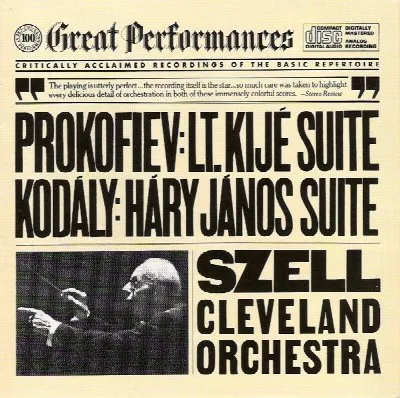
Kodaly: Hary Janos Suite / Prokofiev: Lieutenant Kijé Suite 1983 Not yet reviewed
-
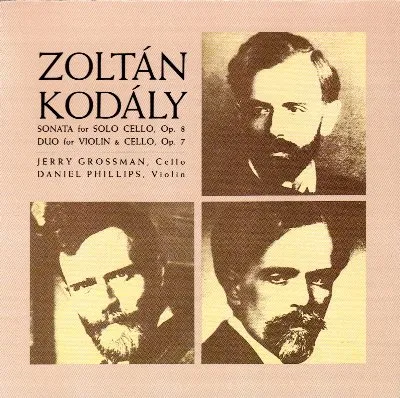
Sonata for Solo Cello / Duo for Violin and Cello 1984 Not yet reviewed
-
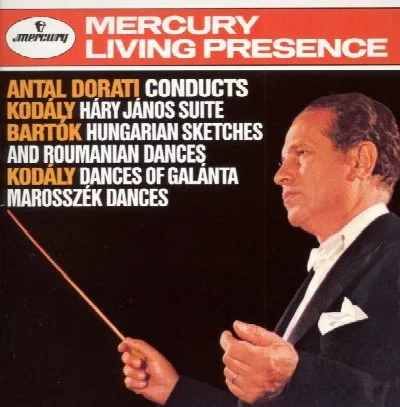
Antal Dorati conducts Kodály & Bartók 1990 Not yet reviewed
-
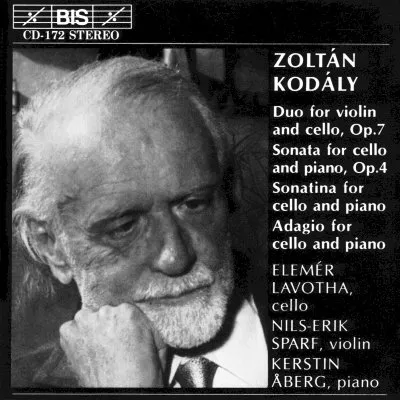
Duo for Violin and Cello, op. 7 / Sonata for Cello, op. 4 / Sonatina for Cello and Piano / Adagio for Cello and Piano 1991 Not yet reviewed
-
Starker plays Kodaly 1992 Not yet reviewed

-
Psalmus hungaricus / Marosszék Dances / Galánta Dances 1992 Not yet reviewed

-
The Complete Piano Music 1994 Not yet reviewed

-
Háry János 1995 Not yet reviewed
-
Hary Janos Suite / Dances 1998 Not yet reviewed

-
Works for Cello (Complete) 2003 Not yet reviewed

03 · Beyond this guide
Where to go next
-
Béla Bartók For a close companion to Kodály, explore Bartók’s Hungarian folk-derived melodies, pungent harmonies, and sharply patterned rhythms. Start with Concerto for Orchestra / Music for Strings, Percussion and Celesta (1990)

-
Antonín Dvořák Try Dvořák for lyrical themes shaped by Central European folk rhythms and a rich, warmly consonant orchestral sound. Start with Symphony no. 9 "From the New World" / Slavonic Dances (1992)

-
Bedřich Smetana His national-romantic orchestral music pairs memorable folk-inflected tunes with dance rhythms and vivid scene-setting. Start with Má vlast (1992)

04 · Keep exploring
The Weekly Dispatch
Every Tuesday, a few more places to start listening.
One short email. Free, unsubscribe anytime. Read this week's.
Common questions
Where should I start with Zoltán Kodály?
Start with Háry János Suite / Peacock Variations / Dances of Galánta (1990). Háry János Suite / Peacock Variations / Dances of Galánta offers a compact introduction to Kodály’s orchestral range without committing you to a single long-form work. Its folk-shaped melodies and contrasting variation and dance forms give you clear clues about which part of his music to pursue next.
What does Zoltán Kodály sound like?
Expect lyrical melodies and strong dance rhythms, often colored by orchestral writing that evokes Hungarian folk music. His music ranges from bright, theatrical suites to intimate chamber works. Rooted in classical.
In what order should I listen to Zoltán Kodály's albums?
In release order: "Kodaly: Hary Janos Suite / Prokofiev: Lieutenant Kijé Suite" (1983), "Sonata for Solo Cello / Duo for Violin and Cello" (1984), "Antal Dorati conducts Kodály & Bartók" (1990), "Duo for Violin and Cello, op. 7 / Sonata for Cello, op. 4 / Sonatina for Cello and Piano / Adagio for Cello and Piano" (1991), "Starker plays Kodaly" (1992), "Psalmus hungaricus / Marosszék Dances / Galánta Dances" (1992), "The Complete Piano Music" (1994), "Háry János" (1995), "Hary Janos Suite / Dances" (1998) and "Works for Cello (Complete)" (2003).
Which artists should I listen to after Zoltán Kodály?
Try Béla Bartók (start with "Concerto for Orchestra / Music for Strings, Percussion and Celesta"), Antonín Dvořák (start with "Symphony no. 9 "From the New World" / Slavonic Dances") and Bedřich Smetana (start with "Má vlast").