


Photo: Sonia y natalia · CC BY-SA 3.0

The Northsound field guide
Where to start with Erik Satie
Spare, gently insistent piano music, with wit and theatrical surprises beyond the familiar pieces.
Satie’s piano music can feel calm without becoming passive: repeated figures and open space make small changes easy to notice. Start with his Gymnopédies and Gnossiennes, then follow the path toward playful miniatures and stranger theatrical works.
- What they sound like
- Expect piano music built from clear, recurring phrases, quiet dynamics, and plenty of space. Its measured pace can feel meditative, while the unusual titles and turns of phrase bring a dry sense of humor.
- You'll like this if
- You’ll connect with Satie if you like music that rewards close attention without demanding a grand, dramatic build. His piano pieces are a good fit for listeners drawn to restrained melodies and surprising little changes.
01 · Your first stop
Start here.
New to Erik Satie? You don’t need to hear everything. Start with this.

Your first album
Gymnopédies / Gnossiennes / Sports et Divertissements
1990 ·Best starting point
This collection pairs the spacious, gently repeating lines of the Gymnopédies and Gnossiennes with the compact, characterful pieces of Sports et Divertissements. That contrast makes it a useful first album: you hear both the stillness and the wit before choosing which side to follow.
Only have a few minutes?
“Gymnopédie No. 1” from 迷宮のエリック・サティ (1981)
Its unhurried pace, spare piano texture, and recurring phrases make the album’s quiet concentration immediately clear.
Not the album for you? Try one of these instead.
-
Piano Works: Gymnopédies & Gnossiennes (2001) Start here if you want a focused introduction to the piano pieces most closely associated with Satie, without the broader selection of miniatures.

-
The Complete Ballets of Erik Satie: Parade / Relache / Les Aventures de Mercure (1989) Choose this if you are curious about Satie’s theatrical side and want orchestral ballet music rather than a piano-first introduction.

-
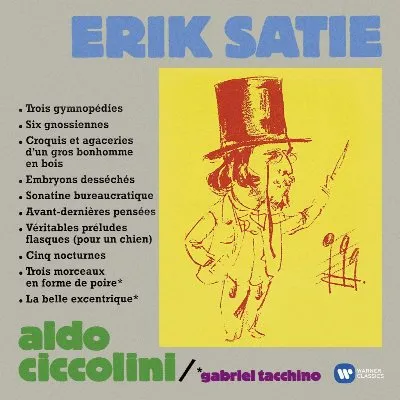
Gymnopédies / Gnossiennes / Nocturnes / La Belle Excentrique / Trois Morceaux en forme de poire (and other works for piano) (1986) This wider selection suits listeners who want the familiar piano works alongside nocturnes and works for piano four hands.
02 · The trail ahead
Listening paths
Pick a route through Erik Satie's catalog.
Follow Satie from his spare piano signatures to his larger, stranger worlds.
-
1Gnossiennes / Gymnopédies / Pièces froides Start with the still, distinctive piano language at his core.

-
2Sports et Divertissements (Piano - Pascal Rogé) Hear that restraint turn playful and sharply characterful.

-
3Socrate + Melodies Move from intimate piano pieces to his lucid vocal writing.
-
4The Complete Ballets of Erik Satie: Parade / Relache / Les Aventures de Mercure (1989) Finish with stage works that reveal his experimental public side.
Begin with familiar, calming piano pieces, then explore Satie's quirks.
-
1The Best of Erik Satie: Gymnopédie (2015) A welcoming sampler centered on his most recognizable sound.
-
2Gymnopédies / Gnossiennes / Sports et Divertissements (1990) Broaden the piano palette while keeping the melodies approachable.
-
3Jack in the Box and Other Piano Favourites (1985) Introduce his wit through concise, characterful miniatures.
-
4Parade / Gymnopédies / La Mort de Socrate / La Belle Excentrique / Trois morceaux en forme de poire (2014) End with a varied mix of ballet, piano, and vocal-scale works.

Explore Satie's ritual, abstraction, and theatrical collisions beyond the familiar piano works.
-
1Vexations (1990) Begin with repetition pushed into a durational, almost ritual experience.

-
2Esoteric Works: Ogives / Sonneries de la rose+croix / Préludes / Danses gothiques (2021) Enter his ceremonial, austere side through unusual early pieces.

-
3Satie: Relâche / Vexations / Musique d’ameublement / Hindemith: Concertpiece for Trautonium & Strings (2004) Hear repetition and furniture music beside modernist sound worlds.

-
4The Unheard Satie: Nocturnes and Other Reconstructions from the Original Manuscripts (2025) Close with reconstructed material that unsettles familiar boundaries.
03 · Beyond this guide
Where to go next
-
Federico Mompou Start here for hushed piano miniatures that use open space, gentle repetition, and subtle harmonic shifts much like Satie’s quieter pieces. Start with Cançons i danses / Suburbis / Cants mágics (2001)

-
Claude Debussy His piano works share Satie’s refined restraint, unexpected chords, and focus on color over grand Romantic gestures. Start with La Mer / Nocturnes (1988)

-
John Cage His quiet, unconventional piano pieces extend Satie’s interest in repetition, stillness, and music that resists dramatic development. Start with Sonatas and Interludes for Prepared Piano (1999)

04 · Keep exploring
The Weekly Dispatch
Every Tuesday, a few more places to start listening.
One short email. Free, unsubscribe anytime. Read this week's.
Common questions
Where should I start with Erik Satie?
Start with Gymnopédies / Gnossiennes / Sports et Divertissements (1990). This collection pairs the spacious, gently repeating lines of the Gymnopédies and Gnossiennes with the compact, characterful pieces of Sports et Divertissements. That contrast makes it a useful first album: you hear both the stillness and the wit before choosing which side to follow.
What does Erik Satie sound like?
Expect piano music built from clear, recurring phrases, quiet dynamics, and plenty of space. Its measured pace can feel meditative, while the unusual titles and turns of phrase bring a dry sense of humor. Rooted in Romantic music.
In what order should I listen to Erik Satie's albums?
In release order: "3 Gymnopédies & Other Piano Works" (1984), "Œuvres pour piano" (1985), "The Complete Ballets of Erik Satie: Parade / Relache / Les Aventures de Mercure" (1989), "The Music of Erik Satie" (1990), "Gymnopédies / Gnossiennes / Sports et Divertissements" (1990), "Œuvres pour piano" (1991), "Œuvres pour piano, Volume 2" (1993), "L'Œuvre pour piano" (1995), "Satie" (1998) and "Piano works" (2006). New listeners can start with "Gymnopédies / Gnossiennes / Sports et Divertissements" and work outward in either direction.
Which artists should I listen to after Erik Satie?
Try Federico Mompou (start with "Cançons i danses / Suburbis / Cants mágics"), Claude Debussy (start with "La Mer / Nocturnes") and John Cage (start with "Sonatas and Interludes for Prepared Piano").