



The Northsound field guide
Where to start with Iannis Xenakis
Start with percussion in motion, then branch into orchestral and electronic Xenakis.
Xenakis can sound like an orchestra, a percussion ensemble, or electronic sound pushed into unfamiliar shapes. Start with Pléïades to hear how sharply patterned rhythms and changing percussion colors can hold your attention without requiring a map of his compositional methods.
- What they sound like
- Expect tightly packed rhythms, abrupt shifts in texture, and sounds that can feel physical as well as cerebral. Xenakis moves between acoustic ensembles and electronics, often making timbre and pattern the main event.
- You'll like this if
- You'll connect with Xenakis if you enjoy percussion-led music, complex rhythmic patterns, and pieces that build tension without relying on familiar melodies. His work also suits listeners curious about where instrumental music ends and sound design begins.
01 · Your first stop
Start here.
New to Iannis Xenakis? You don’t need to hear everything. Start with this.
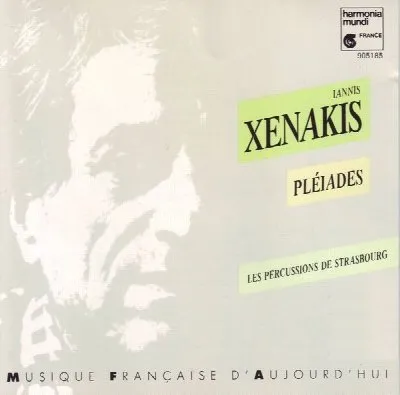
Your first album
Pléïades
1987 ·Strong starting point
Pléïades makes percussion the focus, letting you hear patterns and timbral changes unfold across the ensemble. Its concentrated instrumental sound is a clearer first step than Xenakis’s more abstract electronic works.
Only have a few minutes?
“Pléïades”
Start with the opening movement, “Peaux,” to hear the ensemble’s forceful drum sounds and tightly coordinated rhythmic writing up close.
Not the album for you? Try one of these instead.
-
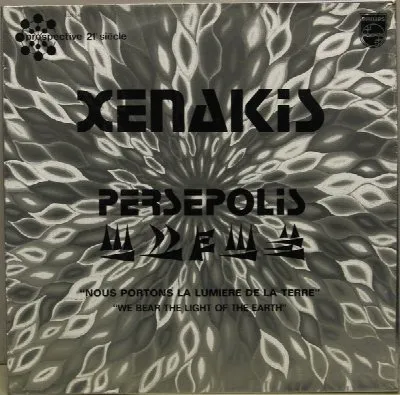
Persepolis (1972) Choose Persepolis if you want to begin with electronic sound, where shifting textures replace the familiar roles of melody and instrumental sections.
-
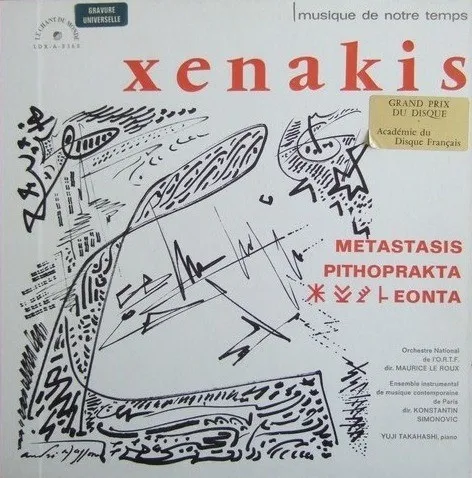
Metastasis / Pithoprakta / Eonta (1965) Choose Metastasis / Pithoprakta / Eonta to hear Xenakis’s orchestral writing, with dense string textures and contrasting instrumental forces.
-
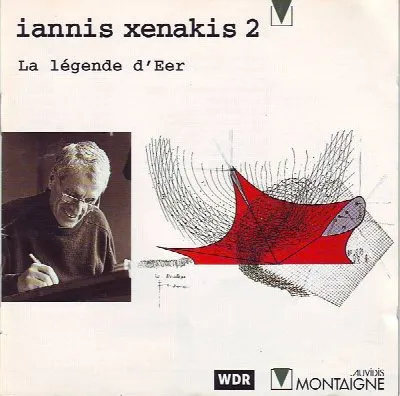
La Légende d’Eer (1995) Choose La Légende d’Eer if you want an electronic work that unfolds as an extended, immersive sound environment.
02 · The trail ahead
Listening paths
Pick a route through Iannis Xenakis' catalog.
Trace Xenakis from architectural orchestral writing to immersive electronics and percussion.
-
1Metastasis / Pithoprakta / Eonta (1965) Start with the orchestral language that established his distinctive sound.
-
2Pléïades (1987) Hear his rhythmic and timbral thinking concentrated in percussion.
-
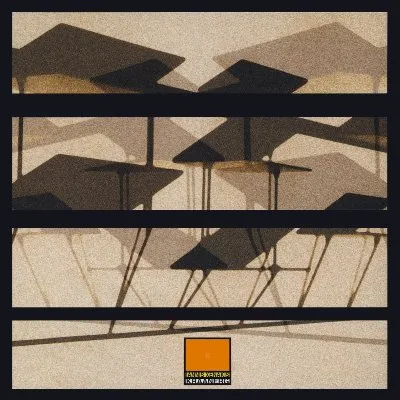
3Kraanerg (1997) Expand the scale with a sustained, high-energy orchestral journey.
-
4La Légende d’Eer (1995) Move from ensemble force into a vast electronic sound world.
-
5Diamorphoses / Concret PH / Orient Occident / Bohor (2022) Close with early electronic works that reveal his radical range.

Begin with vivid instrumental pieces, then gradually enter more demanding sound worlds.
-
1Pléïades (1987) Percussion colors and driving patterns make an immediate, tactile entry.
-
2Rebonds and other Works for Percussion (1999) Keep the rhythmic focus while moving into leaner solo textures.

-
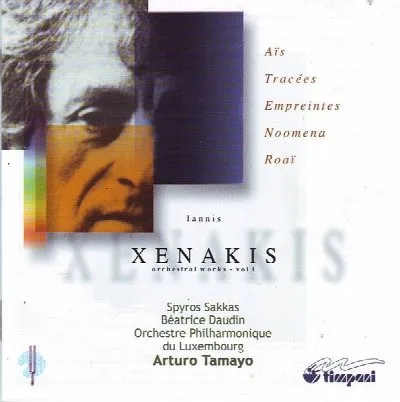
3Orchestral Works, Vol. I (2000) Broaden the palette with forceful orchestral writing.
-
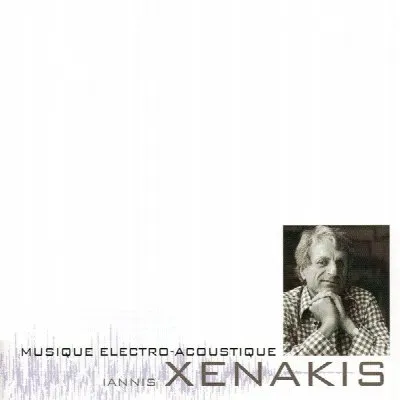
4Musique Electro-Acoustique (2001) Shift toward electronics once his textural language feels familiar.
Explore the extremes: spatial orchestras, abrasive electronics, and computer-realized sound.
-
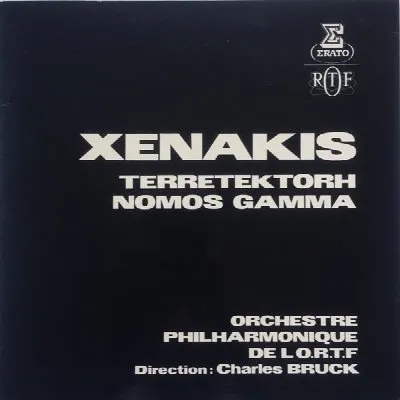
1Terretektorh / Nomos Gamma Begin inside spatialized orchestral music that surrounds the listener.
-
2Persepolis (1972) Push into monumental electronic sound and immersive duration.
-
3Music for Keyboard Instruments Realised by Computer (2008) Hear intricate instrumental writing recast through computer realization.

-
4Taurhiphanie / Voyage Absolu Des Unari Vers Andromède / Gendy 3 / S.709 (2022) Confront algorithmic synthesis and later electronic explorations.

-
5Bohor / Orient Occident (2026) End with uncompromising electronic sonorities at their most stark.

03 · Beyond this guide
Where to go next
-
György Ligeti His dense micropolyphonic textures and slowly shifting masses offer a similarly intricate, high-tension alternative, especially in works such as Atmosphères. Start with Le Grand Macabre (1999)

-
Karlheinz Stockhausen His pioneering electronic pieces and complex rhythmic structures suit listeners drawn to Xenakis’s restless, technically radical sound worlds. Start with Mantra (1999)

-
Pierre Boulez His tightly controlled modernist orchestral writing layers rapid gestures and shifting timbres, appealing to listeners who enjoy demanding, intricate textures. Start with Le Marteau sans maître (1964)

04 · Keep exploring
The Weekly Dispatch
Every Tuesday, a few more places to start listening.
One short email. Free, unsubscribe anytime. Read this week's.
Common questions
Where should I start with Iannis Xenakis?
Start with Pléïades (1987). Pléïades makes percussion the focus, letting you hear patterns and timbral changes unfold across the ensemble. Its concentrated instrumental sound is a clearer first step than Xenakis’s more abstract electronic works.
What does Iannis Xenakis sound like?
Expect tightly packed rhythms, abrupt shifts in texture, and sounds that can feel physical as well as cerebral. Xenakis moves between acoustic ensembles and electronics, often making timbre and pattern the main event. Rooted in electronic and contemporary classical music.
In what order should I listen to Iannis Xenakis' albums?
In release order: "Metastasis / Pithoprakta / Eonta" (1965), "Persepolis" (1972), "Pléïades" (1987), "Oresteïa" (1990), "Phlegra / Jalons / Keren / Nomos Alpha / Thalleïn" (1992), "Idmen / Pléïades" (1992), "Aïs / Gendy 3 / Taurhiphanie / Thalleïn" (1994), "La Légende d’Eer" (1995), "Kraanerg" (1997) and "Kraanerg" (2003). New listeners can start with "Pléïades" and work outward in either direction.
Which artists should I listen to after Iannis Xenakis?
Try György Ligeti (start with "Le Grand Macabre"), Karlheinz Stockhausen (start with "Mantra") and Pierre Boulez (start with "Le Marteau sans maître").