


Photo: 株式会社新潮社 (Shinchosha Publishing Co, Ltd.) · Public domain

The Northsound field guide
Where to start with Tōru Takemitsu
Begin with delicate chamber works shaped by pauses, shifting color, and unhurried movement.
Takemitsu makes space and silence feel as important as melody, with musical phrases that seem to emerge and recede rather than follow a steady beat. Start with a small-scale selection of works to hear that approach clearly, then move toward his larger orchestral writing if the pacing draws you in.
- What they sound like
- Takemitsu’s music moves through changing instrumental colors, open space, and irregular rhythms instead of relying on a strong, regular pulse. It can feel meditative, but its details keep shifting beneath the quiet surface.
- You'll like this if
- You may connect with this if you enjoy contemporary classical music that rewards close listening and leaves room for silence. It suits listeners more interested in atmosphere and instrumental color than in familiar song forms or driving rhythms.
01 · Your first stop
Start here.
New to Tōru Takemitsu? You don’t need to hear everything. Start with this.
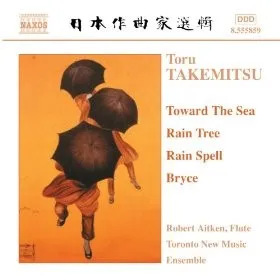
Your first album
Toward the Sea / Rain Tree / Rain Spell / Bryce
2003 ·Best starting point
The varied selection lets you hear Takemitsu work with small-scale instrumental combinations and spacious pacing without committing to a single long orchestral piece. Start here if you want to test whether his attention to silence and timbre holds your interest.
Only have a few minutes?
“Toward the Sea”
Its unhurried chamber writing offers a direct introduction to Takemitsu’s use of instrumental color and open space.
Not the album for you? Try one of these instead.
-
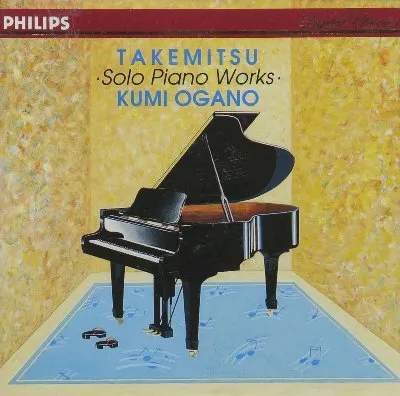
Solo Piano Works (1991) Choose Solo Piano Works if you would rather begin with one instrument and hear how Takemitsu shapes quiet, changing musical gestures at the keyboard.
-
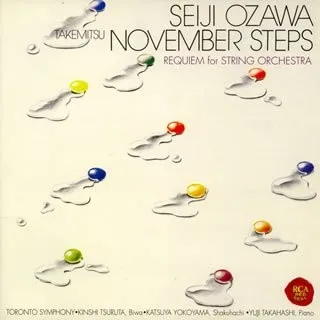
November Steps (1990) Choose November Steps if you want an early encounter with Takemitsu’s orchestral writing and the meeting of Japanese and Western instrumental traditions.
-
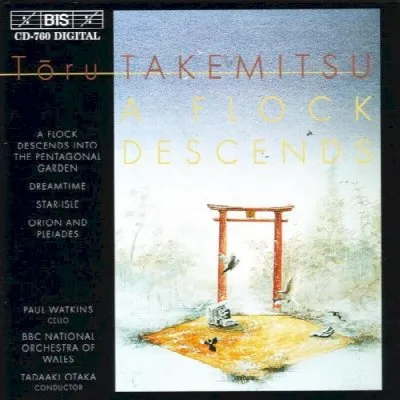
A Flock Descends (1996) Choose A Flock Descends if you are drawn to broader orchestral textures and want a more expansive starting point.
02 · The trail ahead
Listening paths
Pick a route through Tōru Takemitsu's catalog.
A focused route through Takemitsu’s orchestral language, Japanese influences, and intimate late style.
-
1Requiem (1996) Begin with the concentrated orchestral sound that established his voice.

-
2November Steps (1990) Hear his striking dialogue between Japanese and Western instruments.
-
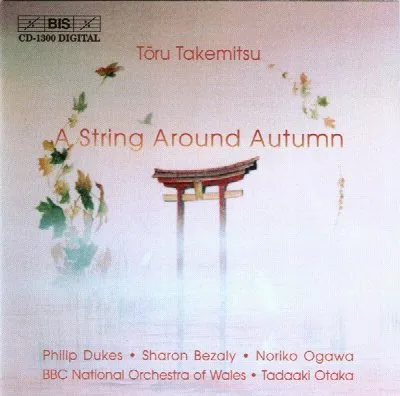
3A String Around Autumn (2002) Move into a more fluid, richly colored orchestral world.
-
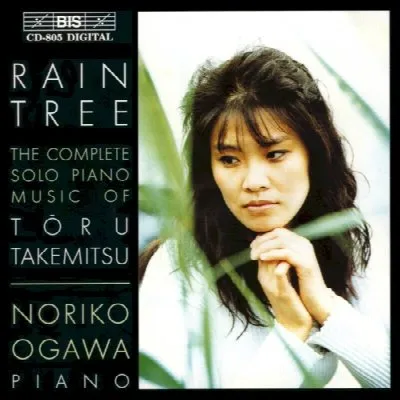
4Rain Tree: The Complete Solo Piano Music of Tōru Takemitsu (1996) End with the intimate piano miniatures and their delicate silences.
Start with lyrical, compact works, then gradually explore more unusual instrumental combinations.
-
1Solo Piano Works (1991) A clear, intimate introduction to his meditative musical language.
-
2Toward the Sea / Rain Tree / Rain Spell / Bryce (2003) Broaden the palette with atmospheric works and memorable instrumental colors.
-
3Film Music By Toru Takemitsu - Volume 1 (1990) Explore his concise, evocative writing through film compositions.

-
4November Steps (1990) Finish with a more challenging meeting of distinct musical traditions.
Follow shifting textures from spatial orchestral writing into unusual ensembles and solo-guitar detail.
-
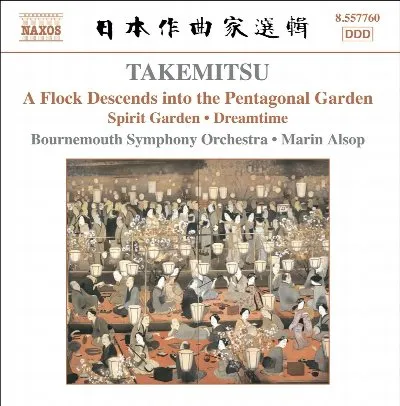
1A Flock Descends Into the Pentagonal Garden / Spirit Garden / Dreamtime (2006) Enter through expansive forms and vividly changing orchestral textures.
-
2From Me Flows What You Call Time / Twill by Twilight / Requiem (1998) Listen for intricate ensemble interplay and boldly contrasting sound worlds.
-
3November Steps / A String Around Autumn / Requiem for String Orchestra, etc. (2000) Compare Japanese instruments with varied orchestral approaches.
-
4Complete Works & Transcriptions for Solo Guitar (2020) Close with spare, exposed writing heard through a single instrument.

03 · Beyond this guide
Where to go next
-
John Cage Explore his chance-based and sparse works for unconventional timbres, open space, and a similarly attentive approach to silence. Start with Sonatas and Interludes for Prepared Piano (1999)

-
Claude Debussy His impressionistic harmony and finely shaded instrumental colors offer a clear route to the atmospheric side of Takemitsu. Start with La Mer / Nocturnes (1988)

-
Olivier Messiaen Listen for richly colored timbres, unusual rhythmic patterns, and contemplative writing shaped by nature and spirituality. Start with Turangalîla‐Symphonie (1991)

04 · Keep exploring
The Weekly Dispatch
Every Tuesday, a few more places to start listening.
One short email. Free, unsubscribe anytime. Read this week's.
Common questions
Where should I start with Tōru Takemitsu?
Start with Toward the Sea / Rain Tree / Rain Spell / Bryce (2003). The varied selection lets you hear Takemitsu work with small-scale instrumental combinations and spacious pacing without committing to a single long orchestral piece. Start here if you want to test whether his attention to silence and timbre holds your interest.
What does Tōru Takemitsu sound like?
Takemitsu’s music moves through changing instrumental colors, open space, and irregular rhythms instead of relying on a strong, regular pulse. It can feel meditative, but its details keep shifting beneath the quiet surface.
In what order should I listen to Tōru Takemitsu's albums?
In release order: "Solo Piano Works" (1991), "Peter Serkin Plays the Music of Toru Takemitsu" (1996), "A Flock Descends" (1996), "In Memoriam" (1997), "Music of Takemitsu" (1998), "Quotation of Dream" (1998), "Orchestral Works IV: Coral Island" (1998), "How Slow the Wind" (2001), "Toward the Sea / Rain Tree / Rain Spell / Bryce" (2003) and "A Flock Descends Into the Pentagonal Garden / Spirit Garden / Dreamtime" (2006). New listeners can start with "Toward the Sea / Rain Tree / Rain Spell / Bryce" and work outward in either direction.
Which artists should I listen to after Tōru Takemitsu?
Try John Cage (start with "Sonatas and Interludes for Prepared Piano"), Claude Debussy (start with "La Mer / Nocturnes") and Olivier Messiaen (start with "Turangalîla‐Symphonie").