

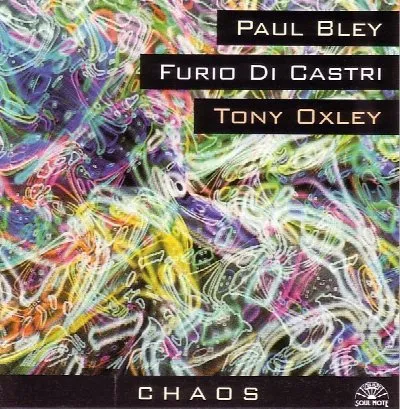
Top tracks — play these first
-
→
Chaos Start here — The opening title track is the natural entry point, establishing the improvisational setting for the pieces that follow.
-
→
Interpercussion 1 — At under two minutes, this first interlude interrupts the sequence of longer pieces and gives the album a compact change of scale.
-
→
Starting Over — Placed late in the program, this five-minute piece opens another substantial stretch of improvisation before the second interlude.
Elevation
Our rating, out of 100 — and why.
AI-generated from five scored dimensions. An opinion, not a measurement.
InstrumentalThe album's innovative blend of structure and improvisation showcases Bley's distinct approach to jazz.
What we noticed
- The use of silence and space is prominent, with moments where the music pauses before launching into intricate melodic lines.
- Composition 25% of the score
-
7/10
- Craft 20% of the score
-
8/10
- Durability 25% of the score
-
6/10
- Distinctiveness 18% of the score
-
8/10
- Sequencing 12% of the score
-
5/10
the writing — melody, harmony, structure, lyrics
production, performance, arrangement
whether it rewards returning to it
whether it sounds like itself
running order, pacing, length
Known within its scene. Reported but not counted — how far a record travelled describes its reception rather than the record, and a newer release has had less time to travel than an older one.
Is this for you?
Good fit if you like
- steady pacing with intricate interplay
- emotive improvisation for deep focus
- reflective moments for quiet contemplation
- balanced flow with emotional peaks
Maybe skip if you
- seeking instant gratification
- prefer straightforward song structures
Where this album fits
- In the catalog
- Experimental — Represents a shift to avant-garde jazz, diverging from earlier styles.
- Themes
- avant-garde improvisation· intimate soundscapes· percussive experimentation
- Career context
- Chaos appeared in 1998, decades after Bley helped reshape small-group jazz through his work with musicians including Ornette Coleman. It belongs to the later phase of a career that had already encompassed bebop, free improvisation and electronic experimentation.
- Stylistic neighbors
- Andrew Hill· Ran Blake· Lennie Tristano
Tracklist
- 1 Chaos Start here 4:53
- 2 Touching Bass 3:47
- 3 Modulating 4:37
- 4 Soft Touch 5:58
- 5 Poetic Justice 6:36
- 6 Interpercussion 1 1:51
- 7 Touch Control 3:22
- 8 Turnham Bey 4:58
- 9 Street Wise 6:07
- 10 Bow Out 4:20
- 11 Starting Over 5:16
- 12 Interpercussion 2 3:34
- 13 Template 4:00
What to play next
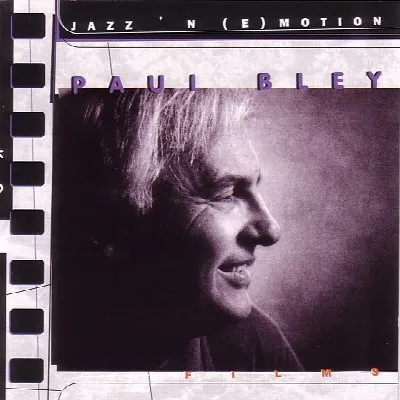
Jazz'n (E)Motion
1998
Continues the improvisational spirit with fresh sonic explorations.
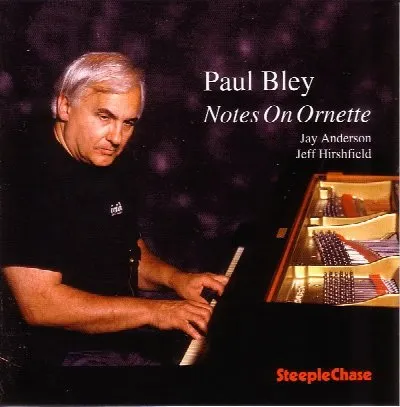
Notes on Ornette
1998
Sets the stage for the avant-garde textures found in Chaos.
If this landed
Records by other artists that run on the same instinct.
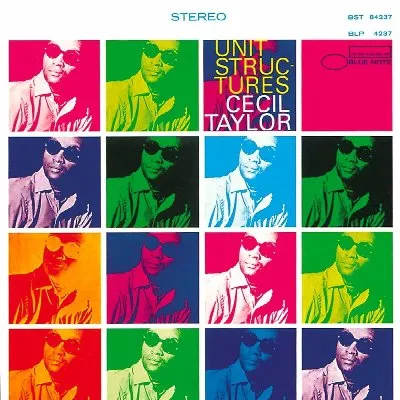
Unit Structures
Cecil Taylor
Explores complex improvisation and avant-garde textures with a focus on percussive interplay.
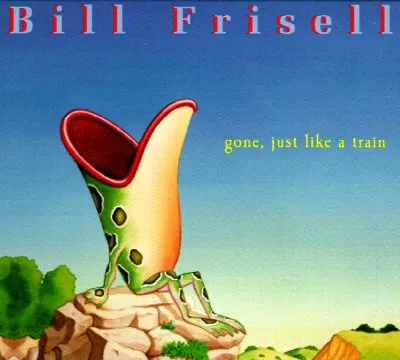
Gone, Just Like a Train
Bill Frisell
Merges emotive improvisation with intricate soundscapes and nuanced electronic elements.
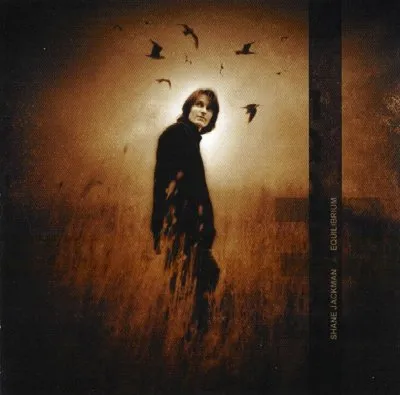
Equilibrium
Matthew Shipp
Features avant-garde jazz with an emphasis on intimate, innovative sonic experimentation.
Reference: Wikipedia · MusicBrainz · Wikidata
Sync your library
Everything you track here works immediately — no account needed. Create one when you want to sync across devices.