

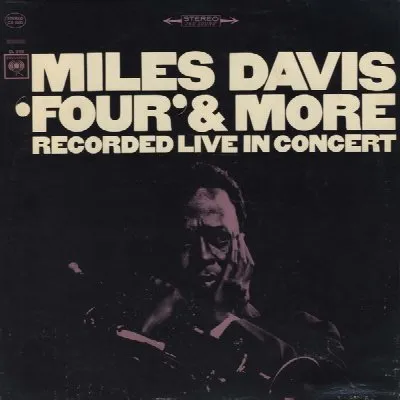
Released 60 years ago
Four & More
Miles Davis · 1966
53 min · 8 tracks · jazz
Standards race through a live set where the rhythm section pushes and pulls against the horns with exhilarating urgency.
Top tracks — play these first
-
→
So What Start here — The familiar modal piece from Kind of Blue returns at a much faster clip, with Tony Williams’s restless drumming transforming its spacious original character.
-
→
Walkin’ — A tune associated with Davis’s earlier hard-bop period becomes a platform for the quintet’s quicksilver rhythmic exchanges.
-
→
Joshua — Victor Feldman’s composition gives George Coleman room to stretch over a rhythm section that keeps shifting the momentum beneath him.
-
→
Four — The compact theme launches a fast-moving performance that makes the band’s precision under pressure especially audible.
Elevation
Our rating, out of 100 — and why.
AI-generated from five scored dimensions. An opinion, not a measurement.
InstrumentalThe album excels in composition and craft, showcasing vibrant improvisation while maintaining a cohesive sound.
What we noticed
- The album features extended improvisations, with each track allowing musicians to explore themes in depth, often exceeding the typical length for jazz pieces.
- Tracks like 'So What' and 'Four' showcase a call-and-response structure between Davis's trumpet and the ensemble, creating dynamic interplay.
- The performance is characterized by a consistent modal approach, with harmonic structures that allow for fluid improvisation rather than strict chord changes.
- Composition 25% of the score
-
8/10
- Craft 20% of the score
-
9/10
- Durability 25% of the score
-
8/10
- Distinctiveness 18% of the score
-
8/10
- Sequencing 12% of the score
-
7/10
the writing — melody, harmony, structure, lyrics
production, performance, arrangement
whether it rewards returning to it
whether it sounds like itself
running order, pacing, length
Significant within its genre. Reported but not counted — how far a record travelled describes its reception rather than the record, and a newer release has had less time to travel than an older one.
Is this for you?
Good fit if you like
- dynamic ensemble interplay throughout
- extended tracks for deep engagement
- vibrant energy for focused listening
- cathartic moments of improvisation
Maybe skip if you
- prefer short, standalone tracks
- seek instant gratification
Where this album fits
- In the catalog
- Critical Peak — Captures a significant live performance, showcasing Davis's innovative sound and influence.
- Themes
- New York concert energy· modal jazz exploration· live improvisational dynamics
- Career context
- Released in 1966, Four & More draws on a February 1964 concert at New York’s Philharmonic Hall, recorded during a benefit for civil rights organizations. It documents Davis’s working quintet with saxophonist George Coleman shortly before Wayne Shorter joined the group; material from the same concert also appeared on My Funny Valentine.
- Stylistic neighbors
- John Coltrane· Herbie Hancock· Wayne Shorter
Moments worth listening for
Where the writing does something specific.
-
So What
The opening call-and-response figure returns in a sharply accelerated live arrangement of the earlier studio piece.
The recognizable exchange provides a structural anchor before the improvisations push against the tune’s familiar shape.
Tracklist
- 1 So What Start here 9:10
- 2 Walkin’ 8:08
- 3 Joshua 9:32
- 4 Go‐Go (The Theme) + Announcement 1:41
- 5 Four 6:20
- 6 Seven Steps to Heaven 7:45
- 7 There Is No Greater Love 10:02
- 8 Go‐Go (The Theme) + Announcement 1:21
What to play next
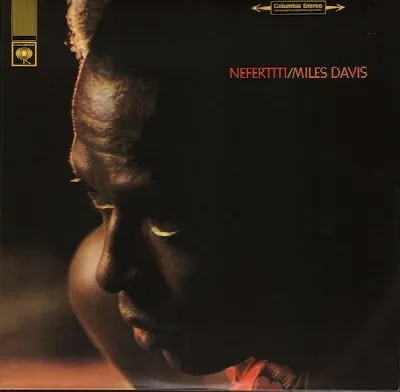
Nefertiti
1967
Continues the modal jazz exploration with rich textures and intricate arrangements.
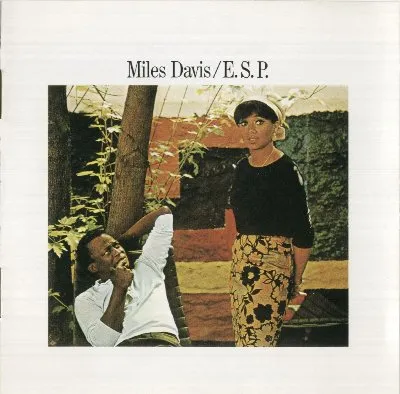
E.S.P.
1965
Sets the stage for the vibrant energy and improvisation found in Four & More.
If this landed
Records by other artists that run on the same instinct.
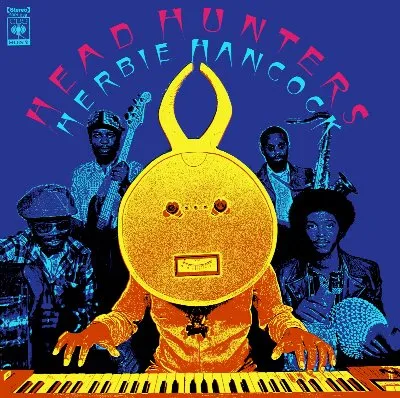
Head Hunters
Herbie Hancock
Explores fusion with electric instrumentation and improvisation, echoing Davis's dynamic live energy.
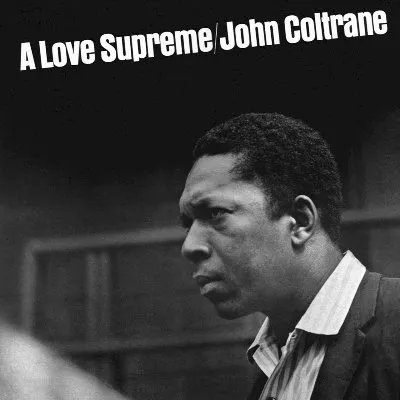
A Love Supreme
John Coltrane
Shares deep modal exploration and spiritual intensity, reflecting similar improvisational depth.
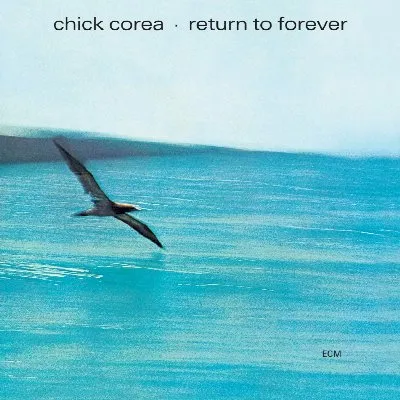
Return to Forever
Chick Corea
Combines jazz fusion with vibrant ensemble interplay, parallel to the energetic atmosphere of Davis's work.
Reference: Wikipedia · MusicBrainz · Wikidata
Sync your library
Everything you track here works immediately — no account needed. Create one when you want to sync across devices.